



Page 19
Page 19
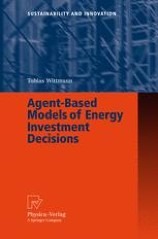
Agent-Based Models of Energy Investment Decisions
This book demonstrates how bounded rational decision models can be standardized and parameterized by socio-economic data. Focusing on private energy technology investment decisions, the author shows how different representative agents can be constructed using search rules, analysis tools and decision strategies. Diffusion curves for energy technologies such as solar collectors, boilers and efficiency upgrades for buildings are calculated. Further, the model is extended to study the impact of firms’ competition on technology diffusion. The modeling approach presented in this book may serve as a template for applications in other domain.

Africa-EU Renewable Energy Research and Innovation Symposium 2018 (RERIS 2018) ; 23–26 January 2018, National University of Lesotho On occasion of NULISTICE 2018
This open access book presents the proceedings of the 2nd Africa-EU Renewable Energy Research and Innovation Symposium (RERIS 18), held in Maseru, Lesotho in January 2018. The symposium aimed to foster research cooperation on renewable energy between Africa and Europe – in academia, as well as the private and public sectors. Addressing thematic areas such as • Grid-connected renewable energy; • Decentralised renewable and household energy solutions; • Energy ocioeconomics; and • Promotion of energy research, innovation, education and entrepreneurship.
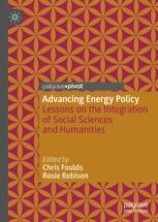
Advancing Energy Policy : Lessons on the integration of Social Sciences and Humanities
Advocates for the Social Sciences and Humanities to be more involved in energy policymaking. It forms part of the European platform for energy-related Social Sciences and Humanities’ activities, and works on the premise that crossing disciplines is essential. All of its contributions are highly interdisciplinary, with each chapter grounded in at least three different Social Sciences and Humanities disciplines. These varying perspectives come together to cover an array of issues relevant to the energy transition, including: energy poverty, justice, political ecology, governance, behaviours, imaginaries, systems approaches, modelling, as well as the particular challenges faced by interdisciplinary work. As a whole, the book presents new ideas for future energy policy, particularly at the European level. It is a valuable resource for energy researchers interested in interdisciplinary and society-relevant perspectives. Those working outside the Social Sciences and Humanities will find this book an accessible way of learning more about how these subjects can constructively contribute to energy policy.

Advances in the Geological Storage of Carbon Dioxide : International Approaches to Reduce Anthropogenic Greenhouse Gas Emissions
As is now generally accepted mankind’s burning of fossil fuels has resulted in the mass transfer of greenhouse gases to the atmosphere, a modification of the delicately-balanced global carbon cycle, and a measurable change in world-wide temperatures and climate. Although not the most powerful greenhouse gas, carbon dioxide (CO) drives climate 2 change due to the enormous volumes of this gas pumped into the atmosphere every day. Produced in almost equal parts by the transportation, industrial and energy-generating sectors, atmospheric CO concentrations have 2 increased by about 50% over the last 300 years, and according to some sources are predicted to increase by up to 200% over pre-industrial levels during the next 100 years. If we are to reverse this trend, in order to prevent significant environmental change in the future, action must be taken immediately.
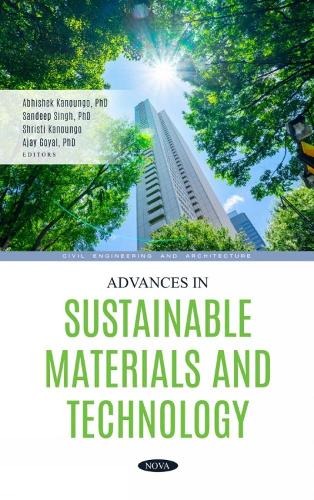
Advances in sustainable materials and technology
Discusses numerous relevant areas and innovative technologies, such as key construction materials and production, materials with lower energy impact, production processes encouraging less use of ever-depleting natural raw materials, minimization of the generation of greenhouse gases, development of new, environmentally friendly materials and agents, characterization of the properties of construction materials, and methodologies applied in the building of structures.

Advances in Renewable Energy and Sustainable Environment : Select Proceedings of NCRESE 2019
comprises the select peer-reviewed proceedings of the National Conference on Renewable Energy and Sustainable Environment (NCRESE) 2019. brings together the latest developments in harvesting, storing and optimizing alternate and renewable energy resources. It covers latest developments in green energy technologies as well as smart grids, and their applications towards a sustainable environment. can be useful for beginners, academicians, entrepreneurs, and professionals interested in renewable energy technologies and sustainable environment practices.
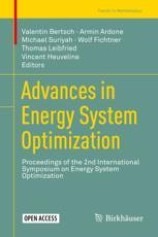
Advances in Energy System Optimization : Proceedings of the 2nd International Symposium on Energy System Optimization
The papers presented in this book address diverse challenges in decarbonizing energy systems, ranging from operational to investment planning problems, from market economics to technical and environmental considerations, from distribution grids to transmission grids, and from theoretical considerations to data provision concerns and applied case studies.
Advances in Electrical and Computer Technologies ; Select Proceedings of ICAECT 2019
Contains the papers presenting the latest developments in the areas of Electrical, Electronics, Communication systems and Computer Science such as smart grids, soft computing techniques in power systems, smart energy management systems, power electronics, feedback control systems, biomedical engineering, geo informative systems, grid computing, data mining, image and signal processing, video processing, computer vision, pattern recognition, cloud computing, pervasive computing, intelligent systems, artificial intelligence, neural network and fuzzy logic, broad band communication, mobile and optical communication, network security, VLSI, embedded systems, optical networks and wireless communication.
Advances in Dynamic Games : Applications to Economics, Management Science, Engineering, and Environmental Management
This book—an outgrowth of the 10th International Symposium on Dynamic Games—presents current developments of the theory of dynamic games and its applications to various domains, in particular energy-environment economics and management sciences.The volume uses dynamic game models of various sorts to approach and solve several problems pertaining to pursuit-evasion, marketing, finance, climate and environmental economics, resource exploitation, as well as auditing and tax evasions. In addition, it includes some chapters on cooperative games, which are increasingly drawing dynamic approaches to their classical solutions.

Advances in Control, Signal Processing and Energy Systems : Select Proceedings of CSPES 2018
Covers topics on both theoretical control systems and their applications across engineering domains such as automatic control, robotics, and adaptive controller design. It discusses several signal processing domains such as image, speech, biomedical signal processing and their applications in IOT, control, robotics, power and energy systems. The book emphasizes both conventional and non-conventional energy, environment, and green processes as related to energy and power systems engineering.
Advances in computer systems architecture ; Vol. 4186 : 11th Asia-Pacific Conference, ACSAC 2006, Shanghai, China, September 6-8, 2006, Proceedings
This is the 11th in a series of conferences, which started life in Australia, as the computer architecture component of the Australian Computer Science Week. In 1999 it ventured away from its roots for the first time, and the fourth Australasian Computer Architecture Conference was held in the beautiful city of Sails (Auckland, New Zealand). Perhaps it was because of a lack of any other computer architecture conference in Asia or just the attraction of traveling to the Southern Hemisphere but the conference became increasingly international during the subsequent three years and also changed its name to include Computer Systems Architecture, reflecting more the scope of the conference, which embraces both architectural and systems issues. In 2003, .

Advances in computer systems architecture ; Vol. 3740 ; 10th Asia-Pacific conference, ACSAC 2005, Singapore, October 24-26, 2005, Proceedings
The papers are organized in topical sections on energy efficient and power aware techniques, methodologies and architectures for application-specific systems, processor architectures and microarchitectures, high-reliability and fault-tolerant architectures, compiler and OS for emerging architectures, data value predictions, reconfigurable computing systems and polymorphic architectures, interconnect networks and network interfaces, parallel architectures and computation models, hardware-software partitioning, verification, and testing of complex architectures, architectures for secured computing, simulation and performance evaluation, architectures for emerging technologies and applications, and memory systems hierarchy and management
Advances in computer systems architecture ; 12th Asia-Pacific Conference, ACSAC 2007, Seoul, Korea, August 23-25, 2007, Proceedings
Covering hardware and software techniques for state-of-the-art multicore and multithreaded architectures.

Advances in Ad Hoc and Sensor Networks
This volume provides a complete survey of the state-of-the-art research that encompasses all areas of ad hoc and sensor networks. These chapters focus on the theoretical and experimental study of advanced research topics involving security and trust, broadcasting and multicasting, power control and energy efficiency, and QoS provisioning.

Advanced Web and Network Technologies, and Applications ; APWeb 2006 International Workshops : XRA, IWSN, MEGA, and ICSE, Harbin, China, January 16-18, 2006, Proceedings
The QOS evaluating model for computational grid nodes put forward can help greatly improving the self-adaptability of resource management and accelerating the appli- tion and development of Computational Grid. Now this model has been applied in NPU Campus Computational Grid. And the good effect brought by it has effectively proved its function. References 1. Foster, I. and C. Kesselman, eds. The Grid: Blueprint for a New Computing Infrastructure. Morgan Kaufmann, 1999. 2. Liu Liang, Zhou Xing-she, and Gu Jian-hua: A Multi-Agent System for Grid Computing. The Second International Conference on Active Media Technology, 2003 3. Yao Wang, Julita Vassileva: Trust and Reputation Model in Peer-to-Peer Networks. Farag Azzedin and Muthucumaru Maheswaran: Integrating Trust into Grid Resource M- agement Systems.

Advanced Radiation Sources and Applications ; Proceedings of the NATO Advanced Research Workshop, held in Nor-Hamberd, Yerevan, Armenia, August 29 - September 2, 2004
A NATO Advanced Research Workshop on ”Advanced Radiation Sources and Applications” Hosted by the Yerevan Physics Institute, Yerevan, Armenia, 30 invited researchers from former Soviet Union and NATO countries gathered at Nor-Hamberd, Yerevan, on the slopes of Mount Aragats to discuss recent theoretical as well as expe- mental developments on means of producing photons from mostly low energy electrons.

Advanced Motion Control and Sensing for Intelligent Vehicles
Provides the latest information in intelligent vehicle control, sensing, and intelligent transportation. It addresses the growing need for safe, comfortable, time and energy-efficient modes of transportation with emphasis on the latest key findings, current trends, and likely future developments in this rapidly expanding field. Highlights : Discusses individual vehicle dynamics, sensory and multiple ground-vehicle interactions / Includes systematic review of past and current research achievements / Presents case studies in cutting-edge directions such as vehicle steering motion, vehicle vision systems, cooperative driving, intersection safety, and tire pressure monitoring / Assesses the likely future developments of this field. This book is useful for both practicing engineers and researchers in the automotive industry.
Advanced Microsystems for Automotive Applications 2006 ; 2nd ed.
Microsystems in many cases provided the key functions for this progress. Although the issues the event concentrated on didn’t change significantly (safety, powertrain, comfort, etc.), considerable shifts of technological paradigms and approaches can be stated. The future of microsystems will consist of integrated smart systems which are able to diagnose a situation, to describe and to qualify it. They will be able to identify and mutually address each other. They will be predictive and therefore they will be able to decide and help to decide. Smart systems will enable the automobile to interact with the environment, they will perform multiple tasks and assist a variety of activities. Smart systems will be highly reliable, often networked and energy autonomous.

Advanced memory optimization techniques for low-power embedded processors
this book explores a collaborative approach by proposing novel memory hierarchies and software optimization techniques for the optimal utilization of these memory hierarchies. Linking memory architecture design with memory-architecture aware compilation results in fast, energy-efficient and timing predictable memory accesses.The evaluation of the optimization techniques using real-life benchmarks for a single processor system, a multiprocessor system-on-chip (SoC) and for a digital signal processor system, reports significant reductions in the energy consumption and performance improvement of these systems. The book presents a wide range of optimizations, progressively increasing in the complexity of analysis and of memory hierarchies. The final chapter covers optimization techniques for applications consisting of multiple processes found in most modern embedded devices.

Advanced materials in smart building skins for sustainability : From nano to macroscale
Demonstrates the importance of smart and dynamic building skins in in sustainable buildings / Provides the scientific basis for integration of nanoscale materials in building envelopes with enhanced performance / Illustrates engineering solution and design process incorporating advanced materials in applications of building skins. / Updates readers on the key areas of smart building skins embodied in the novel advanced materials with unique structures and smart properties that enable multiple functions in energy efficiency, solar harvesting, and environmental greenness. It synergistically integrates the topics and knowledge of material design and experimental studies, theoretical analyses of building energy-saving mechanisms and solar energy utilization, and new design methodologies and processes taking advanced materials into account at different scales - from nano to the macroscale.
