



Page 18
Page 18

Environmental Challenges in Civil Engineering II
Rports on findings concerning structural material behavior, and new methods and technologies in constructions. A special emphasis is given to sustainable constructions practices, including material recycling and reuse, renovation and restoration of historical building and to those fostering sustainable development of cities and rural areas, and a better integration of buildings with the environment. Offering a good balance of theory and practice, and covering both technical and organizational aspects in civil engineering and architectural projects, this book offers extensive information on solutions and current challenges in construction projects and structural interventions in the context of environmental protection and earthquake prevention.

Environmental Bioremediation Technologies
Environmental contamination from both natural and anthropogenic sources is, today, a major environmental concern due to pervasiveness and persistence of many toxicants. It is considered as an inevitable evil of our progress and modernization. To decontaminate the soils, sediments and waters, polluted by anthropogenic activities, the scientists and technologists have evolved different technologies over the years. Although we have to pay high cost for physical and chemical environmental technologies, but they are not eco-friendly and safe. Hence, it was deeply realized to develop viable technologies employing microbes and plants to remediate not only metallic residues and radionuclides, but also the xenobiotic compounds like PCBs, PAHs, PCPs, petroleum sludge and the military wastes. No doubt, the scientists have also got some success in this endeavour and as the result, many companies are in place today to promote the sale of plant or microbe-based technologies to deal with specific environmental contamination challenges. Besides, these technologies are se- driven and do not disturb the sites in cleaning process.

Entry Inhibitors in HIV Therapy
The introductory chapters of this book present an overview of entry inhibitors, review current knowledge of how Env mediates entry, and discuss the challenge of genetic diversity in this region of the viral genome. Subsequent chapters feature current information on individual classes of entry inhibitors that target each step of the virus entry pathway, from attachment to membrane fusion. There is an emphasis on the complex determinants of entry inhibitor susceptibility, resistance mechanisms, the need for clinical phenotyping, and how these issues create new challenges for antiretroviral therapy. Encouraging pre-clinical studies of entry inhibitors as microbicidesare also discussed. The final chapters highlight the current status of entry inhibitors in clinical studies, the major milestone achieved with FDA approval of enfuvirtide, and review drug development, past and present.
Entrepreneurship : Digital transformation, education, opportunities and challenges ; Vol. 28
Digital transformation and artificial intelligence play an important role in entrepreneurship. this book adopts a multidisciplinary approach to entrepreneurship, exploring how entrepreneurial processes contribute to developing new products and services and innovative business models. recent shifts in business models focus on digital transformation and well-being. entrepreneurship is evolving with innovative approaches, and artificial intelligence is revolutionizing marketing strategies and market engagement. this volume presents a comprehensive overview of entrepreneurship, digital transformation, and entrepreneurial education.
Entity-Oriented Search
This open access book covers all facets of entity-oriented search—where “search” can be interpreted in the broadest sense of information access—from a unified point of view, and provides a coherent and comprehensive overview of the state of the art. It represents the first synthesis of research in this broad and rapidly developing area. Selected topics are discussed in-depth, the goal being to establish fundamental techniques and methods as a basis for future research and development. Additional topics are treated at a survey level only, containing numerous pointers to the relevant literature. A roadmap for future research, based on open issues and challenges identified along the way, rounds out the book.
Enterprise service oriented architectures : Concepts, challenges, recommendations
Enterprise Service Oriented Architectures helps readers solve this challenge in making different applications communicate in a loosely coupled manner. This classic handbook leverages the experiences of thought leaders functioning in multiple industry verticals and provides a wealth of knowledge for creating the agile enterprise.

Enterprise interoperability III : New challenges and industrial approaches
This book provides knowledge for cost savings and business improvement as well as new technical solutions. Composed of over 50 papers, Enterprise Interoperability III ranges from academic research through case studies to industrial and administrative experience of interoperability.

Enterprise interoperability II : New challenges and approaches
Interoperability: the ability of a system or a product to work with other systems or products without special effort from the user is a key issue in manufacturing and industrial enterprise generally. It is fundamental to the production of goods and services quickly and at low cost at the same time as maintaining levels of quality and customisation. Interoperability is achieved if internal and external collaborators can interact on at least three levels: data, applications and business enterprise (through the architecture of an enterprise model and making allowance for the semantics of both partners). Not only a problem of software and IT technologies, it implies support for communication and transactions between different organisations that must be based on shared business references. Today, a new and important consideration must be taken into account – economic business evaluation and the definition of dissemination policy.

Enterprise interoperability : New challenges and approaches
Interoperability: the ability of a system or a product to work with other systems or products without special effort from the user is a key issue in manufacturing and industrial enterprise generally. It is fundamental to the production of goods and services quickly and at low cost at the same time as maintaining levels of quality and customisation. Interoperability is achieved if internal and external collaborators can interact on at least three levels: data, applications and business enterprise (through the architecture of an enterprise model and making allowance for the semantics of both partners). Not only a problem of software and IT technologies, it implies support for communication and transactions between different organisations that must be based on shared business references. Today, a new and important consideration must be taken into account – economic business evaluation and the definition of dissemination policy.

Enterprise Architecture for Strategic : Management of Modern IT Solutions
Enterprise Architecture for strategic Management of Modern IT Solutions provides guidance on how to employ EA in deploying and managing IT solutions from pragmatic and implementable perspectives. Until now, implementation and practice of EA have been slow, despite its growing popularity and interest from all sectors. This book employs sociotechnical theories such as actor-network theory (ANT) and structuration theory (ST) as lenses to examine and explain why and how challenges and complexities exist and derail the implementation or practice of EA in organisations.

Enhancing urban environment by environmental upgrading and restoration ; Proceedings of the NATO Advanced Research Workshop on enhancing urban environment : environmental upgrading of municipal pollution control facilities and restoration of urban waters, Rome, Italy from 6 - 9 November 2003.
As urban areas keep growing, water infrastructure ages, and the requirements on environmental protection become more rigorous, there is a continual need for upgrading water pollution control facilities and restoring degraded urban waters. Such issues are addressed in this book by focusing on five major topics: (a) Upgrading stormwater management facilities, (b) Retrofitting / upgrading combined sewer overflow (CSO) facilities, (c) Optimising/upgrading sewage treatment plant performance, (d) Urban stream restoration, and (e) Challenges in restoring urban environment. Each chapter contains some overview papers followed by research or case study papers. Besides presentations of new approaches and accomplishments in the field of upgrading and restoration, several papers provide analysis of vast needs in this field in several countries of Central and Eastern Europe, which either recently joined the European Union (EU) or are preparing for accession, and need to comply with the existing EU directives dealing with environmental protection. As such, this book will be of primary interest to researchers and university lecturers dealing with environmental upgrading and restoration, environmental planners from all levels of government, municipal engineers and politicians, and finally the private industry representatives (consultants, private utilities and environmental technology suppliers) searching for new business opportunities among the new or aspiring members of EU.

Engineering societies in the agents world V : 5th international workshop, ESAW 2004, Toulouse, France, October 20-22, 2004 : revised selected and invited papers
The ?rst workshop “Engineering Societies in the Agents World” (ESAW) was held in August 2000, in conjunction with the 14th European Conference on Arti?cial Intelligence (ECAI 2000) in Berlin. It was launched by a group of - searchers who thought that the design and development of MASs (multi-agent systems) not only needed adequate theoretical foundations but also a call for new techniques, methodologies and infrastructures to develop MASs as arti?cial societies. The second ESAW was co-located with the European Agent Summer School (ACAI 2001) in Prague, and mostly focused on logics and languages, middleware, infrastructures and applications. In Madrid, the third ESAW c- centrated on models and methodologies and took place with the “Cooperative Information Agents” workshop (CIA 2002). The fourth ESAW in London was the ?rst one that ran as a stand-alone event: apart from the usual works on methodologies and models, it also stressed the issues of applications and m- tidisciplinary models. Based on the success of previous ESAWs, and also given that the di?cult challenges in the construction of arti?cial societies are not yet fully addressed, the ?fth ESAW workshop was organized in the same spirit as its predecessors.

Engineering self-organising systems Vol. 3910 ; 3rd International Workshop, ESOA 2005, Utrecht, The Netherlands, July 25, 2005, Revised Selected Papers
This book contains recent work from a broad range of areas with the common theme of utilising self-organisation productively. As distributed information infrastructures continue to spread (such as the Internet, wireless and mobile systems), new challenges have arisen demanding robust and scalable solutions. In these new challenging environments the - signers and engineers of global applications and services can seldom rely on centralised control or management, high reliability of devices, or secure en- ronments. At the other end of the scale, ad-hoc sensor networks and ubiquitous computing devices are making it possible to embed millions of smart computing agents into the local environment.
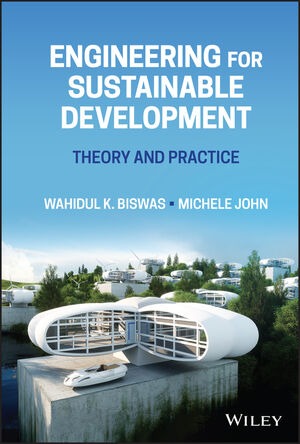
Engineering for Sustainable Development : Theory and Practice
Offers a wide range of civil, mechanical, electrical, and chemical engineering industry applications. Readers will also benefit from: A thorough introduction to contemporary sustainability challenges in the engineering discipline Comprehensive discussions of sustainability assessment tools, including triple bottom line assessment (TBL) and the environmental life cycle assessment (LCA) In-depth examinations of sustainable engineering strategies, including cleaner production and eco-efficiency methods and environmental management systems Detailed review of green engineering principles and industrial symbiosis in engineering application. A link between product stewardship and the design for the environment

Energy Resources in East Africa: Opportunities and Challenges
East African states have historically shared several resources including energy and common heritage of its people. This book provides information on available sources of energy in the region and how the energy suppliers can exploit them in an integrated form to produce the right blend of energy for various applications e.g., industrial, domestic and recreational uses. We provide an in-depth analysis of the advantages and disadvantages of different energy sources in-terms of environmental, industrialization, distribution costs and impacts. We hope that the book will contribute towards a sustainable exploitation of energy resources for the improvement of the people’s quality of life.

Energy in Africa : Challenges and Opportunities
This open access book presents a picture of the current energy challenges on the African continent (and the Sub-Saharan region in particular) and proposes pathways to an accelerated energy transition. Starting with an analysis of the status quo and the outlook for Africa’s energy demand and energy access, it provides an account of the available resources, including hydrocarbons and renewable energy resources, which are playing an increasingly crucial role. It then moves on to analyze the level of investment required to scale-up Africa’s energy systems, shedding light on the key barriers and elaborating on potential solutions. It also provides a suggestion for improving the effectiveness of EU–Africa cooperation. While mainly intended for policymakers and academics, this book also speaks to a broader audience interested in gaining an overview of the challenges and opportunities of the African energy sector today and in the future.

Energy Demand Challenges in Europe : Implications for policy, planning and practice
This book examines the role of citizens in sustainable energy transitions across Europe. It explores energy problem framing, policy approaches and practical responses to the challenge of securing clean, affordable and sustainable energy for all citizens, focusing on households as the main unit of analysis. The book revolves around ten contributions that each summarise national trends, socio-material characteristics, and policy responses to contemporary energy issues affecting householders in different countries, and provides good practice examples for designing and implementing sustainable energy initiatives. Prominent concerns include reducing carbon emissions, energy poverty, sustainable consumption, governance, practices, innovations and sustainable lifestyles.

Energy branding : Harnessing consumer power
Demonstrating the potential of building strong brands in the energy sector, This book explores the challenges of shifting the perception of energy from a commodity business into a consumer brand. Energy suppliers are increasingly being met with skepticism, indicating the need for a greater focus on marketing and branding in the energy industry. The author examines both perspectives of energy as a commodity business and a consumer brand, as well as the perception of energy consumers across Europe. Topics discussed include green energy, the liberalisation of the electricity industry, and the relationship between consumers and executives in the energy market.

End-User Development
By now, most people have become familiar with the basic functionality and interfaces of computers. However, developing new or modified applications that effectively support users' goals still requires considerable expertise in programming that cannot be expected from most people. Thus, one fundamental challenge for the coming years is to develop environments that allow users who do not have background in programming to develop or modify their own applications, with the ultimate aim of empowering people to flexibly employ advanced information and communication technologies.

Endoscopic Surgery of the Potential Anatomical Spaces
Potential anatomical spaces" have attracted surgeons in the past and in recent years. Due to the development of modern imaging techniques and the advent of minimally invasive surgery, access to these spaces has become a real surgical option. The purpose of this book is to document the challenges related to "potential anatomical spaces", traditionally described as "hidden" spaces. The spread of video-assisted surgery and its application in the management of diseases involving organs or anatomical structures placed in the "potential spaces" (neck, mediastinum, pro-peritoneum and retro-peritoneum, subfacial space of the leg, and axilla), has rendered their surgical anatomy less abstract.
