


Refine Results
Sort By
From
To

this book is presenting a review of basic proteomic techniques. The second part of the book is related to the novel high throughput protein identification technique called the 'molecular scanner'
This book uses modern biological knowledge to tackle the question: "What distinguishes living organisms from the non-living world?" In the first few chapters, the authors draw on recent advances in cell and molecular biology to develop an account of the "living state" that applies to all organisms, but only to organisms. Subsequent chapters use this account to explore questions about evolution, the origin of life and the possibility of extraterrestrial life. Towards the end of the book the authors consider human evolution, intelligence and the extent to which our species can be regarded as biologically unique. About Life is written as far as possible in non-technical language; all scientific terms are explained straightforwardly when they are introduced. It is aimed at the general, non-specialist reader, but the novel approach that it takes to general issues in biology will also interest students of the life sciences.
Seduced by the idea of commenting on the clinical experience they have acquired during their career, the authors have deliberately approached their specialty by describing the symptoms that give the chapters their titles. They nevertheless described the differential diagnoses, the diseases involved and the treatments. After a chapter devoted to the examination of the patient, including the detours of the interrogation, back pain or scrotal pain are analyzed. The authors then turned to voiding disorders and their causes. The peculiarities of hematuria, depending on their level of origin, are described and commented on. The semiology of tumor masses is carefully detailed and, conversely, the problem of prostate cancer screening by PSA is dealt with in a separate chapter. Erectile dysfunction and penile diseases are the last chapters. In the line of the “Clinical approach” collection, this manual is easy to consult thanks to a detailed index, easy to understand because it is written in clear language and, moreover, well illustrated (21 diagrams and 2 tables). In this little book, the authors have approached urology from a perspective close to how patients feel.
The general practitioner finds himself alone in the face of difficult and urgent situations. Her internship years taught her to work with the nursing team. At the patient's home, he must act alone with "the means at hand". To have known these difficulties, we conceived this work: it is intended to be a simple, effective and complete help. It sums up what we have learned from the “field”. It complies with scientific recommendations.
This book focuses on the radiographic changes of malformation syndromes and skeletal dysplasias. It is structured such that the reader can identify the radiographic changes and relate them to specific disease entities. The aim is to provide an essential, practical guideline to the recognition of the key radiographic signs for diagnosing malformation syndromes and skeletal dysplasias.
This book represents a major attempt to revise this deficiency. Scholars from ecology, biochemistry, evolutionary biology, cognitive science, anthropology and philosophy discuss how Bateson's thinking might lead to a fruitful reframing of central problems in modern science. Most important perhaps, Bateson's bioanthropology is shown to play a key role in developing the set of ideas explored in the new field of biosemiotics. The idea that organismic life is indeed basically semiotic or communicative lies at the heart of the biosemiotic approach to the study of life.The only book of its kind, this volume provides a key resource for the quickly-growing substratum of scholars in the biosciences, philosophy and medicine who are seeking an elegant new approach to exploring highly complex systems.
The British Nuclear Medicine Society celebrates its 50th Anniversary with this booklet, which reflects the research of many of the pioneers in the use of radionuclides for the diagnosis and therapy of human disease. Since 1949 there have been remarkable advances in radionuclide techniques and imaging equipment: from the first devices “home-made” in the many physics departments throughout the UK, to the sophisticated multimodality imagers now in everyday use in Nuclear Medicine. The BNMS has been instrumental in promoting the use of radionuclide techniques in the investigation of pathology by supporting and providing education, research and guidelines on the optimum use of radiation to help patients.
Te frst section deals with anatomy and the healing of wounds, discusses You have in your hands a work that should become a old and new plastic surgical procedures, and outlines the milestone of our understanding of medical history. In it history of anaesthesia. Te second covers the methods Professor Paolo Santoni-Rugiu and Mr Philip Sykes trace used from ancient times to reconstruct various areas of the development of plastic surgery and much of medi- the body and is the most extensive. Te last section d- cine in general, over three millennia. With his extensive cusses the history of cosmetic surgery and the origin of knowledge of clinical plastic surgery, no one could be present day procedures. better placed than the senior author to gather this valu- Te pages ring with the names of giants of the medical able material from historical documents.
Discover the latest, fast-developing technology to help move towards more cost-effective, small-batch, decentralized manufacturing of personalized systems . 3D printing has revolutionized manufacturing. Its precision and flexibility have enabled the large-scale production of materials and devices too complex for conventional industrial manufacturing. This has been particularly revolutionary in the field of pharmaceutical production, where 3D printing is being integrated into the manufacture of both drugs and drug delivery devices. It has never been more important for industry professionals to understand this form of production.
This book discusses the relationship between periodicals, tourism, and nation-building in Mexico. It enquires into how magazines, a staple form of the promotional apparatus of tourism since its inception, articulated an imaginative geography of Mexico at a time when that industry became a critical means of economic recovery and political stability after the Revolution. Notwithstanding their vogue, popularity, reach, and close affiliations to commerce and state over several decades, magazines have not received any sustained critical attention in the scholarship on that period.
Aims to show which factors have been decisive in the rise of successful countries. Never before have so many people been so well off. However, prosperity is not a law of nature; it has to be worked for. A liberal economy stands at the forefront of this success – not as a political system, but as a set of economic rules promoting competition, which in turn leads to innovation, research and enormous productivity.
Seeks to address the immediacy of COVID-19 by focusing on the implications of the virus in a wider interdisciplinary context Law, Humanities and the COVID Crisis</i> sets out a framework for understanding the COVID-19 virus beyond its epidemiological constraints, asking us to question the very definition of what it means to be human. Researchers from around the world offer their critical reflections on the past, present, and future of this period of sociocultural upheaval and the tremendous suffering that has laid bare fundamental imbalances in our society.
This book offers a comprehensive study of the prerequisites, effectiveness, and enforcement of exclusive jurisdiction and arbitration agreements in international dispute resolution. It examines whether jurisdiction and arbitration clauses have identical effects in private international law and whether they have been or should be given the same treatment by most countries in the world. The book considers whether the Hague Convention on Choice of Court Agreements could be treated as a litigating counterpart to the New York Convention.
Offers contributions to a philosophical and realistic approach to the place of adjudication in contemporary constitutional democracies. Bringing together scholars from different legal and philosophical backgrounds, purports to cast light on the role(s) of judges and the function of judicial interpretation inside of constitutional states, from the standpoint of legal realism as a revisited and sophisticated jurisprudential outlook. In so doing, also copes with a few major jurisprudential issues, like, e.g., determining the ideas that make up the core of legal realism, exploring the relation between legal realism and legal positivism, identifying the boundaries of judicial interpretation as they appear from a realist standpoint, as well as considering some skeptical outlooks on the very claims of contemporary legal realism.

This volume is a selection of essays taken from the excellent range of papers presented at the British Legal History Conference hosted by the Institute for Legal and Constitutional Research at the University of St Andrews, 10-13 July 2019. The theme of the conference gives this book its title: 'comparative legal history'. The topic came easily to the organisers because of their association with the St Andrews-based European Research Council Advanced grant project 'Civil law, common law, customary law: consonance, divergence and transformation in Western Europe from the late eleventh to the thirteenth centuries'.
This book aims to present an overview of China and the world from diverse angles. It brings together essays by ambassadors to China on a range of bilateral and multilateral issues, including trade and investment, regional economic cooperation, sustainable development, technology and innovation, and entrepreneurship. Given their familiarity with China and extensive international experience, the insights of these ambassadors are useful for policymakers, academics, entrepreneurs, students, and anyone trying to make sense of our rapidly changing world.

Since children are not as capable as adults to perceive the risks involved in many situations of daily life, they are at a high risk of suffering personal injuries, mainly resulting from home, school and traffic accidents. From the tort law perspective, this requires a specific treatment of children as victims. For the last few decades some legal systems have been trying to find new solutions for a better protection of children, while other legal systems still follow more traditional rules. After having tackled the problems concerning the position of children as tortfeasors in a previous book, in this book the same working team deals with the problems related to the position of children as victims. This book analyses both the traditional solutions found in some legal systems and the newer solutions offered by others and devotes specific attention to damage issues, apportionment of damage and insurance problems when the victim is a child.
This book provides the most in-depth study of capital punishment in Scotland between the mid-eighteenth and early nineteenth century to date. Based upon an extensive gathering and analysis of previously untapped resources, it takes the reader on a journey from the courtrooms of Scotland to the theatre of the gallows. It introduces them to several of the malefactors who faced the hangman’s noose and explores the traditional hallmarks of the spectacle of the scaffold. It demonstrates that the period between 1740 and 1834 was one of discussion, debate and fundamental change in the use of the death sentence and how it was staged in practice. In addition, the study provides an innovative investigation of the post-mortem punishment of the criminal corpse. It offers the reader an insight into the scene at the foot of the gibbets from which criminal bodies were displayed, and around the dissection tables of Scotland’s main universities where criminal bodies were used as cadavers for anatomical demonstration. In doing so it reveals an intermediate stage in the long-term disappearance of public bodily punishment.
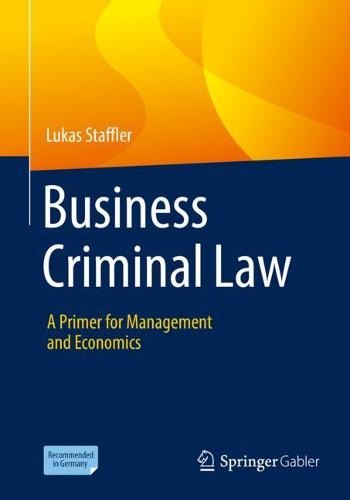
Deals with business criminal law from the perspective of Germany, Austria, Liechtenstein and Switzerland. It primarily addresses students in business and economics (master's programme) as well as business practitioners, but is also meant for lawyers and law students. As criminal law legislators exert considerable influence on economic life, raising and growing awareness in the area of criminal law seems compulsory for future managers and executives. This textbook approaches the legal field less normatively and rather in a practical and entrepreneurial way. Its contents are based on the master level class "Business Criminal Law
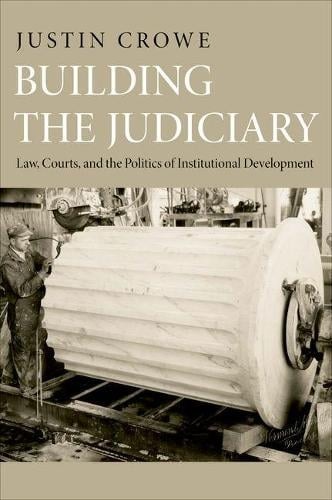
Building the Judiciary uncovers the causes and consequences of judicial institution-building in the United States from the commencement of the new government in 1789 through the close of the twentieth century.Explaining why and how the federal judiciary became an independent, autonomous, and powerful political institution.

Daraa Highway - Ghabagheb - Syria
+963-15 2050 - 15 860 380 /1/2/3 - 11 662 3900