



Page 17
Page 17

Expanding Horizons in Bioethics
What are the resources and needs, the strengths and the vulnerabilities of patients, of society, or of nature? How do we evaluate the societal potential of scientific discovery? It is fairly well assured that we are influencing the terms of existence of many inhabitants of this planet, from flora to fauna to humans. Moreover, history has shown that while technologies can be used neutrally, they can be (and have been) used to the great benefit – or the great detriment – of human life and the fate of the world as a whole. How various types of knowledge and technological ability will be deployed is up to us, individually and collectively. How such information and ability should be deployed, and for what reasons, are questions at the core of bioethical inquiry. These are the "expanding horizons in bioethics" to which this volume refers. This volume is comprised of fourteen essays. It is a rare gathering of scholarly opinion, featuring well-known experts from a diversity of disciplines. The topics addressed are of immediate concern to the public. The essays ask questions about human nature, genetic technologies, reproductive rights, human subjects research, and environmental issues – all in provocative and challenging new ways. Yet the themes that emerge throughout the volume are of enduring interest to anyone concerned about the interactions of scientific development, ethics, and society. This volume is of interest to students and teachers of bioethics and related topics, as well as to professionals working in these disciplines.

Existence and Regularity Properties of the Integrated Density of States of Random Schrödinger Operators
The theory of random Schrödinger operators is devoted to the mathematical analysis of quantum mechanical Hamiltonians modeling disordered solids. Apart from its importance in physics, it is a multifaceted subject in its own right, drawing on ideas and methods from various mathematical disciplines like functional analysis, selfadjoint operators, PDE, stochastic processes and multiscale methods. The present text describes in detail a quantity encoding spectral features of random operators: the integrated density of states or spectral distribution function. Various approaches to the construction of the integrated density of states and the proof of its regularity properties are presented.

Excel PivotTables Recipe Book : A Problem-Solution Approach
Excel Pivot Tables Recipe Book: A Problem-Solution Approach is for anyone who uses Excel frequently. This book follows a problem-solution format that covers the entire breadth of situations you might encounter when working with PivotTables—from planning and creating, to formatting and extracting data, to maximizing performance and troubleshooting. The author presents tips and techniques in this collection of recipes that cannot be found in Excel's Help section, and she carefully explains the most confusing features of PivotTables.

Excel 2007 : Beyond the Manual
Excel 2007: Beyond the Manual will introduce those who are already familiar with Excel basics to more advanced features, like consolidation, what-if analysis, PivotTables, sorting and filtering, and some commonly used functions.

Evolving Connectionist Systems : The Knowledge Engineering Approach
Evolving Connectionist Systems is aimed at all those interested in developing and using intelligent computational models and systems to solve challenging real world problems in computer science, engineering, bioinformatics and neuroinformatics. The book challenges scientists and practitioners with open questions about future creation of new information models inspired by Nature. This edition includes new methods for adaptive, knowledge-based learning, such as online incremental feature selection, spiking neural networks, transductive neuro-fuzzy inference, adaptive data and model integration, cellular automata and artificial life systems, particle swarm optimisation, ensembles of evolving systems, and quantum inspired neural networks. New applications to gene and protein interaction modelling, brain data analysis and brain model creation, computational neuro-genetic modelling, adaptive speech, image and multimodal recognition, language modelling, adaptive robotics, modelling dynamic financial and socio-economic systems, and ecological modelling, are covered. An important new feature of the book is the attempt to connect different structural and functional levels of a complex, intelligent system, looking for inspiration from functional relationships in natural systems, such as the genetic and the brain activity.

Evolutionary Synthesis of Pattern Recognition Systems
Evolutionary Synthesis of Pattern Recognition Systems presents novel effective approaches based on evolutionary computational techniques, such as genetic programming (GP), linear genetic programming (LGP), coevolutionary genetic programming (CGP) and genetic algorithms (GA) to automate the synthesis and analysis of object detection and recognition systems. The book’s concepts, principles, and methodologies will enable readers to automatically build robust and flexible systems—in a systematic manner—that can provide human-competitive performance and reduce the cost of designing and maintaining these systems. Its content covers all key aspects of object recognition: object detection, feature selection, feature discovery, object recognition, domain knowledge. Basic knowledge of programming and data structures, and some calculus, is presupposed.ing the book’s novel ideas

Evolutionary Stasis and Change in the Dominican Republic Neogene
In practice, however, science is no less susceptible to fads, culture shifts, and pendulum swings than any other realm of human endeavor. This is an especially important feature of science to keep in mind in the present climate of shrinking government funding (at least in prop- tion to the demand) and the resulting susceptibility of individual scientists and entire disciplines to being influenced by the changing priorities of funding agencies (even if, as such agencies maintain, those priorities come ultimately “from the c- munity”). The present volume is in several important respects a testimonial to both the threats and opportunities that such scientific culture swings pose, both for the individual researcher and a wider field. When scientific research in the Dominican Republic Neogene began more than a century ago, paleontology was an essentially descriptive discipline, focused mainly on finding, describing, and documenting the taxa represented in the fossil record, and (especially in invertebrate paleontology) on using these taxa for bi- tratigraphic correlation.

Evolutionary Algorithms for Solving Multi-Objective Problems
This book for Solving Multi-Objective Problems, significantly augmented with contemporary knowledge and adapted for the classroom. All the various features of multi-objective evolutionary algorithms (MOEAs) are presented in an innovative and student-friendly fashion, incorporating state-of-the-art research results. The diversity of serial and parallel MOEA structures are given, evaluated and compared. The book provides detailed insight into the application of MOEA techniques to an array of practical problems. The assortment of test suites are discussed along with the variety of appropriate metrics and relevant statistical performance techniques.

Evidence-based school development in changing demographic contexts
This book features a school development model (Arizona Initiative for Leadership Development and Research – AZiLDR) that offers a roadmap for schools to navigate the complexities of continuous school development. Filled with processes that balance evidence-based values with democratic, culturally responsive values, this book offers strategies to mediate the tensions and to address school culture, context and values, leadership capacity, using data as a source of reflection, curricular and pedagogical activity, and strengths-based approaches to meeting the needs of culturally diverse students.
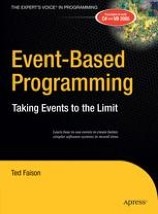
Event-Based Programming : Taking Events to the Limit
This book teaches you how to develop software based on parts that interact primarily through an event mechanism. You'll learn how to use events in many different situations, to solve recurring development problems without coupling. The book introduces Signal Wiring Diagram, a novel form of software diagram similar to the circuit diagrams used by hardware designers. The book concludes with a series of case studies, incorporating all featured concepts.

Event Structure and the Left Periphery : Studies on Hungarian
This book provides substantial new results in a novel field of research examining the syntactic and semantic consequences of event structure. The studies of this volume examine the hypothesis that event structure correlates with word order, the presence or absence of the verbal particle, the [+/- specific] feature of the internal argument, aspect, focusing, negation, and negative quantification, among others. The results reported concern the telicising vs. perfectivizing role of the verbal particle; the syntactic and semantic differences of verbs denoting a delimited change, and those denoting creation or coming into being; evidence of viewpoint aspect in a language with no morphological viewpoint marking; the aspectual role of non-thematic objects; the source of the ‘exhaustive identification’ function of structural focus; the interaction of negation and aspect etc.

Evaluation of text summaries based on linear optimization of content metrics
Covers both theoretical contributions and practical applications in security system design by applying the Internet of Things (IoT) and CI. It further explains the application of IoT in the design of modern security systems and how IoT blended with computational intel- ligence can make any security system improved and realizable. Key features: Focuses on the computational intelligence techniques of security system design Covers applications and algorithms of discussed computational intelligence techniques Includes convergence-based and enterprise integrated security systems with their applications Explains emerging laws, policies, and tools affecting the landscape of cyber security Discusses application of sensors toward the design of security systems This book will be useful for graduate students and researchers in electrical, computer engineering, security system design and engineering

Evaluating competencies : Forensic assessments and instruments
As in its first edition, this book offers a conceptual model for understanding the nature of legal competencies. The model is interpreted to assist mental health professionals in designing and performing assessments for legal competencies defined in criminal and civil law, and to guide research that will improve the practice of evaluations for legal competencies. A special feature is the book's evaluative review of specialized forensic assessment instruments for each of several legal competencies. Three-fourths of the 37 instruments reviewed in the second edition are new and thus were not reviewed in the first edition.

Eutrophication of Shallow Lakes with Special Reference to Lake Taihu, China
Eutrophication and algal blooms are worldwide environmental issues in lakes. The eutrophication process and formation mechanisms of algal blooms are particularly complicated in shallow lakes due to the strong lake–land, air–water and water–sediment interactions. This volume features papers presented at the International Symposium on the Eutrophication Process and Control in Large Shallow Lakes – with Special Reference to Lake Taihu, a Shallow Subtropical Chinese Lake, held in Nanjing, China, 22–26 April, 2005. The topics include: physical processes and their effects on shallow lake ecosystems; biogeochemistry of sediments and nutrient cycling in shallow lakes; algal blooms and ecosystem response in shallow lakes; eutrophication control and restoration in shallow lakes; and resource exploitation, environmental protection and sustainable management in shallow lakes.

European Traditions in Didactics of Mathematics
This book discusses several didactic traditions in mathematics education in countries across Europe, including France, the Netherlands, Italy, Germany, the Czech and Slovakian Republics, and the Scandinavian states. It shows that while they all share common features both in the practice of learning and teaching at school and in research and development, they each have special features due to specific historical and cultural developments. The book also presents interesting historical facts about these didactic traditions, the theories and examples developed in these countries.

European Oncology Leaders : The CancerFutures Collection 2001-2004
CancerFutures was launched in 2001 with the aim of increasing knowledge about the complex world of cancer care through people and facts. Cover Story and Masterpiece are two key sections of the magazine that have featured in-depth interviews with some of Europe’s most influential oncology leaders – people who have been pioneers of the art and science of oncology over the past 30 years. These interviews comprise a unique collection of stories that give insight into the many personal and professional challenges these leaders have faced in building their careers and pushing forward the boundaries of oncology practice. The European School of Oncology is pleased to launch the CancerFutures Collection which will be of interest to all members of the European oncology community, both today and in the future. This collection acknowledges the tremendous contribution that these leaders have made to cancer care and pays tribute to their dedication and drive. It will provide encouragement for all those confronted with difficulties in building their careers, and will give some inspiration for future leaders.

EUNICE 2005: Networks and Applications Towards a Ubiquitously Connected World ; IFIP International Workshop on Networked Applications, Colmenarejo, Madrid/Spain, 6-8 July, 2005
The IFIP series publishes state-of-the-art results in the sciences and technologies of information and communication. The scope of the series includes: foundations of computer science; software theory and practice; education; computer applications in technology; communication systems; systems modeling and optimization; information systems; computers and society; computer systems technology; security and protection in information processing systems; artificial intelligence; and human-computer interaction. Proceedings and post-proceedings of referred international conferences in computer science and interdisciplinary fields are featured. These results often precede journal publication and represent the most current research. The principal aim of the IFIP series is to encourage education and the dissemination and exchange of information about all aspects of computing.

Ethnobotany and ethnopharmacology of medicinal and aromatic plants : steps towards drug discovery
Medicinal and aromatic plants are beneficial to human health. Plant-derived molecules possess biological activities that can be used to prevent many infectious diseases and metabolic disorders. Ethnobotany and Ethnopharmacology of Medicinal and Aromatic Plants summarizes techniques and methods used to study the biological activities of plant-derived extracts and compounds to study ethnobotanical and ethnopharmacological features of medicinal and aromatic plants.

Essentials of human anatomy and physiology
Helps students focus on the essentials of A&P, without getting sidetracked in unnecessary details. The brief and accessible text combines short, easy-to-read chapters with easy-to-follow figures to provide a near-perfect level and depth of content that students need to succeed in the one-semester A&P course. The authors hallmark clear and friendly writing style features familiar analogies and abundant mnemonic cues to help students learn and remember concepts.

Essential discrete mathematics for computer science
An ideal introductory textbook for standard undergraduate courses, and is also suitable for high school courses, distance education for adult learners, and self-study. The essential introduction to discrete mathematics / Features thirty-one short chapters, each suitable for a single class lesson / Includes more than 300 exercises / Almost every formula and theorem proved in full / Breadth of content makes the book adaptable to a variety of courses / Each chapter includes a concise summary
