


Refine Results
Sort By
From
To


To do algebra is essentially to calculate, that is to say to perform, on elements of a set, (<algebraic operations n, the best-known example of which is provided by the (<four rules)) of elementary arithmetic. This is not the place to retrace the slow process of progressive abstraction by which the notion of algebraic operation, initially restricted to natural integers and to measurable quantities, gradually widened its field, as it grew. at the same time generalized the notion of ((number O, until, going beyond the latter, it came to apply to elements which no longer had any character ((numeric)>, for example to permutations of a - seems (see Historical Note in chap. 1).
A self-contained introduction to algebraic control for nonlinear systems suitable for researchers and graduate students.The most popular treatment of control for nonlinear systems is from the viewpoint of differential geometry yet this approach proves not to be the most natural when considering problems like dynamic feedback and realization. Professors Conte, Moog and Perdon develop an alternative linear-algebraic strategy based on the use of vector spaces over suitable fields of nonlinear functions. This algebraic perspective is complementary to, and parallel in concept with, its more celebrated differential-geometric counterpart.Algebraic Methods for Nonlinear Control Systems describes a wide range of results, some of which can be derived using differential geometry but many of which cannot.

Algebraic groups are treated in this volume from a group theoretical point of view and the obtained results are compared with the analogous issues in the theory of Lie groups. The main body of the text is devoted to a classification of algebraic groups and Lie groups having only few subgroups or few factor groups of different type. In particular, the diversity of the nature of algebraic groups over fields of positive characteristic and over fields of characteristic zero is emphasized. This is revealed by the plethora of three-dimensional unipotent algebraic groups over a perfect field of positive characteristic, as well as, by many concrete examples which cover an area systematically. In the final section, algebraic groups and Lie groups having many closed normal subgroups are determined.
This book provides an exploration of the consequences of the ontological differences between natural and social objects (sometimes described as objects of nature and objects of thought) in the workings of causal and agency relationships.

Environmental issues continued to loom large in the last decade of the twentieth century,especially environmental problems related to rising levels of CO emissions and 2 other greenhouse gases on the planet’s average temperatures and, subsequently, storm patterns. Floods and droughts, in combination with unseasonably high and low temperatures became the norm rather than the exception for large expanses of Africa,Asia and Oceania. Even large areas of Europe and NorthAmerica were s- jected to recurrent floods and droughts and experienced unseasonable extremes of hot and cold temperatures associated with man-made intrusions into the natural environment. And, still, a global plan of action to haltman-related patterns of def- estation, desertification, and over-fishing of the seas has yet to come into being. At the same time, the number of regional conflicts and civil wars increased and, with them, the lives of many women, children, old people and other n- combatants were lost in these conflicts.

Contains peer-reviewed papers from the Fourth World Landslide Forum organized by the International Consortium on Landslides (ICL), the Global Promotion Committee of the International Programme on Landslides (IPL), University of Ljubljana (UL) and Geological Survey of Slovenia in Ljubljana, Slovenia from May 29 to June 2, 2017. The complete collection of papers from the Forum is published in five full-color volumes
The future of Earth’s ecosystems is increasingly influenced by the pace and patterns of urbanization. One of the greatest challenges for natural and social scientists is to understand how urbanizing regions evolve through the complex interactions between humans and ecological processes. Questions and methods of inquiry specific to our traditional disciplinary domains yield partial views that reflect different epistemologies and understandings of the world. In order to achieve the level of synthesis required to see the urban ecosystem as a whole we must change the way we pose questions and search for answers. Cities are the result of human and ecological processes occurring simultaneously in time and in space and the legacy of the simultaneous processes of the past. Urban ecology is the study of the co-evolution of human-ecological systems. Scholars of both urban systems and ecology must challenge the assumptions and world views within their disciplines and work towards a hybrid theory that builds on multiple world views.

This book presents 53 independently reviewed papers which embody the latest advances in the theory, design, control and application of robotic systems, which are intended for a variety of purposes such as manipulation, manufacturing, automation, surgery, locomotion and biomechanics.

The chapters in this book jointly contribute to what we shall call the fieldof natural and multimodal interactive systems engineering. This is not yet awell-established field of research and commercial development but, rather, anemerging one in all respects. It brings together, in a process that, arguably, wasbound to happen, contributors from many different, and often far more estab-lished, fields of research and industrial development. To mention but a few,these include speech technology, computer graphics and computer vision. Thefield’s rapid expansion seems driven by a shared vision of the potential of newinteractive modalities of information representation and exchange for radicallytransforming the world of computer systems, networks, devices, applications,etc.

In recent years meshless/meshfree methods have gained a considerable attention in engineering and applied mathematics. The variety of problems that are now being addressed by these techniques continues to expand and the quality of the results obtained demonstrates the effectiveness of many of the methods currently available. The book presents a significant sample of the state of the art in the field with methods that have reached a certain level of maturity while also addressing many open issues.The book collects extended original contributions presented at the first ECCOMAS Conference on Meshless Methods held in 2005 in Lisbon. The list of contributors reveals a mix of highly distinguished authors as well as quite young but very active and promising researchers, thus giving the reader an interesting and updated view of different mesh reduction methods and its range of applications. The material presented is appropriate for researchers, engineers, physicists, applied mathematicians and graduate students interested in this active research area.
Acollection of world class paper articles addressing the following topics: Image and Pattern Recognition: Compression, Image processing, Signal Processing Architectures, Signal Processing for Communication, Signal Processing Implementation, Speech Compression, and Video Coding Architectures. Languages and Systems: Algorithms, Databases, Embedded Systems and Applications, File Systems and I/O, Geographical Information Systems, Kernel and OS Structures, Knowledge Based Systems, Modeling and Simulation, Object Based Software Engineering, Programming Languages, and Programming Models and tools. Parallel Processing: Distributed Scheduling, Multiprocessing, Real-time Systems, Simulation Modeling and Development, and Web Applications. New trends in computing: Computers for People of Special Needs, Fuzzy Inference, Human Computer Interaction, Incremental Learning, Internet-based Computing Models, Machine Intelligence, Natural Language Processing, Neural Networks, and Online Decision Support System.

Advanced Magnetic Nanostructures is devoted to the fabrication, characterization, experimental investigation, theoretical understanding, and utilization of advanced magnetic nanostructures. Focus is on various types of 'bottom-up' and 'top-down' artificial nanostructures, as contrasted to naturally occurring magnetic nanostructures, such as iron-oxide inclusions in magnetic rocks, and to structures such as perfect thin films. Industrial and academic researchers in magnetism and related areas such as nanotechnology, materials science, and theoretical solid-state physics will find this book a valuable resource.

This book is under a CC BY 4.0 license. It presents the results of the ComBoNDT European project, which aimed at the development of more secure, time- and cost-saving extended non-destructive inspection tools for carbon fiber reinforced plastics, adhered surfaces and bonded joints. The book reports the optimal use of composite materials to allow weight savings, reduction in fuel consumptions, savings during production and higher cost efficiency for ground operations.

Walter Charleton (1619-1707) has been widely depicted as a natural philosopher whose intellectual career mirrored the intellectual ferment of the ‘scientific revolution’. Instead of viewing him as a barometer of intellectual change, I examine the previously unexplored question of his identity as a physician. Examining three of his vernacular medical texts, this volume considers Charleton’s thoughts on anatomy, physiology and the methods by which he sought to understand the invisible processes of the body.

This book contains the edited version of the invited lectures that were delivered by prominent researchers at UTL. This book brings together in a review manner a comprehensive summary of high quality research contri- tions across basic and applied sciences. The contributing papers are organized around the following major areas: – Emergent areas (Nanosciences, Quantic Computations and Infor- tion, Risk and Volatility in Financial Markets); – Basic Sciences (Mathematics, Physics, Chemistry and Materials); – Social Sciences, Economics and Management Sciences; – Life Sciences and Biotechnology; – Engineering and Technologies – Nature, Environment and Sustainability; – Public Health, Food Quality and Safety; – Health and Sport Sciences; – Urbanism, Transports, Architecture, Arts and Design.
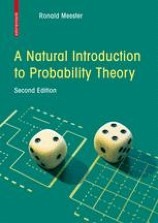
According to Leo Breiman (1968), probability theory has a right and a left hand. The right hand refers to rigorous mathematics, and the left hand refers to ‘pro- bilistic thinking’. The combination of these two aspects makes probability theory one of the most exciting ?elds in mathematics. One can study probability as a purely mathematical enterprise, but even when you do that, all the concepts that arisedo haveameaningontheintuitivelevel.Forinstance,wehaveto de?newhat we mean exactly by independent events as a mathematical concept, but clearly, we all know that when we ?ip a coin twice, the event that the ?rst gives heads is independent of the event that the second gives tails.
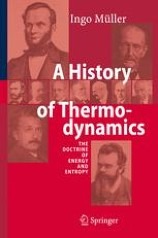
The development of thermodynamics in the second half of the 19th century has had a strong impact on both technology and natural philosophy. It is true that the steam engine for the conversion of heat into work existed before thermodynamics was developed as a branch of physics. However, the systematic theory improved the conversion process, and it succeeded in developing other processes essential to modern life, notably refrigeration and rectification. So, altogether thermodynamics has provided humanity with cheap energy, and cheap fuel, -- consequently with cheap, and abundant, and unspoiled food. Thus thermodynamics has made populations grow, and life expectancy increase beyond anything people could possibly have imagined 200 years ago.
This is a history of parametric statistical inference, written by one of the most important historians of statistics of the 20th century, Anders Hald. This book can be viewed as a follow-up to his two most recent books, although this current text is much more streamlined and contains new analysis of many ideas and developments. And unlike his other books, which were encyclopedic by nature, this book can be used for a course on the topic, the only prerequisites being a basic course in probability and statistics.
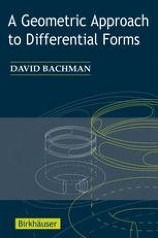
The modern subject of differential forms subsumes classical vector calculus. This text presents differential forms from a geometric perspective accessible at the undergraduate level. The book begins with basic concepts such as partial differentiation and multiple integration and gently develops the entire machinery of differential forms. Each new concept is presented with a natural picture that students can easily grasp. Algebraic properties then follow. This facilitates the development of differential forms without assuming a background in linear algebra. Throughout the text, emphasis is placed on applications in 3 dimensions, but all definitions are given so as to be easily generalized to higher dimensions. A centerpiece of the text is the generalized Stokes' theorem. Although this theorem implies all of the classical integral theorems of vector calculus, it is far easier for students to both comprehend and remember.
This book is unique in that it is more concise than most others; the material is treated in a streamlined fashion. This allows the lecturer to select the material for a one-semester course on a topic more easily. These initial chapters cover just the material for an introductory course on mathematical logic combined with the necessary material from set theory. Chapter 3 is partly of a descriptive nature, providing a view towards decision problems, automated theorem proving, non-standard models and related subjects. The other chapters contain material on logic programming for computer scientists, model theory, recursion theory, Gödel's Incompleteness Theorems, and applications of mathematical logic. Philosophical and foundational problems of mathematics are discussed where appropriate.

Daraa Highway - Ghabagheb - Syria
+963-15 2050 - 15 860 380 /1/2/3 - 11 662 3900