



Page 16
Page 16
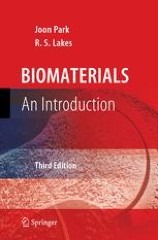
Biomaterials : An Introduction
Biomaterials, an Introduction is intended as a general introduction to the uses of artificial materials in the human body for the purposes of aiding healing, correcting deformities, and restoring lost function. Enhancing on the field developments since the successful last edition, Biomaterials, an Introduction continues in its tradition as an outgrowth of an undergraduate course for senior students in biomedical engineering developed by the authors With 60 years of combined experience, the authors have emphasized the fundamental materials science, structure-property relationships and biological responses as a foundation for a wide array of biomaterials applications.
Biologie und epidemiologie der hormonersatztherapie : Diskussionen zur postmenopausalen gesundheit = Biology and epidemiology of hormone replacement therapy : Discussions on postmenopausal health
The advantages and disadvantages of hormone replacement therapy (HRT) are discussed by a group of experts with regard to the epidemiological evidence. However, the focus of the discussion is the problem of breast cancer risk. Among other things, it is shown that the results derived from epidemiological studies do not coincide with the growth characteristics of these tumors, so that further population studies with the inclusion of pathobiological expertise appear necessary. The benefits and risks of hormone replacement therapy (HRT) are discussed by a group of experts with a view towards the evidence provided by recent epidemiological studies. Although all aspects of HRT indications and contra-indications are reviewed, the particular emphasis of this discussion is on breast cancer. Among other things, it is shown that the evidence on breast cancer provided in epidemiological studies does not match the growth characteristics of the tumors, and that further population research incorporating pathobiological assessments is required.
Binary Rare Earth Oxides
The book begins with a brief introduction to binary rare earth oxides, their physical and chemical stabilities, polymorphism, crystal structures and phase transformation and the association with current applications. The book goes on to present the band structure of the oxides using several quantum chemical calculations, which belong to a newly developed area in the binary rare earth oxides. Central to this chapter are the characterizations of electrical, magnetic and optical properties, as well as details of single crystal growth and particle preparation methods that have progressed in recent years. Later chapters concentrate on thermo-chemical properties and trace determination techniques. The final chapter contains a variety of useful applications in various fields such as phosphors, glass abrasives, automotive catalysts, fuel cells, solid electrolytes, sunscreens, iron steels, and biological materials.
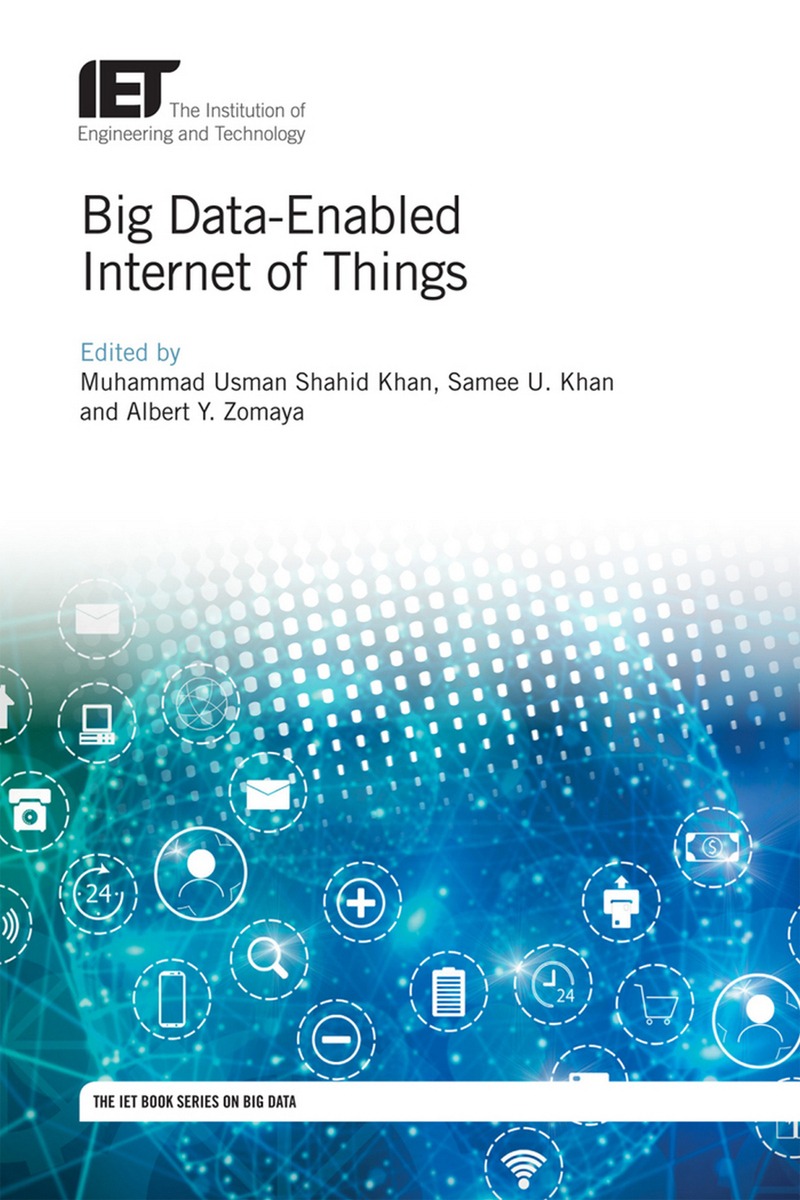
Big data-enabled internet of things
Covers analytical techniques for handling the huge amount of data generated by the Internet of Things, from architectures and platforms to security and privacy issues, applications, and challenges as well as future directions. The fields of Big Data and the Internet of Things (IoT) have seen tremendous advances, developments, and growth in recent years. The IoT is the inter-networking of connected smart devices, buildings, vehicles and other items which are embedded with electronics, software, sensors and actuators, and network connectivity that enable these objects to collect and exchange data. The IoT produces a lot of data. Big data describes very large and complex data sets that traditional data processing application software is inadequate to deal with, and the use of analytical methods to extract value from data. This edited book covers analytical techniques for handling the huge amount of data generated by the Internet of Things, from architectures and platforms to security and privacy issues, applications, and challenges as well as future directions.
Biased technical change and economic conservation laws
Makes use of Lie groups to shed new light on the analysis of economic conservation laws. Economic conservation laws are not simply abstract concepts; this book shows that they are tools of empirical analysis that can be applied to such topics as analyses of macro performance and corporate efficiency.
Beyond the limits to growth : New ideas for sustainability from Japan
This book offers an optimistic view of the future and provides a road map for societies to get there. Drawing upon extensive research and many years as a thought leader in environmental and sustainability issues in Japan and internationally, Hiroshi Komiyama analyzes the most pressing challenges to the attainment of sustainability of economically advanced nations and argues forcefully for Japan to lead them out of the present dilemma through active promotion of creative consumer and societal demand. He shows how an active industry–government–academic partnership can provide the environment needed to promote such new creative demand and illustrates its potential through presentation of a Platinum Society Network that was launched on a regional basis in Japan in 2010 to facilitate the solution of common issues through the exchange of information and ideas.

Beauty’s Appeal : Measure and Excess
Beauty fulfils human existence. As it registers in our aesthetic experience, beauty enhances nature’s enchantment around us and our inward experience lifting our soul toward moral elevation. Carried by creative imagination (Imaginatio Creatrix), beauty participates in the moulding of the forms of the intellective constitution of the mind in tandem with praxis and seeks deeper enigmas of the real in the labyrinth of the cosmos. Yet with the evolution of human development and in technological inventions, beauty, while suffusing all modalities of experience, seems to undergo transformations and expansion. Are there perduring norms and modalities of beauty or are we carried along blindly by human development? Is there a measure intrinsic to our human ontopoietic unfolding and the growth of human life that we may follow instead of the whim of fancy and excess? The present collection of art-explorations seeks the elemental ties of Human Condition. Together, the authors aim to answer the questions posed above.
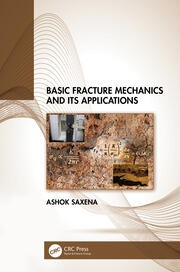
Basic Fracture Mechanics and its Applications
Presents specific aspects of how fracture mechanics is used to address fatigue crack growth, environment assisted cracking, and creep and creep-fatigue crack growth. Other topics include mixed-mode fracture and materials testing and selection for damage tolerant design, alongside in-depth discussions of ensuring structural integrity of components through real-world examples. There is a strong focus throughout the book on the practical applications of fracture mechanics. It provides a clear description of the theoretical aspects of fracture mechanics and also its limitations.
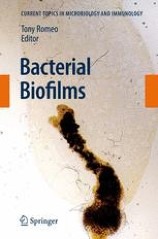
Bacterial Biofilms
This volume tends to focus on the biology of biofilms that affect human disease. It opens with chapters that provide the reader with current perspectives on biofilm development, physiology, environmental and regulatory effects, the role of quorum sensing, and resistance/phenotypic persistence to antimicrobial agents during biofilm growth. The next chapters are devoted to common problematic biofilms, those that colonize venous and urinary catheters. The final series of chapters examines biofilm formation by four species that are important pathogens and well studied models, one of which, Yersinia pestis, cleverly adopts a biofilm state of growth within its insect vector to promote disease transmission to mammalian hosts.
Axonal branching and recovery of coordinated muscle activity after transsection of the facial nerve in adult rats
Facial nerve surgery inevitably leads to partial pareses, abnormally associated movements and pathologically altered reflexes. The reason for this "post-paralytic syndrome" is the misdirected reinnervation of targets
Axon growth and guidance
The complexarchitectureofneuronal networks togetherwith the extraordinary associated functions make the nervous system a fascinating biological structure. The considerable work performed to explore this cellular machinery is nowadays successfulbecause the mysteryofnervous system developmentisbeing unravelled. As described in their outstanding review published 10 years ago in Science.' Marc Tessier-Lavigne and Corey Goodman-the pioneers of the molecular era of axon guidance-summarized the assembly of nervous system connections as a subtle game of attraction and repulsion of neuronal growth cones. The cellular ballet ensuring the formation of billions of synapses, which ultimately gives rise to the highest cognitive functions, is primarily orchestrated by a step-by-step mechanism of growth driven by multiple molecular cues. While our general concept of axon guidance remains identical, a profound evolution ofour knowledge ofthe molecular identityofthe guidance cues together with their interactions and signalling pathways occurred over the past ten years.
Automated machine learning : Methods, systems, challenges
This book presents the first comprehensive overview of general methods in Automated Machine Learning (AutoML), collects descriptions of existing systems based on these methods, and discusses the first series of international challenges of AutoML systems. The recent success of commercial ML applications and the rapid growth of the field has created a high demand for off-the-shelf ML methods that can be used easily and without expert knowledge. However, many of the recent machine learning successes crucially rely on human experts, who manually select appropriate ML architectures (deep learning architectures or more traditional ML workflows) and their hyperparameters. To overcome this problem, the field of AutoML targets a progressive automation of machine learning, based on principles from optimization and machine learning itself.
Associative and endophytic nitrogen-fixing bacteria and cyanobacterial associations
Associative and Endophytic Nitrogen-fixing Bacteria and Cyanobacterial Associations This book is part of the seven-volume series that was launched a few years ago with the ambitious objectives of reviewing the field of nitrogen fixation from its earliest beginnings through the millennium change and of consolidating the relevant information - from fundamental to agricultural and environmental aspects – all in one place. Volume 5 covers the biology of bacteria that associate with n- leguminous plants. The subject matter includes a wide range of associations; it covers the bacterial species that associate either with the surface or within the tissues of grasses (often referred as plant growth-promoting rhizobacteria) and also the symbiotic associations that cyanobacteria form with fungi, algae, and both lower and higher plants. This volume does not deal with the Frankia-actinorhizal plant associations, which is the topic of Volume 6
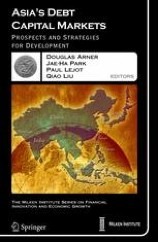
Asias debt capital markets : Prospects and strategies for development
The book has three parts. Part I describes the characteristics and historical origins of these markets. Part II examines the contemporary bond markets and shows how they contribute to general welfare, describes the relationship between the banking sector and capital markets, and assesses prospects for reform in Asia's governmental and corporate debt markets. Part III explains the micro-level impediments and obstacles that must be the first targets of any reform efforts, provides an appraisal of attempts at regional cooperation to stimulate structural reform, and lastly contributes proposals to accelerate the growth and reach of bond markets throughout Asia.
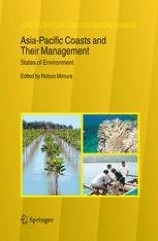
Asian-Pacific coasts and their management : States of environment
The Asia-Pacific region is home to the world’s largest region of coral reefs and mangroves. It accommodates two-thirds of the world’s human population and its economic activities have the highest growth rate in the world. Ongoing degradation of the environment, resulting from coastal development, deforestation, desertification and over-harvesting, are becoming a matter of great concern, as floods and droughts occur as a result of this degradation. Threats of global environmental change, such as climate change and sea-level rise, will exacerbate such problems. Therefore, appropriate policies and measures are needed for coastal management, to address both the local and global trends. This book gives an overview of the state-of-the-art understanding on the drivers, state, and responses to coastal environmental changes in the Asia-Pacific region. It provides excellent perspectives on current and anticipated environmental changes in the region’s coastal areas, to researchers, students, policy makers, coastal managers and other stakeholders.
Asian economy and finance : A post-crisis perspective
Topicality of Asian economy has refused to fade for almost four decades; if anything it has been levitating. The Asian economy has changed markedly since the economic and financial crisis of 1997-1998 and is continuing to evolve. As a scholarly subject matter, Asian economy has not stopped attracting academicians, policy mandarins, decision makers in the arena of business and students of Asian economy. The Asian crisis was a cataclysmic event for the region and brought to the surface several systemic limitations, like those in the financial sector, corporate governance, regulatory oversight, legal framework, and exchange rate management. Managers of Asian economy need to get to the bottom of these acutely problematical systemic issues. Additionally, Asian economies need to change with the demands of time and devise their post-crisis development strategy. Asia’s growth model, that served it so well for four decades, is overdue for renewal so that it can re-strengthen its bonds with the ever-evolving regional and global economic reality. The old growth model is likely to be less relevant and effective in the post-crisis future of the Asian economies. It is sure to run into the wall of diminishing returns.

Asian Digital Libraries. Looking Back 10 Years and Forging New Frontiers ; 10th International Conference on Asian Digital Libraries, ICADL 2007, Hanoi, Vietnam, December 10-13, 2007. Proceedings
The theme reflects upon the growth of the digital libraries community and explores new areas that the community could delve into in the coming years.
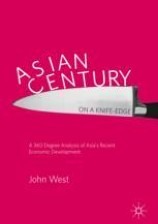
Asian century … on a knife-edge : A 360 degree analysis of Asia's recent economic development
This book delves into the widely held belief that the 21st century will be the "Asian Century" by examining the Asia's rapid economic development in the post-war era and the challenges it faces in forging ahead of world leaders in the West. The impact of the current turbulent global political climate on Asia is critically analyzed, employing a holistic and multidisciplinary approach, combining economic, social, political and geopolitical perspectives. Written in an accessible style, the book offers students, business, government, and civil society players powerful insights on Asia.

Arum palaestenium in cancer therapies
Cancer is a very complicated sequence of disease conditions progressing gradually with a generalized loss of growth control.1–3 There were only a few options of cancer treatment for patients for many decades which include surgery, radiation therapy, and chemotherapy as single treatments or in combination.4,5 But recently, many pathways involved in cancer therapy progression and how they can be targeted has improved dramatically, with combinatorial strategies, involving multiple targeted therapies or “traditional” chemotherapeutics, such as the taxanes and platinum compounds, being found to have a synergistic effect.6 New approaches, such as drugs, biological molecules, and immune-mediated therapies, are being used for treatment.
Aromatase Inhibitors
Many breast tumours are dependent upon oestrogen for their development and continued growth. Over the last 25 years hormone therapy has progressed from the irreversible destruction of endocrine glands to the use of drugs that reversibly suppress oestrogen synthesis or action. The inhibition of oestrogen synthesis is most readily achieved by inhibiting the final step in the pathway of oestrogen biosynthesis, the reaction which transforms androgens into oestrogens by creating an aromatic ring in the steroid molecule (hence the enzyme's trivial name, aromatase). Whereas the first aromatase inhibitors to be used therapeutically could be shown to produce drug-induced inhibition of the enzyme and therapeutic benefits in patients with breast cancer, they were not particularly potent and lacked specificity. However, second-generation drugs were developed and most recently third-generation inhibitors have evolved which possess remarkable specificity and potency. Initial results from clinical trials suggest that these agents will become the cornerstones of future endocrine therapy.
