



Page 16
Page 16

Color Atlas of Melanocytic Lesions of the Skin
The purpose is to teach dermatologists how to increase diagnostic accuracy of pigmented lesions, especially melanoma, by using the dermatoscope. … The audience is dermatologists and dermatology residents

Color Atlas of Histopathology of the Cervix Uteri
The new edition of this atlas integrates all significant advances made in the past 15 years in molecular pathology, tumor virology, and genetics of cervical cancer. It emphasizes the importance of these advances in facilitating its pathological diagnosis and in op- mizing clinical management and prognosis.

Collaborative Medicine Case Studies : Evidence in Practice
Collaborative Medicine Case Studies Collaborative Medicine Case Studies shows physicians and mental health practitioners working together across a variety of settings to assess and treat entrenched illnesses, combined physical and psychological conditions (back pain/panic attacks, diabetes/bipolar disorder), and cases that defy straightforward diagnosis. At the same time, the cases reflect the economic and financial realities of contemporary health care.

Cohen's Pathways of the Pulp
Full color illustrations and detailed radiographs guide readers through each step of endodontic care — from diagnosis and treatment planning to proven techniques for managing pulpal and periapical diseases. This new twelfth edition also boasts the very latest evidence-based research and techniques, reorganized and condensed chapters, plus other features designed to help you locate important information quickly and easily. Complete with access to Expert Consult, it’s everything you need to stay ahead in the field of endodontics.

Clinicopathological Correlation of Oral Diseases
Represents an innovative approach to the assessment and diagnosis of both common and relatively uncommon oral diseases. It introduces the reader to adopt a systematic, analytical approach to gather clinical information and understand the underlying pathological processes to arrive at an accurate diagnosis to help efficient management of diseases in the oral and maxillofacial region.

Clinician's guide to the diagnosis and management of tooth sensitivity
Tooth sensitivity, or dentin hypersensitivity, has a high prevalence among the general population and is a very common cause of visits to the dentist. This guide provides the clinician with the most important information required for the correct diagnosis and effective management of dentin hypersensitivity.

Clinical Ultrasound in Benign Proctology : 2-D and 3-D Anal, Vaginal and Transperineal Techniques
Anal US may provide the clinician with useful information for both classification, diagnosis and management of anorectal sepsis, anal incontinence and anorectal-perineal chronic pain. Almost any case presented in this Atlas shows both imaging and clinical pictures, thus allowing both the radiologist and the clinician to assess the reliability of the exam and the outcome of the selected treatment.

Clinical textbook of mood disorders
Mood disorders affect around 1 in 5 people, but the diagnosis and management of these conditions can be challenging. This practical handbook presents a comprehensive overview of these disorders, as well as detailed guidelines for their treatment. The handbook takes a transdisciplinary approach to mood disorders, focusing not only on the biological aspects but also on psychosocial features of importance for optimal diagnosis and management. Content covers nosological considerations, historical aspects, peculiarities along the lifespan, and the associations between mood disorders and other conditions, with a focus on their implications for the optimal management of patients. Practical and evidence-based information is discussed on the role of guidelines related to treatment in selected population groups, including youth, the elderly, and women. With a practical, reader-friendly approach, this book will be invaluable for mental health professionals involved in the treatment of patients with mood disorders, including trainees from different mental health areas.

Clinical text mining : Secondary use of electronic patient records
Describes the results of natural language processing and machine learning methods applied to clinical text from electronic patient records. It is divided into twelve chapters. Chapters 1-4 discuss the history and background of the original paper-based patient records, their purpose, and how they are written and structured. These initial chapters do not require any technical or medical background knowledge. The remaining eight chapters are more technical in nature and describe various medical classifications and terminologies such as ICD diagnosis codes, SNOMED CT, MeSH, UMLS, and ATC. Chapters 5-10 cover basic tools for natural language processing and information retrieval, and how to apply them to clinical text. The book’s closing chapters present a number of applications in clinical text mining and summarise the lessons learned from the previous chapters.

Clinical Pharmacology of Sleep
This volume covers the clinical and pharmacological treatment of several important sleep disorders such as insomnia, sleep apnea, narcolepsy, restless legs syndrome, and periodic limb movement syndrome. It further addresses the use of sleep medications in children, adolescents, and in the elderly. It offers a comprehensive overview of the currently available hypnotic medications and covers aspects of chronopharmacology and its implications for the pharmacology of sleep. It also reviews the basic science of sleep and sleep disorders, and thus the potential development of new pharmacological approaches. The book will be useful for physicians, psychopharmacologists, psychiatrists, sleep disorder specialists and other healthcare professionals such as nurses, social workers and graduate medical students.
Materials for medical applications : Principles and practices
Discusses advanced knowledge about the synthesis and application of materials in the medical field for diagnostic and therapeutic conditions. These materials have been extensively used in various biological and medical applications, especially in drug delivery, tumor screening, bioimaging, diagnosis, and therapies. Materials for Medical Applications provides comprehensive but concise information about materials and their medical applications. The readers will get information about the trends in materials and their medical applications, as well as current material-based products that are used in the medical field. The book also discusses how materials are tested in research laboratories, preclinical (animal) trials, and clinical (human) trials, and how material-based products go through various regulatory and safety phases before reaching patients. It also discusses topics such as materials delivery, imaging, and treatments for various diseases. It includes a chapter dedicated to regulatory guidelines and policies in the application of nanomaterials and will include current clinical trial information on the materials. Finally, the book has topics such as health safety, toxicity, dosages, and long-term implications of materials.

Markell & Voge's Medical Parasitology
An updated and fresh look that highlights the comprehensive material students have trusted for over 40 years. Completely redrawn line drawings and improved halftones provide visual examples related directly to the textual material. The content explores the etiologic agents of human disease belonging to the animal kingdom: protozoa, helminths (worms), and arthropods (insects and spiders), all of which are a significant cause of, or link to illness encountered both in tropical and temperate environments.
Manual of Diagnostic Ultrasound in Infectious Tropical Diseases
This manual is intended to fill a gap in the range of books on ultrasound diagnosis, concentrating exclusively on the diagnosis of infectious and tropical diseases. The book starts with a short introduction to ultrasound diagnosis. The main part describes and discusses the organ-related changes that can be detected with ultrasound in infectious and inflammatory diseases. The infectious and parasitic diseases that can successfully be diagnosed with ultrasound are presented in more detail. The important potential of interventional ultrasound diagnosis and therapy in infectious diseases is described.
Manual of clinical procedures in dentistry
Explains the core procedures in dentistry, how to do them, and the rationale that underpins them. Full of useful and easy-to-access information, it acts as a compendium of practical procedures in primary dental care, supporting students and dental practitioners in their daily professional and academic lives. This manual is a complete, practical guide to the delivery of effective, state of the art oral healthcare—the ‘what, when, and how’ of clinical practice. It compiles chapters written by expert clinicians on topics such as dental imaging, the management of dental pain, conscious sedation, operative dentistry, implant dentistry, oral medicine and surgery, paediatric dentistry, periodontics, prosthodontics, special care dentistry, dental trauma, aesthetic dentistry, and much more.
Manual of cardiovascular medicine
Cardiovascular medicine has experienced an unforeseen and impressive development over the last fifty years, particularly recently, as new diagnostic innovative medications have been developed, as well as interventional and surgical procedures to treat patients with cardiac disease. Thus, the number of cardiovascular diagnoses, the number of diagnostic modalities, as well as the number of treatment options has expanded enormously and made cardiovascular medicine one of the biggest specialties in medicine. This cardiovascular manual focuses on diagnostic algorithms and therapeutic recommendations according to European Guidelines. It encompasses all aspects of cardiovascular medicine from hypertension to transplantation; from imaging to intervention; and from pharmacotherapy to surgical procedures.
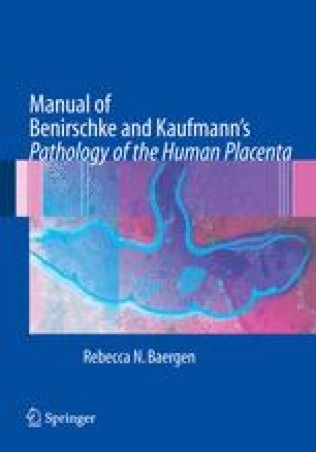
Manual of Benirschke and Kaufmanns Pathology of the Human Placenta
Benirschke and Kaufmann's Pathology of the Human Placenta has long been regarded as the gold standard in the field. It is comprehensive and thorough and contains the detail necessary for those in the subspecialties of placental, perinatal and pediatric pathology. However, placentas are relatively common specimens and are not examined primarily by specialists in the field, but by general pathologists. Thus, there is a need for a more practical and concise manual that can be used by pathology trainees and generalists in their daily work. Manual of Benirschke and Kaufmann's Pathology of the Human Placenta will fill that need. The Manual is a practical, user-friendly guidebook for the general pathologist and pathologist in training for everyday, bench-side use. Organized in 27 chapters, the book will discuss placental development, general features, approach to the specimen by macroscopic and microscopic evaluation, all aspects of placental abnormalities and lesions, disease processes and the placenta, legal aspects of the placental examination, future directions and much more. The sections on macroscopic and microscopic evaluations feature quick-reference tables that allow the reader to identify abnormalities, learn the situations where they occur, and refer back to the text for in-depth discussions. Each chapter will end with selected readings from Pathology of the Human Placenta for more detailed discussions, classic recommended readings, as well as an up-to-date bibliography of current literature. The manual features over 444 illustrations, more than 100 of them in full-color. A must-have for every pathologist and pathology resident.
Management of the Addicted Patient in Primary Care
لThe text is logically organized and key information is easily accessible. The introductory section offers the reader important background and rationale for evaluating and treating addiction in primary care. Following a useful presentation of addiction "basics" (i.e., definitions, neurobiology, genetics, and the disease model), the majority of the book focuses on helping the physician gain insight and develop practical skills that can be readily implemented. A wealth of clinical assessment tools is provided, and the underlying psychosocial processes common to all forms of addiction are discussed. Both pharmacologic interventions and nonpharmalogic modalities are clearly outlined. Of particular note are specific cognitive-behavioral and motivational strategies that can be administered in an office-based setting. The role of community-based recovery support systems is considered as well. Since a complete understanding of why and when to refer is critical to the management of this often life-threatening condition, criteria for referral are detailed. Bulleted clinical "pearls" further aid the reader in gaining insight into treating this difficult patient population.
Management of Prader-Willi Syndrome
Management of Prader-Willi Syndrome brings together the contributions of professionals with considerable expertise in diagnosis and management of PWS. Clinical, social, family, and community issues are explored and management strategies identified. The text presents historical, medical, and genetic information to orient the reader. The major portion deals with pragmatic guidelines, rather than research and diagnosis, and is directed to health and educational specialists in academic, clinical, and community settings. This manual is endorsed by The Prader-Willi Syndrome Association, which is recognized world-wide.
Management of Heart Failure ; Vol.2 : Surgical
Management of Heart Failure has been conceived as a rapid but comprehensive review for practitioners of all persuasions involved in the management of patients with heart failure. Heart failure is a problem of epidemic proportions in all parts of the world. State of the art treatment may not be accessible to all, but simply creating an awareness of simple methods of diagnosis and treatment would assist in promoting a better global response to this epidemic. This practical volume, written by a panel of world-renown cardiology experts, focuses on the surgical management of heart failure. Surgery for heart failure is an evolving and new area in cardiac surgery with many exciting developments.

Management of free distal extension by partial prosthesis
The study highlights that removable partial dentures remain a fundamental treatment option for managing partial edentulism, especially when implants or fixed prostheses are not feasible. Successful outcomes depend on accurate diagnosis, thorough oral preparation, sound prosthesis design, continuous patient education, and regular follow-up.
