



Page 15
Page 15

Efficient Screening Techniques to Identify Mutants with TR4 Resistance in Banana : Protocols
The Joint FAO/IAEA Centre of Nuclear Techniques in Food and Agriculture implemented a Coordinated Research Project (CRP) ‘Efficient Screening Techniques to Identify Mutants with Disease Resistance for Coffee and Banana” (2015-2020). This CRP brought together experts from Asia, Europe and Africa in addition to experts of the Joint FAO/IAEA Centre to develop resistance against TR4 through mutation-assisted breeding. Induced mutagenesis is particularly attractive in case of banana since most cultivated bananas are seedless, thus hampering conventional cross breeding
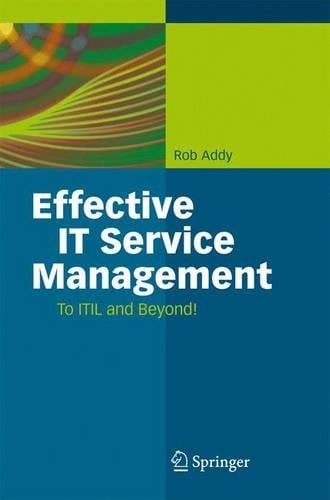
Effective IT Service Management : to ITIL and beyond!
IT service management (ITSM) is the group of processes and functions that oil the wheels of the IT machine. Without ITSM, every IT project and system would deteriorate over time until failure. ITIL is the recognized best-practice standard for ITSM, and has been around since the late 1980s, with ITIL version 3 published just recently. However, many of today’s IT problems have been around for just as long - so in order to manage IT effectively, organizations must go beyond the ITIL framework.

Education and Development in Colonial and Postcolonial Africa : Policies, Paradigms, and Entanglements, 1890s–1980s
This book offers an analysis of the entangled histories of education and development in twentieth-century Africa. It deals with the plurality of actors that competed and collaborated to formulate educational and developmental paradigms and projects

Economic evaluations in exploration
This textbook, now in its second English edition, is originally a translation of the G- man textbook “Rechnen für Lagerstättenkundler und Rohstoffwirtschaftler, Teil 1”, also translated into the Chinese and Russian languages. Compared to the previous English and German editions the chapters have been updated with new examples and in many cases amended. The textbook is intended for the economic geologist who deals with the evaluation of deposits at an early stage of development. Once an exploration project has reached the feasibility stage, the exact calculations that are necessary for a comprehensive te- nical and economic assessment will be performed by a team of geologists, mining engineers, metallurgists, and economists. In the early stages of exploration, however, any evaluator of deposits must be able to cover the whole spectrum himself. Since only order of magnitude parameters are available at this early stage, the c- culations can only yield order of magnitude results.

Economic Analysis of Information System Investment in Banking Industry
Explains in reahty, examines theoretically, and analyzes statistically information system investment in the banking industry with regard to the process of the information technology revolution. This kind of comprehensive research on the banking industry is the first in the world. It could be seen as an application study for Japanese financial deregulation after 1997. However, our project, the Workshop of Information System Investment, is a theoretical research venture, consisting originally, when it began in 1994, of economists and computer scientists. It aimed to measure the effect of com puter hardware and software on the modern economy, based on the microdata of each firm, and to extend the frontiers of economic science. It was, coin- dentally, the time when this project began full-scale operation, in July 1997, that the voluntary closure of Yamaichi Securities was decided. The failure of the Hokkaido Takushoku Bank was disclosed in November of the same year, and the breakdown, temporary nationalization, buying out, and mergers of several banks succeeded one another. Our research therefore suddenly got into the social spotlight on the application stage. Part I is the first history and strategic guidelines of information systems in the banking industry. Part II summarizes the economic analyses of informa tion system investment in the United States, Europe, and Japan. These parts are foundations for the statistical analyses in Part III.

Ecological risks associated with the destruction of chemical weapons ; Proceedings of the NATO ARW on ecological risks associated with the destruction of chemical weapons, Lüneburg, Germany, from 22-26 October 2003
Chemical Weapons Convention after the First Review Conference -- Implementation of Russia’s Obligation to Destroy chemical Weapons in the Udmurt Republic -- The CWC after the Review Conference . Prof. Dr. Vladimir Mikhailovitsh Kolodkin , Prof. Dr.-Ing. Wolfgang Ruck 1 Institute of Natural and Technogenic Disasters, Udmurt State University, Izhevsk (Russia), 2 Institute of Ecology and Environmental Chemistry, University Lüneburg (Germany) During the Cold War a whole arsenal of deadly chemical weapons was allowed to build up on both sides of the ideological divide. Happily, today the problems are reversed. Expertise is now required in the field of safe and environment-friendly disposal of chemical weapons and cleaning up of contaminated sites all around the world, but not least in the ex-Soviet-led countries. In all, there were 57 participants, of which 11 dispatched from the TACIS project “The development of the chemical weapons” facility at the detached plant No 4 of OAO Khimprom, Novocheboksarsk.

E-Business@Print : Internet-based services and processes
The Internet has opened up exciting new opportunities for print media companies, enabling information to be processed for both paper and online output. It also offers new possibilities for print media companies to work increasingly closely with customers and production partners. The author provides a comprehensive overview of the new services that are now available and the new processes that the Internet enables. The reader is systematically guided through the various specialist terms, and numerous examples are used to illustrate possible applications, e.g. online editing systems, Web-based project management tools and online tracking of print jobs.

Earthquake disaster simulation of civil infrastructures : From tall buildings to urban areas
Covers a range of numerical modeling approaches, higher performance computation methods, and high fidelity visualization techniques for earthquake disaster simulation of tall buildings and urban areas. It also demonstrates successful engineering applications of the proposed methodologies to typical landmark projects (e.g., Shanghai Tower and CITIC Tower, two of the world's tallest buildings; Beijing CBD and San Francisco Bay Area).

Earthquake alert with smartwatch = تنبيه الزلازل باستخدام الساعة الذكية
After the recent events and earthquakes that affected the region, resulting in the deaths of many individuals due to the lack of timely emergency response, the idea for this project emerged Earthquake Alert with Smartwatch. Initially, our application gathers information about the user, such as age, family members, and any existing medical conditions. In the event of an earthquake, the application sends an alert to the user. It receives earthquake information, such as ‘magnitude, time, location…’ from United States Geological Survey “USGS” through an API. If the user is within the geographical area affected by the earthquake, the application will assist the Smartwatch in calculating vital signs such as ‘heart rate and blood pressure’. Additionally, there is another artificial intelligence model that receives the user's audio recordings and converts them into written texts. All this information, along with the user's geographical location, will be sent to the nearest emergency point for the purpose of aiding those individuals trapped under the rubble.

Earth System Science in the Anthropocene : Emerging Issues and Problems
Earth System Science in the Anthropocene aims to provide an in-depth perspective and update on special topics in Global Environmental Change in relation to Human Security. It gives an overview on the new Joint Projects of the four International Global Change Programmmes and on research efforts in Germany. It is also an up-to-date report on emerging necessities in Global Environmental Change research as well as suggestions for its future development.

Earth Structures : In Transport, Water and Environmental Engineering
This book describes the principles of working with soil as a construction material, including two basic ways of treating it: geosynthetics and stabilization. The book discusses the design logic and ways to control Earth Structures, which differ significantly from other construction materials. Building with Earth involves greater uncertainty and risk, which means that there is a need for better design detailing and improvement in the quality of financial calculations. The general part of the book gives a detailed description of the principles of limit states according to Eurocode 7, after which geotechnical design is also described. Subsequent chapters concentrate on earth structures for transport, water, and environmental projects. The chapter on Earth Structures in transport engineering presents detailed coverage of limit states of stability and deformation. Earth Structures in water engineering prioritizes the limit state of internal erosion. Earth Structures in environmental engineering describes new designs, in which part of the structure is created from non-standard materials which are usually susceptible to internal collapse, double porosity, unsaturation, etc. It also focuses on protecting the surrounding environment from contamination.

Early Nutrition and its Later Consequences : New Opportunities; Perinatal Programming of Adult Health - EC Supported Research
Health problems such as hypertension, tendency to diabetes, obesity, blood lipids, vascular disease, bone health, behaviour and learning and longevity may be ‘imprinted’ during early life. This process is defined as ‘programming’ whereby a nutritional stimulus operating at a critical, sensitive period of pre and postnatal life imprints permanent effects on the structure, physiology and metabolism. For this reason, academics and industry set-up the EC supported Scientific Workshop -Early Nutrition and its Later Consequences: New Opportunities. The prime objective of the Workshop was to generate a sound exchange of the latest scientific developments within the field of early nutrition to look for opportunities for new preventive health concepts. Further, a closer look was taken at the development of food applications which could provide (future) mothers and infants with improved nutrition that will ultimately lead to better future health. The Workshop was organised by the Dept. of Pediatrics, University of Munich, Germany in collaboration with the Danone Institutes and the Infant Nutrition Cluster, a collaboration of three large research projects funded by the EU.

Dynamics AX : A guide to microsoft axapta
The world’s leading Axapta 3.0 experts will take you from Axapta novice to pro in this book. This authoritative and comprehensive guide walks you gently through the bulk of what you need to know to productively apply the system in the real worldwith real data, sizing guidelines, deployment architectures, and code. By the book’s end, you will have acquired practical hands-on experience. You’ll be able to get Axapta 3.0 up and running, and identify gaps between the out-of-the-box product and your actual business needs. You’ll also know how to automate real-world business functions.

Dynamic General Equilibrium Modelling : Computational Methods and Applications
Modern business cycle theory and growth theory uses stochastic dynamic general equilibrium models. Many mathematical tools are needed to solve these models. The book presents various methods for computing the dynamics of general equilibrium models. In part I, the representative-agent stochastic growth model is solved with the help of value function iteration, linear and linear quadratic approximation methods, parameterised expectations and projection methods. In order to apply these methods, fundamentals from numerical analysis are reviewed in detail. Part II discusses methods for solving heterogeneous-agent economies. In such economies, the distribution of the individual state variables is endogenous. This part of the book also serves as an introduction to the modern theory of distribution economics. Applications include the dynamics of the income distribution over the business cycle or the overlapping-generations model.

Durability of reinforced concrete structures
Reinforced concrete structures corrode as they age, with significant financial implications, but it is not immediately clear why some are more durable than others. This book looks at the mechanisms for corrosion and how corrosion engineering can be used for these problems to be minimized in future projects. Several different examples of reinforced concrete structures with corrosion problems are described and the various life enhancement solutions considered and applied are discussed. The book includes a chapter on the effectiveness of corrosion monitoring techniques and questions why the reality is at odds with current theory and standards.

Drug discovery with privileged building Blocks : Tactics in medicinal chemistry
Drug Discovery with Privileged Building Blocks traces back PharmaBlock’s founding philosophy of designing privileged building blocks. High-quality building blocks are crucial not only to biological activities of different molecules but also to ADMET properties, which eventually will impact the success rate of drug discovery projects. A thorough study of how building blocks perform in drug molecules and a regular analysis of new building block structures in the latest researches have proven to be a fruitful strategy to generate novel building blocks. Using this strategy, PharmaBlock has supplied the drug industry with a great number of building blocks, which are increasingly being adopted by drug hunters, and these are identified in this book.

Drousi: A private lessons management system
Private teaching is considered to be an effective way to increase academic achievement of students and it seen as being a supplementary education, so it has become very common all around the world, however, previous studies have come to different conclusions regarding its necessity, so Drousi application had been made ,it’s a user-friendly mobile application to manage and arrange private lessons, and There has never been a better time to become a private tutor, as class sizes in schools increase, this can result in teachers being unable to give their undivided attention to students, and this document lays out a project plan for the development of “Drousi”, The plan will include a summary of the system functionality and how it implemented.

Drawing the Ground - Landscape Urbanism Today : The Work of Palmbout Urban Landscapes
Documents some fifteen projects organized into six thematic blocks, including such extensive projects as Amsterdam Ijburg, a design for an urban extension to Amsterdam with a total area of 450 hectares, 18,000 residences, 100,000 square meters of office space, 30,000 square meters of stores, and other facilities, and Maastricht Belvedere, a restructuring of 280 hectares of a former industrial site with 4,000 residences, 100,000 square meters of office space, parking lots, and a vehicle bridge.

Drawing for Interior Designers
The perfect guide to producing successful hand drawings of interior designs. Sitting quietly at home, sketchbook in hand, is the ideal way to tackle drawing. In fact, your home is an absolute mine of subjects to draw. Perhaps you already have a plan in your head for a makeover or conversion? This book is filled with practical principles which will help you put your plans down on paper and better express your ideas, for no serious project gets made without a progressive plan. Teaches you some tricks of the trade and conventions which are part of an architect's know-how and which will help you with ideas. Packed with beautiful sketches, provides advice from drawing perspective, floor plans and furniture to rendering rooms and taking down a partition wall.

Drawing architecture and the Urban
Provides an instrumental approach to drawing, especially computer-generated drawings; it outlines how drawings should be used to convey clear and analytical information in the process of design, as well as the communication and discussion of a project. In depth examples are provided how to communicate effectively. The final section demonstrates how to transform case-studies, directly connecting an analytical approach with the design process.
