



Page 15
Page 15

Computational Mechanics of the Classical Guitar
This book performs a state-of-the-art finite-difference calculation of the complete geometry of the classical guitar as a time-stepping application. It provides insight into the overall behaviour as well as the finite structure mechanisms of this musical instrument. Fundamental problems of coupling, nonlinearities, noise or time reversion, complex modelling solutions, and modern signal processing tools are discussed. Also musicologists, musicians or instrument builders can find explanations and may also be inspired by aspects of musical timbre, the sounding and time-dependent qualities of the different guitar parts. The work helps to suggest new geometrical and timbral solutions in modern guitar performance.

Computational Intelligence, Theory and Applications ; International Conference 9th Fuzzy Days in Dortmund, Germany, Sept. 18-20, 2006 Proceedings
This book constitutes the refereed proceedings of the 9th Dortmund Fuzzy Days, held in Dortmund, Germany, 2006. The Fuzzy Days conference has established itself as an international forum for the discussion of new results in the field of Computational Intelligence. All the papers had to undergo a thorough review guaranteeing a solid quality of the programme. The papers are devoted to foundational and practical issues in fuzzy systems, neural networks, evolutionary algorithms, and machine learning and thus cover the whole range of computational intelligence.

Computational intelligence for modelling and prediction
This book contains recent advances in Computational Intelligence methods for modeling, optimization and prediction and covers a large number of applications. The book presents new Computational Intelligence theory and methods for modeling and prediction. The range of the various applications is captured with 5 chapters in image processing, 2 chapters in audio processing, 3 chapters in commerce and finance, 2 chapters in communication networks and 6 chapters containing other applications.

Computational Fluid Dynamics for Wind Engineering
Covers topics such as: Fluid mechanics, turbulence in fluid mechanics, turbulence modelling, and mathematical modelling of wind engineering problems The finite difference method for CFD, solutions to the incompressible Navier-Stokes equations, visualization, and animation in CFD, and the application of CFD to building and bridge aerodynamics How to compare CFD analysis with wind tunnel measurements, field measurements, and the ASCE-7 pressure coefficients Wind effects and strain on large structures

Computational Fluid Dynamics 2004 ; Proceedings of the Third International Conference on Computational Fluid Dynamics, ICCFD3, Toronto, 12-16 July 2004
The International Conference on Computational Fluid Dynamics (ICCFD) is the merger of the International Conference on Numerical Methods in Fluid Dynamics (ICNMFD) and the International Symposium on Computational Fluid Dynamics (ISCFD). It is held every two years and brings together physicists, mathematicians and engineers to review and share recent advances in mathematical and computational techniques for modeling fluid dynamics. The proceedings of the 2004 conference held in Toronto, Canada, contain a selection of refereed contributions and are meant to serve as a source of reference for all those interested in the state of the art in computational fluid dynamics.

Computational Engineering : Introduction to Numerical Methods
This book is an introduction to modern numerical methods in engineering. It covers applications in fluid mechanics, structural mechanics, and heat transfer as the most relevant fields for engineering disciplines such as computational engineering, scientific computing, mechanical engineering as well as chemical and civil engineering. The content covers all aspects in the interdisciplinary field which are essential for an ''up-to-date'' engineer.

CMOS single chip fast frequency hopping synthesizers for Wireless multi-gigahertz applications : Design methodology, analysis, and implementation
Describes an efficient design and characterization methodology that has been developed to study loop trade-offs in both open and close loop modelling techniques. This is based on a simulation platform that incorporates both behavioral models and measured/simulated sub-blocks of the chosen frequency synthesizer. The platform predicts accurately the phase noise, spurious and switching performance of the final design. Therefore excellent phase noise and spurious performance can be achieved while meeting all the specified requirements. The design methodology reduces the need for silicon re-spin enabling circuit designers to directly meet cost, performance and schedule milestones. The developed knowledge and techniques have been used in the successful design and implementation of two high speed multi-mode fractional-N frequency synthesizers for the IEEE 801.11a/b/g standards. Both synthesizer designs are described in details.

CMOS Hotplate Chemical Microsensors
Covers all aspects of successful sensor prototyping: theory of transducer modelling, microelectronics design considerations, system design issues, and issues related to system and device microfabrication, packaging, and testing. A variety of different hotplates for different operation conditions is detailed and a family of metal-oxide-covered microhotplate-based microsensor systems with increasing complexity is presented. These systems belong to a new generation of chemical microsensors and represent examples of the successful integration of nanomaterials, microtechnology and microelectronics.The book provides students, scientists and engineers with an accessible introduction to the field of microhotplate-based chemical sensing, with all the necessary fundamental knowledge included. Beyond that, it also provides detailed information on all important issues concerning complex high-performance CMOS chemical microsensor systems; hence it will also be valuable to experts already familiar with the field.
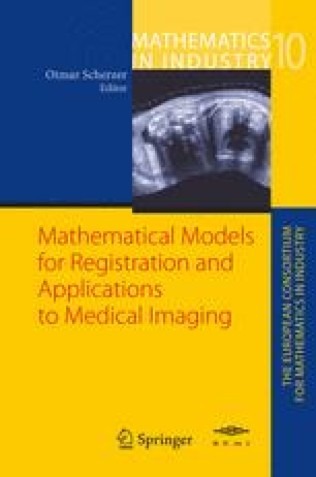
Mathematical Models for Registration and Applications to Medical Imaging
Image registration is an emerging topic in image processing with many applications in medical imaging, picture and movie processing. The classical problem of image registration is concerned with ?nding an appropriate transformation between two data sets. This fuzzy de?nition of registration requires a mathematical modeling and in particular a mathematical speci?cation of the terms appropriate transformations and correlation between data sets. Depending on the type of application, typically Euler, rigid, plastic, elastic deformations are considered. The variety of similarity p measures ranges from a simpleL distance between the pixel values of the data to mutual information or entropy distances. This goal of this book is to highlight by some experts in industry and medicine relevant and emerging image registration applications and to show new emerging mathematical technologies in these areas. Currently, many registration application are solved based on variational prin- ple requiring sophisticated analysis, such as calculus of variations and the theory of partial differential equations, to name but a few. Due to the numerical compl- ity of registration problems ef?cient numerical realization are required. Concepts like multi-level solver for partial differential equations, non-convex optimization, and so on play an important role. Mathematical and numerical issues in the area of registration are discussed by some of the experts in this volume.

Mathematical Modelling of Biosystems
This volume is an interdisciplinary book, which introduces, in a very readable way, state of the art research in the fundamental topics of mathematical modelling of Biosystems. These topics include: the study of Biological Growth and its mechanisms, the coupling of pattern to form via theorems of Differential Geometry, the human immunodeficiency virus dynamics, the inverse folding problem and the possibility of analysing true protein backbone flexibility, the Biclustering techniques for the organization of microarray data, the analytical approach to the modelling of biomolecular structure via Steiner trees, the action of biocides on resistance mechanisms of mutated and phenotypic bacteria strains, a description of the fundamental processes for the distribution and abundances of species towards a unified theory of Ecology, and a special introduction to Protein Physics aiming to explain the all-or-none first order phase transitions from native to denatured states.
Mathematical Modelling for Sustainable Development
Mathematics needs Sustainable Development. When science was gradually reinvented in European medieval societies, it was legitimised as contributing to the disclosure of God’s divine creation. The conflicts that emerged became well known as a result of the clash between Galileo and the Church. Science found a new legitimacy through recognition that it was a powerful force against superstition. In the Enlightenment the argument was pushed forward by attributing Progress to the advancement of science: science could produce a better world by promoting rationality. In our modern society, science has become intimately linked to technology. Science for its own sake unfortunately rarely has positive outcomes in terms of research grant applications. Meanwhile, science and technology, and the progress they are supposed to produce, meet with wide scale scepticism. We all know of the current global problems: climate change, resource depletion, a thinning ozone layer, space debris, declining biodiversity, malnutrition, dying ecosystems, global inequity, and the risk of unprecedented nuclear wars

Mathematical modeling of the human brain : From magnetic resonance images to finite element simulation
This book bridges common tools in medical imaging and neuroscience with the numerical solution of brain modelling PDEs. The connection between these areas is established through the use of two existing tools, FreeSurfer and FEniCS, and one novel tool, the SVM-Tk, developed for this book. The reader will learn the basics of magnetic resonance imaging and quickly proceed to generating their first FEniCS brain meshes from T1-weighted images.
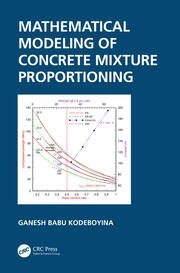
Mathematical Modeling of Concrete Mixture Proportioning
It puts together an understanding of the appropriate principles of ensuring performance and sustainability of concrete. Broadly subdivided into three parts, first part contains the fundamental aspects introducing the constituent materials, the concepts of concrete mixture designs and the mathematical formulations of the various parameters involved in these designs. The second part is dedicated to discussing approaches and recommendations of American, British and European bodies related to mathematical modelling. Lastly, it discusses perceptions and prescriptions towards both the performance assessment and insurance of the resulting concrete compositions.
Mathematical Methods for Mechanics : A Handbook with MATLAB Experiments
The interaction between mathematics and mechanics is a never ending source of new developments. Today, challenging problems like space flight, gyroscope motions and tidal currents, can be studied on a laptop, feats that people still in the 1950’s dreamed of accomplishing. The present textbook addresses such problems and moreover, a wide-ranging spectrum of topics from bifurcation theory, optimization and control to rigid-body motion and continuum mechanics of elastic bodies and fluids. It fully encompasses the provision of mathematical tools up to their technical application. Because verifiability is a main element of science and numerical mathematics remain lackluster without demonstrations, a portion of the book is dedicated purely to computations.

Mathematical Methods for Engineers and Geoscientists
This book introduces and explains classical and modern mathematical procedures as applied to the real problems confronting engineers and geoscientists. Written in a manner that is understandable for students across the breadth of their studies, it lays out the foundations for mastering difficult and sometimes confusing mathematical methods.

Mathematical methods and modelling in hydrocarbon exploration and production
Hydrocarbon exploration and production incorporate great technology challenges for the oil and gas industry. In order to meet the world's future demand for oil and gas, further technological advance is needed, which in turn requires research across multiple disciplines, including mathematics, geophysics, geology, petroleum engineering, signal processing, and computer science. This book addresses important aspects and fundamental concepts in hydrocarbon exploration and production. Moreover, new developments and recent advances in the relevant research areas are discussed, whereby special emphasis is placed on mathematical methods and modelling. The book reflects the multi-disciplinary character of the hydrocarbon production workflow, ranging from seismic data imaging, seismic analysis and interpretation and geological model building, to numerical reservoir simulation. Various challenges concerning the production workflow are discussed in detail.

Math Everywhere : Deterministic and Stochastic Modelling in Biomedicine, Economics and Industry
These proceedings are reporting on the conference ''Math Everywhere", a successful event celebrating a leading scientist, promoting ideas he pursued and sharing the open atmosphere he is known for. The areas of the contributions are the following , Deterministic and Stochastic Systems. Mathematical Problems in Biology, Medicine and Ecology, Mathematical Problems in Industry and Economics.
Materials for Tomorrow : Theory, Experiments and Modelling
This book contains six chapters on central topics in materials science. Each is written by specialists in the field, and gives a state-of-the-art presentation of the subject for graduate students and scientists not necessarily working in that field. Computer simulations of new materials, theory and experimental work are all extensively discussed. As nanomaterials are of great current interest, most of the topics discussed have a bearing on nanomaterials and nanodevices. In addition to inorganic nanotubes, metallic nanocrystals, electronic nanodevices, spintronics and interfaces on an atomic scale, the text also presents computer simulations on one of the less well understood fields in solid-state physics and materials science: glasses and undercooled fluids.

Material Inhomogeneities and their Evolution : A Geometric Approach
The first part of the book deals with the geometrical description of uniform bodies and their homogeneity (i.e., integrability) conditions. In the second part, a theory of material evolution is developed and its relevance in various applied contexts discussed. The necessary geometrical notions are introduced as needed in the first two parts but often without due attention to an uncompromising mathematical rigour. This task is left for the third part of the book, which is a highly technical compendium of those concepts of modern differential geometry that are invoked in the first two parts (differentiable manifolds, Lie groups, jets, principal fibre bundles, G-structures, connections, frame bundles, integrable prolongations, groupoids, etc.).

Martingale Methods in Financial Modelling
This book provides a comprehensive, self-contained and up-to-date treatment of the main topics in the theory of option pricing. The first part of the text starts with discrete-time models of financial markets, including the Cox-Ross-Rubinstein binomial model. The passage from discrete- to continuous-time models, done in the Black-Scholes model setting, assumes familiarity with basic ideas and results from stochastic calculus. However, an Appendix containing all the necessary results is included. This model setting is later generalized to cover standard and exotic options involving several assets and/or currencies. An outline of the general theory of arbitrage pricing is presented. The second part of the text is devoted to the term structure modelling and the pricing of interest-rate derivatives. The main emphasis is on models that can be made consistent with market pricing practice.
