



Page 14
Page 14

Human Cytomegalovirus
The golden age of cytomegalovirus research was ushered in during the late 1970s and early 1980s by a set of powerful new technologies that included restriction enzymes, DNA cloning, DNA sequencing, and open reading frame prediction. The genetic manipulation and propagation of novel CMV strains was accelerated with the app- cation of bacterial artificial chromosome technology. Today, we still struggle to understand the full spectrum of disease associated with human CMV. To the molecular biologist, CMV is a master of regulation in the eukaryotic cell where it either replicates or remains latent. To the immunologist, CMV is a master of immune evasion with tools to escape both the innate and acquired immune responses. The use of animal models with non-human CMVs has become significantly more sophisticated and tied to a more certain understanding of the interrelationships of non-human and human CMV genes.

Human Cell Culture ; Vol. VI : Embryonic Stem Cells
If you wish to grow or characterize embryonic stem cells or persuade them to differentiate into a particular cell type, then this book contains information that is vital to your success. The aim is to provide clear simple instructions and protocols for growing, maintaining and characterizing embryonic stem cells and details of the various methods used to make stem cells differentiate into specific cell types.

Human antibody therapeutics for viral disease
The articles in this volume are definitive and comprehensive reviews written by experts who have sought to define the principles of viral neutralization by human antibodies. They explore and anticipate the obstacles and opportunities that will be encountered as the power of human antibodies is harnessed to address the vast, un-met need for effective anti-viral therapeutics.

Human and Animal Relationships
Pathogenic fungi are widely distributed and can infect many organisms, particularly humans, but also other vertebrates and insects. Due to a growing number of fungal infections, there is an increasing need to understand the interaction of pathogenic fungi with their hosts. This second completely updated and revised edition of Volume VI of The Mycota consists of state of the art reviews written by experts in the field, covering three major areas of this rapidly developing field. In the first part the current understanding of pathogenic fungi and the physiological reactions relevant for the pathogen - host interaction are elucidated. The second part describes novel technologies for the identification of proteins, virulence factors and mechanisms central to the host - pathogen interaction. The third part deals with the characterization of the host response towards pathogenic fungi and addresses timely clinical aspects.

Hox Gene Expression
The study of Hox genes is crucial not only in exploring the enigma of homeosis but also in understanding normal development at the fundamental molecular level. "Hox Gene Expression" starts with the amazing discovery of the homeobox twenty-three years ago and follows the exciting path thereafter of a series of breakthroughs in Genetics, Development and Evolution. It deals with homeotic genes- their evolution, structure, normal and abnormal function. Researchers and graduate students in Biology and Medicine will benefit from this integrated overview of Hox gene activities.

How the immune system recognizes self and nonself : Immunoreceptors and their signaling
This brain function must have been particularly important for most animals to protect their lives from enemies and for species to survive through evolution. Similarly, higher organisms have also acquired their immune system through evolution that discriminates nonself pathogens and self-body to protect their lives from pathogens such as bacteria or viruses. The brain system may distinguish integrated images of self and nonself created from many inputs, such as vision, sound, smell, and others. The immune system recognizes and distinguishes a variety of structural features of self and nonself components. The latter actually include almost everything but self.

Hot Topics in Infection and Immunity in Children IV
Hot Topics in Infection and Immunity in Children IV contains chapters based on lectures given by speakers at the “Infection and Immunity in Children” course, held in June 2006 at Keble College, Oxford. It was the fourth annual course of this name and this is the fourth book in the series as well. Together the courses and books have become important components of the training available to paediatricians with an interest in this specialty and have become increasingly popular each year. This book covers topics in infectious diseases in children and is intended for Pediatric Infectious Disease trainees, trainers, and all those who manage children with infections.
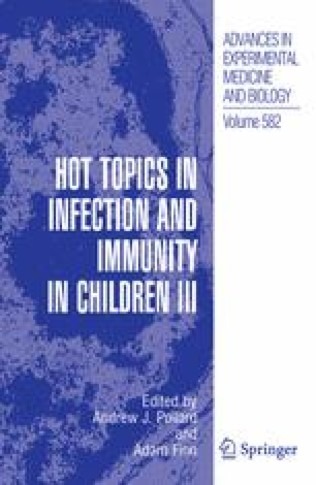
Hot Topics in Infection and Immunity in Children III
This book is based on the course “Infection and Immunity in Children 2005” which was held at St Catherine’s College Oxford, UK in June 2005. This is the third book in this series covering topics in infection and immunity during childhood and based on the Oxford courses. These courses, and their companion books, are aimed at encouraging excellence in clinical practice and raising the pro? le of paediatric infectious disease with a particular eye on the needs of trainees in the specialty. At the time of writing a fourth course is already at an advanced stage of planning for June 2006 with a completely new programme once again. You will ? nd in this book a wealth of state of the art information about various aspects of paediatric infectious diseases written by leading authorities in the ? eld. We hope this volume will bring new insights into the management of children with infectious diseases and improve the health of children.

Hot Topics in Infection and Immunity in Children II
Hot Topics in Infection and Immunity II provides a current view from leading experts concerning the hottest topics of concern to clinicians caring for children with infections. The book brings together a collection of manuscripts from a faculty of authors of international standing who contributed to a course in Paediatric Infection and Immunity in Oxford, UK in June 2004.

Hormones, metabolism and the benefits of exercise
The world is faced with an epidemic of metabolic diseases such as obesity and type 2 diabetes. This is due to changes in dietary habits and the decrease in physical activity. Exercise is usually part of the prescription, the first line of defense, to prevent or treat metabolic disorders. However, we are still learning how and why exercise provides metabolic benefits in human health. This open access volume focuses on the cellular and molecular pathways that link exercise, muscle biology, hormones and metabolism. This will include novel “myokines” that might act as new therapeutic agents in the future.

Hormonal control of cell cycle
This volume reflects the proceedings of an International Workshop held in Paris in December 2006. The aim of the meeting was to undertake a high level of scholarly exchange between experts in cell biology, oncology and endocrinology interested in cell cycle control. The topics covered ranged from fundamental studies of DNA replication,chromosomal and nuclear function through growth factor control of endocrine tumor initiation and progression.

Hormonal carcinogenesis V
Information gathered from cell-free systems, cell cultures, animal models, and human studies, together will (1) provide important insights to our understanding of hormonal cancer causation, development, and prevention; (2) be the primary objective of these Symposia.

Hominin environments in the East African Pliocene : An assessment of the Faunal Evidence
This volume presents the work of researchers at many sites spanning the East African Pliocene. This volume aims to synthesize large amounts of faunal data, and to present the evolution of East African vertebrates in the context of environmental and climatic changes during the Pliocene.

Homing Endonucleases and Inteins
This book provides detailed summary of the genetics, structure, function, mechanisms of action, evolution and engineering of homing endonucleases and inteins. These two unique protein superfamilies have generated considerable excitement for their fundamental, structural, and functional properties, their evolution as parasitic elements, and their widespread applications as gene targeting agents and as instruments for the generation of modified proteins and novel protein combinations.

HIV and AIDS : Basic elements and priorities
This volume is an excellent reference for science graduates and post graduates, medical students, research scholars and scientists across the world. This book is recommended by the World Health Organization Eastern Mediterranean Region Office (WHO-EMRO) as a basic resource for medical faculty libraries.

High dilution effects : Physical and biochemical basis
this volume provides evidence in support of effects from control clinical studies, and in vitro tests without any organisms (Chapter II). An overview of the methods for preparing drugs at ultra high dilution is also provided as well as the basic principles of homeopathy, (Chapter I). Chapter III provides physical basis of high dilutions as evidence from the NMR, IR, UV and fluorescence spectra of those drugs.Chapter IV focuses on the mechanism of action of potentized drugs in the living system, discussing the structure of the cell, the plasma membrane, the integral proteins on the membrane, the interaction between these proteins and high dilutions and the manifestations of the therapeutic effects of high dilutions.

High Density Lipoproteins : From Biological Understanding to Clinical Exploitation
In this Handbook of Experimental Pharmacology on “High Density Lipoproteins – from biological understanding to clinical exploitation” contributing authors (members of COST Action BM0904/HDLnet) summarize in more than 20 chapters our current knowledge on the structure, function, metabolism and regulation of HDL in health and several diseases as well as the status of past and ongoing attempts of therapeutic exploitation.

Heterogeneity in statistical genetics : How to assess, address, and account for mixtures in association studies
Heterogeneity, or mixtures, are ubiquitous in genetics. Even for data as simple as mono-genic diseases, populations are a mixture of affected and unaffected individuals. Still, most statistical genetic association analyses, designed to map genes for diseases and other genetic traits, ignore this phenomenon.In this book, we document methods that incorporate heterogeneity into the design and analysis of genetic and genomic association data. Among the key qualities of our developed statistics is that they include mixture parameters as part of the statistic, a unique component for tests of association. A critical feature of this work is the inclusion of at least one heterogeneity parameter when performing statistical power and sample size calculations for tests of genetic association.

Herbal Products : Toxicology and Clinical Pharmacology
Herbal Products: Toxicology and Clinical Pharmacology, Second Edition builds upon the informative foundation laid by its predecessor. This fully revised and expanded second edition boasts over 200 new references that document efficacy studies and adverse effects and four new chapters devoted to dietary products.

Hepatitis Delta Virus ; Vol. 307
Since its discovery nearly 30 years ago, hepatitis delta virus (HDV) has continued to surprise and fascinate. At 1,680 nucleotides the HDV genome is the smallest known to infect man. It is unique among animal viruses, the closest known relatives being plant viroids. To compensate for its limited protein coding capacity, HDV relies heavily on host functions and on structural features of its circular RNA genome. HDV infection depends on hepatitis B virus as a helper, and increases the severity of liver disease caused by HBV alone. There is currently neither an effective HDV vaccine nor a generally accepted useful therapy for HDV infection. This volume encompasses recent developments in HDV research, from molecular virology to genetics to experimental investigation of new therapeutic and vaccine candidates.
