


Refine Results
Sort By
From
To


Many difficult scientific discovery tasks can only be solved in interactive ways, by combining intelligent computing techniques with intuitive and adaptive user interfaces. It is inevitable to use human intelligence in scientific discovery systems: human eyes can capture complex patterns and relationships, along with detecting the exceptional cases in a data set; the human brain can easily manipulate perceptions to make decisions. Ambient intelligence is about this kind of ubiquitous and autonomous human interaction with information. Scientific discovery is a process of creative perception and communication, dealing with questions like: how do we significantly reduce information while maintaining meaning, or how do we extract patterns from massive data and growing data resources. Originating from the SIGCHI Workshop on Ambient Intelligence for Scientific Discovery, this state-of-the-art survey is organized in three parts: new paradigms in scientific discovery, ambient cognition, and ambient intelligence systems. Many chapters share common features such as interaction, vision, language, and biomedicine.

Ambient Intelligence (AmI) is an integrating technology for supporting a pervasive and transparent infrastructure for implementing smart environments. Such technology is used to enable environments for detecting events and behaviors of people and for responding in a contextually relevant fashion. AmI proposes a multi-disciplinary approach for enhancing human machine interaction. The authors start with a description of the iDorm as an example of a smart environment conforming to the AmI paradigm, and introduces computer vision as an important component of the system. Other computer vision examples describe visual monitoring for the elderly, classic and novel surveillance techniques using clusters of cameras installed in indoor and outdoor application domains, and the monitoring of public spaces. Face and speech recognition systems are also covered as well as enhanced LEGO blocks for novel educational purposes. The book closes with a provocative chapter on how a cybernetic system can be designed as the backbone of a human machine interaction.
Thousands of mini computers (comparable to a stick of chewing gum in size), equipped with sensors, are deployed in some terrain or other. After activation the sensors form a self-organized network and provide data, for example about a forthcoming earthquake. The trend towards wireless communication increasingly affects electronic devices in almost every sphere of life. Conventional wireless networks rely on infrastructure such as base stations; mobile devices interact with these base stations in a client/server fashion. In contrast, current research is focusing on networks that are completely unstructured, but are nevertheless able to communicate (via several hops) with each other, despite the low coverage of their antennas. Such systems are called sensor or ad hoc networks, depending on the point of view and the application. Wireless ad hoc and sensor networks have gained an incredible research momentum. Computer scientists and engineers of all flavors are embracing the area. Sensor networks have been adopted by researchers in many fields: from hardware technology to operating systems, from antenna design to databases, from information theory to networking, from graph theory to computational geometry.
A broad introduction to algorithms for decision making under uncertainty, introducing the underlying mathematical problem formulations and the algorithms for solving them. Automated decision-making systems or decision-support systems—used in applications that range from aircraft collision avoidance to breast cancer screening—must be designed to account for various sources of uncertainty while carefully balancing multiple objectives. This textbook provides a broad introduction to algorithms for decision making under uncertainty, covering the underlying mathematical problem formulations and the algorithms for solving them.
his book constitutes the revised papers of the Fourth International Workshop on Algorithms and Models for the Web-Graph, WAW 2006, held in Banff, Canada, November 30 - December 1, 2006.
Learn: Probabilistic sketching data structures for practical problems Choosing the right database engine for your application Evaluating and designing efficient on-disk data structures and algorithms Understanding the algorithmic trade-offs involved in massive-scale systems Deriving basic statistics from streaming data Correctly sampling streaming data Computing percentiles with limited space resources Algorithms and Data Structures for Massive Datasets reveals a toolbox of new methods that are perfect for handling modern big data applications. You'll explore the novel data structures and algorithms that underpin Google, Facebook, and other enterprise applications that work with truly massive amounts of data. These effective techniques can be applied to any discipline, from finance to text analysis. Graphics, illustrations, and hands-on industry examples make complex ideas practical to implement in your projects--and there's no mathematical proofs to puzzle over. Work through this one-of-a-kind guide, and you'll find the sweet spot of saving space without sacrificing your data's accuracy. About the Technology Standard algorithms and data structures may become slow--or fail altogether--when applied to large distributed datasets. Choosing algorithms designed for big data saves time, increases accuracy, and reduces processing cost.
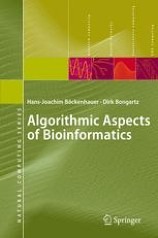
Advances in bioinformatics and systems biology require improved computational methods for analyzing data, while progress in molecular biology is in turn influencing the development of computer science methods. This book introduces some key problems in bioinformatics, discusses the models used to formally describe these problems, and analyzes the algorithmic approaches used to solve them. After introducing the basics of molecular biology and algorithmics, Part I explains string algorithms and alignments; Part II details the field of physical mapping and DNA sequencing; and Part III examines the application of algorithmics to the analysis of biological data. Exciting application examples include predicting the spatial structure of proteins, and computing haplotypes from genotype data. This book describes topics in detail and presents formal models in a mathematically precise, yet intuitive manner, with many figures and chapter summaries, detailed derivations, and examples. It is well suited as an introduction into the field of bioinformatics, and will benefit students and lecturers in bioinformatics and algorithmics, while also offering practitioners an update on current research topics.

This book constitutes the refereed proceedings of the 12th International Conference on Algebraic Methodology and Software Technology, AMAST 2008, held in Urbana, IL, USA, in July 2008.
Provides the state-of-the-art development on security and privacy for cyber-physical systems (CPS) and industrial Internet of Things (IIoT). More specifically, this book discusses the security challenges in CPS and IIoT systems as well as how Artificial Intelligence (AI) and Machine Learning (ML) can be used to address these challenges. Furthermore, this book proposes various defence strategies, including intelligent cyber-attack and anomaly detection algorithms for different IIoT applications.
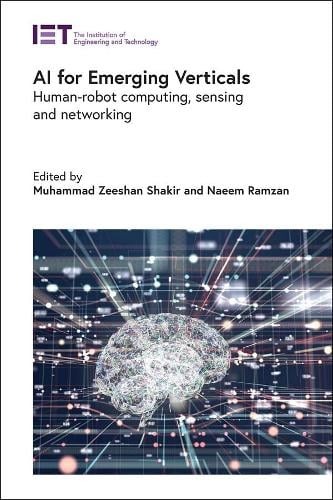
Artificial intelligence (AI) and machine learning (ML) will play a major role. By adopting AI software and services, businesses can create predictive strategies, enhance their capabilities, better interact with customers, and streamline their business processes. Explores novel concepts and cutting-edge research and developments towards designing these fully automated advanced digital systems. Fostered by technological advances in artificial intelligence and machine learning, such systems potentially have a wide range of applications in robotics, human computing, sensing and networking. The chapters focus on models and theoretical approaches to guarantee automation in large multi-scale implementations of AI and ML systems; protocol designs to ensure AI systems meet key requirements for future services such as latency; and optimisation algorithms to leverage the trusted distributed and efficient complex architectures.
Provides a valuable combination of relevant research works on developing smart city ecosystem from the artificial intelligence (AI) and Internet of things (IoT) perspective. The technical research works presented here are focused on a number of aspects of smart cities: smart mobility, smart living, smart environment, smart citizens, smart government, and smart waste management systems as well as related technologies and concepts. This edited book offers critical insight to the key underlying research themes within smart cities, highlighting the limitations of current developments and potential future directions.

Agile software is a means of putting the software first while at the same time reacting to these user requirements in a flexible and agile way.Agile Software Construction covers the emerging methods and approaches (including extreme programming, feature-driven development and adaptive software development), that are loosely described as "Agile" and shows how to apply them effectively to software development projects. It shows how to plan, organise and develop systems using agile techniques, and highlights some of the problems that may be encountered.

Supply Chain Event Management (SCEM)" is one of the major topics in application-oriented Supply Chain Management. However, many solutions lack conceptual precision and currently available client-server SCEM-systems are ill-suited for complex supply networks in today's business environment,In this book a thorough analysis of the event management problem domain is the starting point to develop a generic agent-based approach to Supply Network Event Management. The concept is illustrated with prototypical implementations and assessed in a multi-dimensional evaluation of potential benefits. The main focus lies on practical issues of event management (e.g. semantic interoperability) and economic benefits to be achieved with agent technology in this state-of-the-art problem domain.

The field of agent & multi-agent systems is experiencing tremendous growth. At the same time the field of formal methods is blossoming and has proven its importance in industrial and government applications. The FAABS (Formal Approaches to Agent-Based Systems) workshops, merging the concerns of the two fields, provided a timely and compelling platform on which the growing concerns and requirement of agent-based systems users that systems should be accompanied by behavioral assurances, could be discussed. This book has arisen from the overwhelming response to FAABS ’00, ’02 & ’04 and all chapters are updated or represent new research, and are designed to provide a more in-depth treatment of the topic. Examples of how others have applied formal methods to agent-based systems are included, plus formal method tools & techniques that readers can apply to their own systems.

Multi-agent systems are one of the most exciting research areas in Artificial Intelligence. This book reports on the results achieved in this area, discusses the benefits (and drawbacks) that agent-based systems may bring to medical domains and society.
AGENT INTELLIGENCE THROUGH DATA MINING offers a self-contained overview of a relatively young but important area of research: the intersection of agent technology and data mining. This intersection leads to considerable advancements in the area of information technologies, drawing the increasing attention of both research and industrial communities. It can take two forms: a) the more mundane use of intelligent agents for improved data mining and; b) the use of data mining for smarter, more efficient agents. The second approach is the main focus of this volume. this book presents a methodology for developing multi-agent systems, describes available open-source tools to support this process, and demonstrates the application of the methodology on three different cases. AGENT INTELLIGENCE THROUGH DATA MINING is designed for a professional audience composed of researchers and practitioners in industry.

Agent-based modeling and social simulation have emerged as both developments of and challenges to the social sciences. The developments include agent-based computational economics and investigations of theoretical sociological concepts using formal simulation techniques. Among the challenges are the development of qualitative modeling techniques, implementation of agent-based models to investigate phenomena for which conventional economic, social, and organizational models have no face validity, and the application of physical modeling techniques to social processes. Bringing together diverse approaches to social simulation and research agendas.

Security systems have become an integral part of the building and large complex setups, and intervention of the computational intelligence (CI) paradigm plays an important role in security system architecture. This book covers both theoretical contributions and practical applications in security system design by applying the Internet of Things (IoT) and CI. It further explains the application of IoT in the design of modern security systems and how IoT blended with computational intel- ligence can make any security system improved and realizable. Focuses on the computational intelligence techniques of security system design / Covers applications and algorithms of discussed computational intelligence techniques / Includes convergence-based and enterprise integrated security systems with their applications / Explains emerging laws, policies, and tools affecting the landscape of cyber security / Discusses application of sensors toward the design of security systems

The Webisaliveenvironmentthatmanagesanddrivesawidespectrumofapp- cations in which a user may interact with a company, a governmental authority, a non-governmental organization or other non-pro?t institution or other users. User preferences and expectations, together with usage patterns, form the basis for personalized, user-friendly and business-optimal services. Key Web business metrics enabled by proper data capture and processing are essential to run an e?ective business or service. Enabling technologies include data mining, sc- able warehousing and preprocessing, sequence discovery, real time processing, document classi?cation, user modeling and quality evaluation models for them. Recipient technologies required for user pro?ling and usage patterns include recommendation systems, Web analytics applications, and application servers, coupled with content management systems and fraud detectors.
Radar systems can provide the all-weather and all-time detection and tracking of targets of interest, and they have been extensively applied by the remote sensing community, in applications such as geological exploration, disaster forecasting, traffic monitoring, urban planning, environmental sciences, hydrology, littoral zones, oceans, etc. This reprint contains the several advance research studies on radar systems for target detection and tracking. It includes multipath ghost suppression, maneuvering target tracking, target detection, and other topics.

Daraa Highway - Ghabagheb - Syria
+963-15 2050 - 15 860 380 /1/2/3 - 11 662 3900