



Page 13
Page 13
Artificial Market Experiments with the U-Mart System
Economics went through great development in the 20th century. This development, which was based mainly on mathematical methods, is not an appropriate method of analyzing markets that change every hour and every day. In a stock market, prices constantly change depending on speculation. U-Mart, a manmade market, has been proposed in order to study such instantly moving markets. Although the U-Mart system is internationally acclaimed for being at the forefront of market research, its use is by no means limited to a small number of researchers on the fringe. The whole system, including its source code, is open and is distributed without charge, testifying to a philosophy of creating and providing a common testbed for research into financial markets.
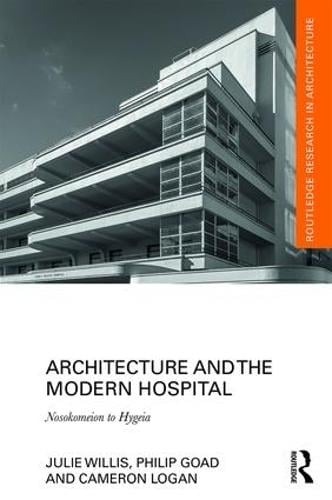
Architecture and the modern hospital : Nosokomeion to Hygeia
Explores the rapid evolution of hospital design in the twentieth century, analysing the ways in which architects and other specialists reimagined the modern hospital. It examines how the vast expansion of medical institutions over the course of the century was enabled by new approaches to architectural design and it highlights the emerging political conviction that physical health would become the cornerstone of human welfare.
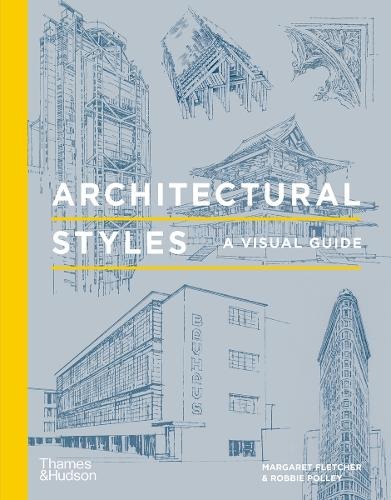
Architectural styles : A visual guide
It begins with the earliest styles of the ancient civilizations – Egypt, Greece and Rome – before travelling through Medieval, Renaissance and Baroque and into the modern world via the panoply of 19th century revivalist styles. Also covered is the traditional architecture of China, India, Japan and Pre-Columbian America. A final section gathers together key architectural elements from different periods – columns, towers, doorways, windows.
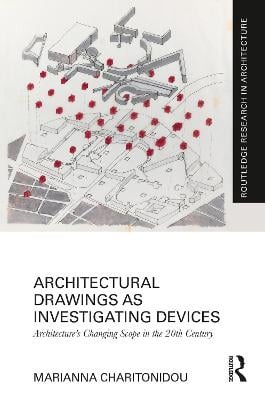
Architectural drawings as investigating devices : Architecture’s changing scope in the 20th century
Explores how the changing modes of representation in architecture and urbanism relate to the transformation of how the addressees of architecture and urbanism are conceived. Diagnoses the dominant epistemological debates in architecture and urbanism during the 20th and 21st centuries. It traces their transformations, paying special attention to Le Corbusier and Ludwig Mies van der Rohe’s preference for perspective representation, to the diagrams of Team 10 architects, to the critiques of functionalism, and the upgrade of the artefactual value of architectural drawings in Aldo Rossi, John Hejduk, Peter Eisenman, and Oswald Mathias Ungers, and, finally, to the reinvention of architectural programme through the event in Bernard Tschumi and the Office for Metropolitan Architecture (OMA). Particular emphasis is placed on the spirit of truth and clarity in modernist architecture, the relationship between the individual and the community in post-war era architecture, the decodification of design process as syntactic analogy and the paradigm of autonomy in the 1970s and 1980s architecture, the concern about the dynamic character of urban conditions and the potentialities hidden in architectural programme in the post-autonomy era.
Architect, verb : the new language of building
Leading architect Reinier de Graaf De Graaf punctures the myths behind the debates on what contemporary architecture is, with wit and devastating honesty. Architecture, it seems, has become too important to leave to architects. No longer does it suffice to judge a building solely by its appearance, it must be measured, and certified. When architects talk about "Excellence," "Sustainability," "Well-being," "Liveability," "Placemaking," "Creativity," "Beauty" and "Innovation" what do they actually mean? In Architect, Verb, De Graff dryly skewers the doublespeak and hot air of an industry in search of an identity in the 21st century
Architect : The evolving story of a profession
From Ancient Egypt, where architects were members of the ruling class, tied into the running of the empire, to the 21st century when questions are being raised about the future of the profession, this book, with its engaging narrative, explores the constant threads that remain as the profession adapts. While architects are no longer deified, their ability to imagine a new impending reality in built form implies a visionary dimension to their work. By focusing on both the practicalities of the profession and the more intangible motivations behind design – humans’ need to make a mark upon their surroundings – this volume provides a critical overview of over 3000 years of practice and education.
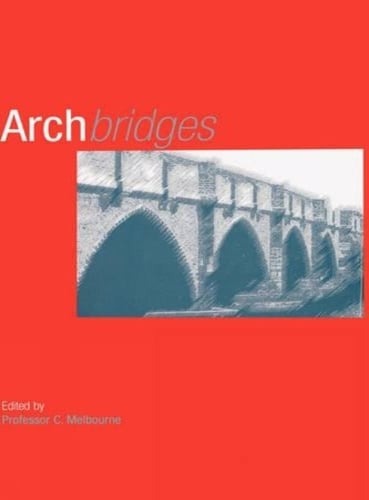
Arch bridges : Proceedings of the first international conference on arch bridges held at Bolton, UK on 3–6 September 1995
In the twentieth century bridge engineers have seen many changes. Advances in technology, materials and engineers understanding of structural behaviour and methods of analysis has presented opportunities for innovation and have led to increasingly sophisticated solutions to the basic problem of providing a bridge over an obstacle. However, despite these innovative technological changes, the masonry arch bridge has shown itself to be a durable, cost-effective structure, tolerant of its modern environment and out-performing many of its competitors.

Applied Demography in the 21st Century : Selected Papers from the Biennial Conference on Applied Demography, San Antonio, Texas, January 7–9, 2007
The work contains chapters on several major topical areas that are central to applied demography including works on data Use and measurement, including detailed analysis of the American Community Survey and Master Address File, population estimation and projection, applied demography and health, and surveys examples of applied demographic analysis in such diverse areas as urban planning, educational planning, church selection, and private-sector marketing. The work also contains a section on the process of educating applied demographers delineating the types of skills needed by the applied demographer and providing examples of a program designed to meet such needs.
Applications of Agent Technology in Traffic and Transportation
Building effective and user-friendly transportation systems is one of the big challenges for engineers in the 21st century. There is an increasing need to understand, model, and govern such systems at both the individual (micro) and the society (macro) level. Still, this raises significant technical problems, as transportation systems may contain thousands of autonomous, "intelligent" entities that need to be simulated and/or controlled. Therefore, traffic and transportation scenarios are extraordinarily appealing for Distributed Artificial Intelligence, and (multi-) agent technology in particular. This book gives an overview of recent advances in agent-based transportation systems. It includes both a state-of-the-art survey and reports on cutting-edge research in the field.

Anxiety disorders : A pocket guide for primary care
In Anxiety Disorders: A Pocket Guide for Primary Care, distinguished clinicians combine over a century of experience into concise, practical information and techniques for the diagnosis, evaluation, and effective management of psychiatric disorders.
Anti-vivisection and the profession of medicine in Britain : A social history
This book explores the social history of the anti-vivisection movement in Britain from its nineteenth-century beginnings until the 1960s. It discusses the ethical principles that inspired the movement and the socio-political background that explains its rise and fall. Opposition to vivisection began when medical practitioners complained it was contrary to the compassionate ethos of their profession. Christian anti-cruelty organizations took up the cause out of concern that callousness among the professional classes would have a demoralizing effect on the rest of society. As the nineteenth century drew to a close, the influence of transcendentalism, Eastern religions and the spiritual revival led new age social reformers to champion a more holistic approach to science, and dismiss reliance on vivisection as a materialistic oversimplification.

Antimicrobial Resistance and Implications for the Twenty-First Century
This new volume of the Emerging Infectious Diseases of the 21st Century series is a collection of chapters by leading world authorities on antimicrobial resistance of common, important bacterial, viral and fungal pathogens. This unique book should be in the possession of anyone interested in the field of infectious diseases, microbiology, infection control & public health. The chapters, which are written by reknown experts, provide a wealth of contemporary information on microbiology, molecular mechanisms, epidemiology, clinical relevance, treatment, and prevention
Anticipating and preparing for emerging skills and jobs : Key issues, concerns, and prospects
Analyzes the main drivers that are influencing the dramatic evolution of work in Asia and the Pacific and identifies the implications for education and training in the region.

Ancient monuments and modern identities : A critical history of archaeology in 19th and 20th century Greece
Sets out to examine the role of archaeology in the creation of ethnic, national and social identities in 19th and 20th century Greece. The essays included in this volume examine the development of interpretative and methodological principles guiding the recovery, protection and interpretation of material remains and their presentation to the public. The role of archaeology is examined alongside prevailing perceptions of the past, and is thereby situated in its political and ideological context. The book is organized chronologically and follows the changing attitudes to the past during the formation, expansion and consolidation of the Modern Greek State. The aim of this volume is to examine the premises of the archaeological discipline, and to apply reflection and critique to contemporary archaeological theory and practice.
Analysis by Its History
This book presents first-year calculus roughly in the order in which it first was discovered. The first two chapters show how the ancient calculations of practical problems led to infinite series, differential and integral calculus and to differential equations. The establishment of mathematical rigour for these subjects in the 19th century for one and several variables is treated in chapters III and IV. The text is complemented by a large number of examples, calculations and mathematical pictures and will provide stimulating and enjoyable reading for students, teachers, as well as researchers.
Analgesia
Analgesics are among the oldest drugs described, albeit not necessarily for medicinaluse. Forexample,theSumeriansisolatedopioids(probablyfortheir euphoric effects) in the third millennium b. c. and the use of willow bark (salicin) for fever was ?rst reported in the eighteenth century. Both types of drugs are still in use, but today they are supplemented by a wide array of substances ranging from antidepressants to ion channel blockers. Not all of theseareprescribedbyphysicians. Manycompoundsaresoldoverthecounter and thus available to the public for self-medication. As a result, analgesics are also the most misused class of drugs and are the culprit for a multitude of healthproblemsdueto untoward sideeffects. Thisvolumeattemptstosummarizethecurrentstateofknowledgeonme- anisms underlying the various effects of these drugs, their side effect pro?les, and their indications and contraindications in clinical use.
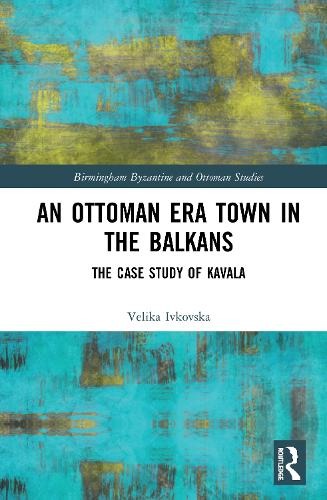
An Ottoman Era Town in the Balkans : The Case Study of Kavala
Presents the town of Kavala in Northern Greece as an example of Ottoman urban and residential development, covering the long period of Kavala’s expansion over five centuries under Ottoman rule. Kavala was part of the Ottoman Empire from 1387 to 1912. In the middle of the sixteenth century, Ibrahim Pasha, grand vizier of Suleiman the Magnificent, contributed to the town's prosperity and growth by the construction of an aqueduct. The Ottomans also rebuilt and extended the existing Byzantine fortress.
An Archaeological Evolution
An Archaeological Evolution is a personal recounting of his life as it is played out among some of the most important debates and movements in archaeology starting in the 1960's up to the 21st century.This seminal volume will be of interest to archaeologists (both professional and academic), anthropologists, historians, and conservators in or studying the United States but also, wherever archaeology is taught and practiced.
An American scientist on the research frontier : Edward Morley, community, and radical ideas in nineteenth-century science
This important examination of Morley’s struggle for personal and professional legitimacy extends and transforms our understanding of science during a foundational period, and leads to a number of unique conclusions that are vital to the literature and historiography of science.
Alzheimer : 100 Years and Beyond
Few medical or scientific addresses have so unmistakeably made history as the presentation delivered by Alois Alzheimer on November 4th, 1906 in Tübingen. The celebratory event, "Alzheimer 100 Years and Beyond" organized on the initiative of the Alzheimer community in Germany and worldwide, in collaboration with the Fondation Ipsen, at the very site of the original lecture, namely the Institute of Psychiatry at the University of Tübingen in Germany from November 2nd to 5th, 2006, was the highlight of the Alzheimer Year. Over the last century of Alzheimer research (1906-2006), remarkable progress has been achieved. Most of the authors of the major discoveries and the people involved in research in this field will present, during the meeting and in this volume, the pioneering research explaining the conditions under which they were conducted. The goal of this book is to honor the work accomplished, to summarize the most important knowledge and to provide material for the history of science.
