



Page 104
Page 104

Branch-and-Bound Applications in Combinatorial Data Analysis
There are a variety of combinatorial optimization problems that are relevant to the examination of statistical data. Combinatorial problems arise in the clustering of a collection of objects, the seriation (sequencing or ordering) of objects, and the selection of variables for subsequent multivariate statistical analysis such as regression. The options for choosing a solution strategy in combinatorial data analysis can be overwhelming. Because some problems are too large or intractable for an optimal solution strategy, many researchers develop an over-reliance on heuristic methods to solve all combinatorial problems. However, with increasingly accessible computer power and ever-improving methodologies, optimal solution strategies have gained popularity for their ability to reduce unnecessary uncertainty. In this monograph, optimality is attained for nontrivially sized problems via the branch-and-bound paradigm.

Brainlesion: Glioma, Multiple Sclerosis, Stroke and Traumatic Brain Injuries ; 7th International Workshop, BrainLes 2021, Held in Conjunction with MICCAI 2021, Virtual Event, September 27, 2021, Revised Selected Papers, Part I
The content of thebook covers the current state-of-the-art literature on federated learning applications for cancer research and Vclinical oncology analysis, as well as an overview of the deep learning approaches improving the current standard of care for brain lesions and current neuroimaging challenges. It is also focusing on the accepted BrainLes workshop submissions, is to provide an overview of new advances of medical image analysis in all the aforementioned brain pathologies. It brings together researchers from the medical image analysis domain, neurologists, and radiologists working on at least one of these diseases. The aim is to consider neuroimaging biomarkers used for one disease applied to the other diseases.
Brain-inspired computing ; 4th International Workshop, BrainComp 2019, Cetraro, Italy, July 15–19, 2019, Revised Selected Papers
The 11 papers presented in this volume were carefully reviewed and selected for inclusion in this book. They deal with research on brain atlasing, multi-scale models and simulation, HPC and data infra-structures for neuroscience as well as artificial and natural neural architectures.
Brain-computer interfaces : An international sssessment of research and development trends
This WTEC study gathered information on worldwide status and trends in BCI research to disseminate to government decisionmakers and the research community. The study reviewed and assessed the state of the art in sensor technology, the biotic-abiotic interface and biocompatibility, data analysis and modeling, hardware implementation, systems engineering, functional electrical stimulation, noninvasive communication systems, and cognitive and emotional neuroprostheses in academic research and industry.
Brain, vision, and artificial intelligence ; 1st International Symposium, BVAI 2005, Naples, Italy, October 19-21, 2005, Proceedings
This book constitutes the refereed proceedings of the First International Symposium on Brain, Vision and Artificial Intelligence, BVAI 2005, held in Naples, Italy in October 2005. The 48 revised papers presented together with 6 invited lectures were carefully reviewed and selected from more than 80 submissions for inclusion in the book. The papers are addressed to the following main topics and sub-topics: brain basics - neuroanatomy and physiology, development, plasticity and learning, synaptic, neuronic and neural network modelling; natural vision - visual neurosciences, mechanisms and model systems, visual perception, visual cognition; artificial vision - shape perception, shape analysis and recognition, shape understanding; artificial inteligence - hybrid intelligent systems, agents, and cognitive models.
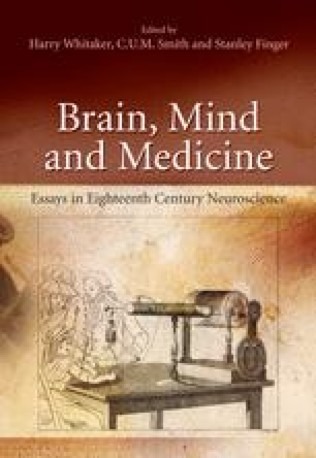
Brain, Mind and Medicine : Essays in Eighteenth-Century Neuroscience
Ideas we associate with the 18th century are clearly seen in work published from the latter decades of the 17th century through the first decades of the 19th century. This is the "long 18th century", a period which exhibits multiple discourses in medicine, brain science and philosophy. The editors have deliberately adopted a "presentist" subtitle, "neuroscience", to emphasize that this collection of essays reflect a range of current thought about 18th century-studies of the nervous system in isolation and in context. There are six sections, each preceded by a short introduction.

Brain tumor pathology : Current diagnostic hotspots and pitfalls
Since Bailey and Cushing (1926), all brain tumor classifications have been called histogenetic. The nosographic position that the tumor types progressively acquired in the classification systems derived from the resemblance of tumor cells to those of the cytogenesis, modified whenever new information became available from different biological research fields and especially from molecular genetics. Classically, on the basis of the rough correspondence between the mature/immature aspect of tumor cells and the benign/malignant biological behavior of the tumors, the histological labels contained a prognostic significance. The supposed origin of the tumors was thus a factor for prognosis. Later on, with the concept of anaplasia (Cox, 1933; Kernohan et al., 1949) new criteria were introduced for establishing the malignancy grades of tumors. Immunohistochemistry and later molecular genetics further refined the prognostic diagnoses, substantially increasing the opportunities to recognize the cell origin of tumors, beside revealing the pathogenetic mechanisms. Prognoses became more accurate, as required by the greater and more targeted possibilities of therapy.

Brain thoughts recognition
Humans controlling machines with their minds may sound like something from a scifi movie, but it’s becoming a reality through brain-computer interfaces BCI. Where BCI technology allows a human brain and an external device to talk to each other—to exchange signals. It gives humans the ability to directly control machines, without the physical constraints of the body. There are two ways to implement the BCI: Noninvasive tools often use sensors applied on or near the head to track and record brain activity, or Invasive BCI would require surgery. Electronic devices would need to be implanted beneath the skull, directly into the brain, to target specific sets of neurons. In order to implement a non-invasive BCI in a mobile phone, this study developed a mobile application to help paralyzed people who do not have the ability to use their phones to spend their basic daily needs, such as using the keyboard and interacting with PDF, etc.
Brain research in language
processing with precise temporal and spatial resolutions, respectively. This book presents data obtained from various studies employing behavioral, electrophysiological and imaging methodologies in different languages focusing on the regular reading process and the dyslexic population.Educators and researchers within neuroscience, literacy, and special education will benefit from Brain Research in Language.
Brain Repair
Brain Repair, addresses all relevant issues underlying the mechanisms of brain damage, brain plasticity and post-traumatic reorganisation after CNS lesions. This book is divided the three major sections that follow; cellular and molecular basis of brain repair, plasticity and reorganisation of neural networks, and experimental therapy strategies. Brain Repair is written by high profile, international experts who describe in detail the newest results from basic research and highlight new model systems, techniques and therapy approaches. Based on a careful analysis of the cellular and molecular reaction patterns of the CNS to lesions, the contributions cover possibilities for endogenous reorganisation and repair as well as exciting new therapies emerging from basic research, some of which have already been introduced into the clinics.

Brain Metastases
Brain metastases are the most dreaded complication of systemic cancer, affecting approximately 170,000 people a year, a far greater incidence than primary brain tumors. Advances in modern chemotherapy have led to an improved control of system cancers, often with agents that poorly penetrate the central nervous system, resulting in an increasing incidence of brain metastases. Traditional chemotherapy has had little impact on brain metastases. The main therapeutic option is radiation therapy, and in a small number of patients - surgery. However, refinements in all of these treatments offer some positive outcomes and an increased ability to stratify patients based on certain criteria.

Brain Edema XIII
The XIII International Symposium on Brain Edema intracerebral hemorrhage. This volume includes papers pre- day satellite conference on the subject. Brain vestigation focusing primarily on the secondary events edema, in many respects, is a marker of underlying which develop after the hemorrhage. pathological processes which include tissue injury There was considerable enthusiasm to continue the from many diseases.
Brain Dynamics : Synchronization and Activity Patterns in Pulse-Coupled Neural Nets with Delays and Noise
This book addresses a large variety of models in mathematical and computational neuroscience.He devotes the main part to the synchronization problem. He presents neural net models more realistic than the conventional ones by taking into account the detailed dynamics of axons, synapses and dendrites, allowing rather arbitrary couplings between neurons. He gives a complete stabile analysis that goes significantly beyond what has been known so far. He also derives pulse-averaged equations including those of the Wilson--Cowan and the Jirsa-Haken-Nunez types and discusses the formation of spatio-temporal neuronal activity pattems. An analysis of phase locking via sinusoidal couplings leading to various kinds of movement coordination is included.
Brain dynamics : An introduction to models and simualtions
Brain Dynamics serves to introduce graduate students and nonspecialists from various backgrounds to the field of mathematical and computational neurosciences. Some of the advanced chapters will also be of interest to the specialists. The book approaches the subject through pulse-coupled neural networks, with at their core the lighthouse and integrate-and-fire models, which allow for the highly flexible modelling of realistic synaptic activity, synchronization and spatio-temporal pattern formation. Topics also include pulse-averaged equations and their application to movement coordination. The book closes with a short analysis of models versus the real neurophysiological system.
Brain development in Drosophila melanogaster
The central nervous system (CNS) represents the organ with the highest structural and functional complexity. Accordingly, uncovering the mechanisms leading to cell diversity, patterning and connectivity in the CNS is one of the major challenges in developmental biology. The developing CNS of the fruitfly Drosophila melanogaster is an ideal model system to study these processes. Several principle questions regarding neurogenesis (like stem cell formation, cell fate specification, axonal pathfinding) have been addressed in Drosophila by focusing on the relatively simply structured truncal parts of the nervous system. This book provides an overview of some major facets of recent research on Drosophila brain development.
Brain Death : A Reappraisal
This text is intended to provide an overview of brain death. The topics explored in this book are the concept and historical approach of human death, clinical examinations of brain-dead patients, ancillary tests in coma and brain death, bioethical discussions of brain death and its relationship with some consciousness disturbances, and the legal considerations of human death.
Brain Control of Wakefulness and Sleep
The book is rich in references and leaves no aspect of the problem untouched. The morphological, pharmacological, physiological and mathematical modeling aspects of different components of the subject are treated to exhaustion...the book is richly illustrated and down-right comprehensive. It will delight those interested in the field, will inform those who need a context for their research efforts and is a must for graduate and medical libraries.
Brain and Human Body Modeling 2020 : Computational Human Models Presented at EMBC 2019 and the BRAIN Initiative® 2019 Meeting
This book describes modern applications of computational human modeling in an effort to advance neurology, cancer treatment, and radio-frequency studies including regulatory, safety, and wireless communication fields.
Brain and Human Body Modeling : Computational Human Modeling at EMBC 2018
This book describes modern applications of computational human modeling with specific emphasis in the areas of neurology and neuroelectromagnetics, depression and cancer treatments, radio-frequency studies and wireless communications. Special consideration is also given to the use of human modeling to the computational assessment of relevant regulatory and safety requirements. Readers working on applications that may expose human subjects to electromagnetic radiation will benefit from this book’s coverage of the latest developments in computational modelling and human phantom development to assess a given technology’s safety and efficacy in a timely manner.

Brain and Heart Dynamics
Despite the increasing awareness that neural mechanisms are the primary cause of cardiac disease and its progression, therapy continues to focus on end-organ protection and does not approach the neural core of the problem. Growing public health problems such as heart failure are still treated with autonomic drugs that are 30-40 years old and simply act on cardiac receptors. However, it has now been shown that the progression of ischemic heart disease to heart failure is mainly due to abnormal central responses to incipient cardiac disease, with neural activation the primary cause rather than the consequence of cardiac remodeling.
