



Page 103
Page 103
Marine Biotechnology II
This volume of Advances in Biochemical Engineering/Biotechnology illustrates several topics in line with the following broad objectives: thinking of marine biotechnology as the controlled production and use of marine organisms and molecules for useful purposes, firstly by exploring aspects of marine biodiversity and exploitation of biomass, then considering the identification, production and processing of marine products.
Marine Biotechnology I
Oceans, which occupy up to two thirds of the surface of our planet, were not really approached from scientific point of view until the second half of the 19th century and even the 20th with regard to microbial and unicellular life. Today, the importance of marine biodiversity has been fully recognized. It is, indeed, one of the aspects which, over the two past decades, have made a major contribution to our knowledge and vision of the living planetThis volume of Advances in Biochemical Engineering/Biotechnology illustrates several topics in line with the following broad objectives: thinking ofmarine biotechnology as the controlled production and use of marine organisms and molecules for useful purposes, firstly by exploring aspects of marine biodiversity and exploitation of biomass, then considering the identification, production and processing of marine products.

Marine bioactive molecules for biomedical and pharmacotherapeutic application
Explores cutting-edge research on the discovery and application of marine bioactive molecules for biomedical and pharmacotherapeutic purposes. The book begins by delving into the bioprospection of marine sponge microbiomes for bioactive metabolites using advanced metagenomics tools. It then explores metagenome mining approaches for the discovery of marine microbial natural products. The use of marine-derived fungi as a source of anticancer secondary metabolites is also discussed. The book then turns to the biomedical applications of marine-derived biomaterials, including marine biopolymers in tissue engineering and regenerative medicine. Marine-derived pharmaceuticals and polymeric nanostructures for cancer treatment are also examined.
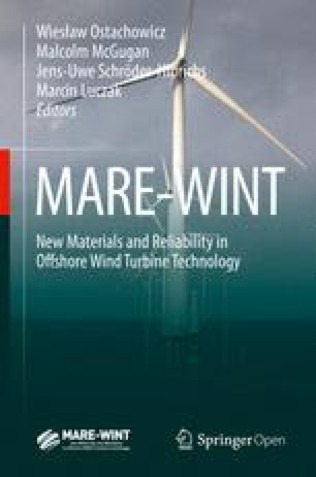
MARE-WINT : New Materials and Reliability in Offshore Wind Turbine Technology
This book provides a holistic, interdisciplinary overview of offshore wind energy, and is a must-read for advanced researchers. Topics, from the design and analysis of future turbines, to the decommissioning of wind farms, are covered. The scope of the work ranges from analytical, numerical and experimental advancements in structural and fluid mechanics, to novel developments in risk, safety & reliability engineering for offshore wind. The core objective of the current work is to make offshore wind energy more competitive, by improving the reliability, and operations and maintenance (O&M) strategies of wind turbines.
Map-based Mobile Services : Design, Interaction and Usability
It addresses methods and techniques for topics that range from design and rendering, context modelling, personalisation, multimodal interaction to usability test. Instead of striving for a seamless coverage of all essential theoretical and technical issues with an equal depth and extent, we attempt to pinpoint a number of research highlights and representative development activities at universities, research institutions and so- ware industry. The operational prototypes and platforms reported in the book are on the one hand outcome and feasibility proof of various approaches. On the other hand, they serve as a new starting point for the refinement of user interfaces and iterative usability tests.
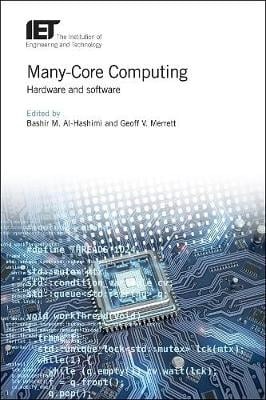
Many-Core Computing : Hardware and software
Provides a timely and coherent account of the recent advances in many-core computing research. Starting with programming models, operating systems and their applications; it presents runtime management techniques, followed by system modelling, verification and testing methods, and architectures and systems. Computing has moved away from a focus on performance-centric serial computation, instead towards energy-efficient parallel computation. This provides continued performance increases without increasing clock frequencies, and overcomes the thermal and power limitations of the dark-silicon era. As the number of parallel cores increases, we transition into the many-core computing era. There is considerable interest in developing methods, tools, architectures and applications to support many-core computing.
Manufacturing Systems Control Design : A Matrix-based Approach
The matrix-based approach presented here is a solution to the real-time application of control in discrete event systems and flexible manufacturing systems (FMS), and offers a sound practical basis for the design of controllers for manufacturing systems.
Manufacturing Systems and Technologies for the New Frontier ; The 41st CIRP Conference on Manufacturing Systems May 26–28, 2008, Tokyo, Japan
Manufacturing systems and technology stand on a new frontier, facing up to the challenges posed by the ever-evolving requirements of global sustainability. Value-creation is taking its place alongside more traditional production-process priorities. Collected here are over a hundred papers concerned with all manner of new directions in manufacturing systems and given at the 41st CIRP Conference on Manufacturing Systems. The high-quality material presented in this volume includes reports of work from both scientific and engineering standpoints and several invited and keynote papers addressing the current cutting edge and likely future trends in manufacturing systems.
Manufacturing Systems : Theory and Practice
The book has six chapters that have been arranged according to the sequence used when creating and operating a manufacturing system. Thus, the subjects emphasised are: the decision framework for manufacturing, the manufacturing processes, the manufacturing equipment and machine tools, the design for manufacturing and the operation of manufacturing systems. The book attempts a compromise between theory and practice in all addressed manufacturing systems issues, covering a long spectrum of issues from traditional manufacturing processes to innovative technologies such as Virtual Reality, Nanotechnology and Rapid Prototyping.
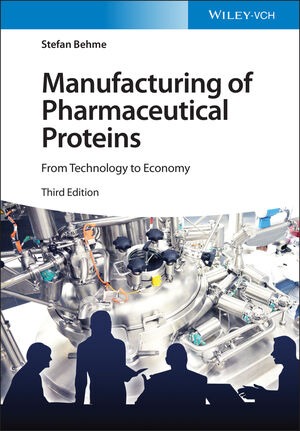
Manufacturing of Pharmaceutical Proteins: From Technology to Economy
Manufacturing of Pharmaceutical Proteins: From Technology to Economy, renowned chemical engineer Dr. Stefan Behme delivers a comprehensive text covering all aspects of biopharmaceutical manufacturing, including legal and regulatory considerations, production facility design, quality assurance, supply chain management, emerging market regulations, and cost control.
Manufacturing Execution Systems - MES
The production plants of today develop into modern service centers. Economic efficiency of modern added value is not a property of products alone but of the process. Decisive potential in business now is a question of process capability, rather than production capability. Process capability in business requires real-time systems for optimization. Business-IT needs to be developed from telecommunications and ERP to real time services, which are not offered by the prevailing ERP systems. Today, only modern Manufacturing Execution Systems (MES) offer real-time applications. They generate current as well as historic mappings of production facilities and thus they can be used as basis for optimizations. It is important to map the supply chain in real time. Increasing complexity in production requires an integrated view of the production and service facilities: detailed scheduling, status collection, quality, performance analysis, tracing of material and so on have to be recorded and displayed in an integrated way.
Manual of multi-storey timber construction
Wood is suitable for use in multi-storey building construction with barely any restrictions. This is new and requires creative rethinking of tried and tested practices in wood construction: classical categories can be replaced by mixed construction methods as necessary within a project, which yields completely new possibilities in designing wood structures. The Manual provides architects, engineers and wood specialists with the essential expertise on the new systematic and construction methodology, from the design to prefabrication to the implementation on site. It lays the grounds for mutual understanding among everyone involved in the project, to facilitate the necessary cooperation in the integral planning and construction process
Manual of Multistorey Timber Construction
Wood is suitable for use in multi-storey building construction with barely any restrictions. This is new and requires creative rethinking of tried and tested practices in wood construction: classical categories can be replaced by mixed construction methods as necessary within a project, which yields completely new possibilities in designing wood structures. The Manual provides architects, engineers and wood specialists with the essential expertise on the new systematic and construction methodology, from the design to prefabrication to the implementation on site.

Managing Traffic Performance in Converged Networks ; 20th International Teletraffic Congress, ITC20 2007, Ottawa, Canada, June 17-21, 2007, Proceedings
Managing traffic performance is a critical enabler for success. Reaching the desired performance levels requires adapting processes such as network planning, resource engineering, and network monitoring to the converged network milieu.
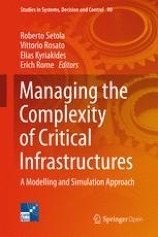
Managing the Complexity of Critical Infrastructures : A Modelling and Simulation Approach
This book summarizes work being pursued in the context of the CIPRNet (Critical Infrastructure Preparedness and Resilience Research Network) research project, co-funded by the European Union under the Seventh Framework Programme (FP7). The project is intended to provide concrete and on-going support to the Critical Infrastructure Protection (CIP) research communities, enhancing their preparedness for CI-related emergencies, while also providing expertise and technologies for other stakeholders to promote their understanding and mitigation of the consequences of CI disruptions, leading to enhanced resilience.
Managing product life cycle in a supply Chain Context : A prescription based on empirical research
The aim of this book is to provide a better understanding with as to how to coordinate and improve decisions about product life cycle, process and supply chain design to improve new product development.

Managing Next Generation Networks and Services ; 10th Asia-Pacific Network Operations and Management Symposium, APNOMS 2007, Sapporo, Japan, October 10-12, 2007, Proceedings
The 48 revised full papers and 30 revised short papers cover management of distributed networks, network configuration and planning, network security management, sensor and ad-hoc networks, network monitoring, routing and traffic engineering, management of wireless networks and security on wireless networks.
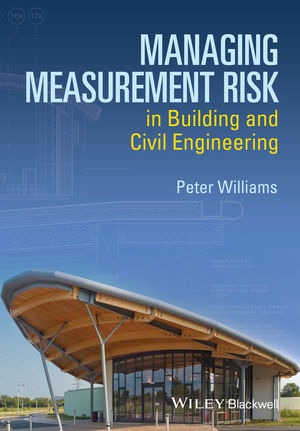
Managing Measurement Risk in Building and Civil Engineering
Managing Measurement Risk in Building and Civil Engineering will help all those who use measurement in their work or deal with the output from the measurement process, to understand not only the ‘ins and outs’ of measuring construction work but also the relationship that measurement has with contracts, procurement, claims and post-contract control in construction. The book is for quantity surveyors, engineers and building surveyors but also for site engineers required to record and measure events on site with a view to establishing entitlement to variations, extras and contractual claims.

Managing logistics systems : Planning and analysis for a successful supply chain
Introduces logistics from a broad perspective to include all activities throughout the product and service life cycle pertaining to supply chain and logistics management, the physical supply and distribution of products, and the corresponding maintenance and support. It recognizes the mutual interdependence of the major functional areas of the organization including marketing, production, and finance. The emphasis throughout the text is on logistics in the context of a total business system design process. It views the business as a "system", managing logistics within that system, and thus transforming their Supply Chain. Pedagogy to aid learning is incorporated throughout every chapter, with chapter objectives, case studies, and concept checks. This text is intended for both upper-level undergraduate and lower-level graduate students in both Business and Engineering on logistics and supply chain tracks. It can also serve as a reference for practitioners actively engaged in day-to-day management of logistics and supply chain activities.

Managing innovative projects and programs : Using the ISO 56000 standards for guidance and implementation
Provides a step-by-step procedure on how to process a medium- or large-size project, program, or product using an already-established IMS that considers the guidance given in ISO 56002:2019 – Innovation Management Systems Standard. Often the most complicated, complex, difficult, and challenging system used in an organization is the IMS. At the same time, it usually is the most important system because it is the one that generates most of the value-adding products for the organization, and it involves most of the key functions within the organization.
