



Page 10
Page 10

Jamming, Yielding, and Irreversible Deformation in Condensed Matter
This collection ot ten tutorial reviews by leading researchers in the field introduces and renews recent advances on irreversible deformation phenomena in solid state and soft condensed matter physics. The focus in applications is on amorphous materials, crystalline solids under stress and more generally, elastic manifolds driven by external processes. This book addresses in particular nonspecialists and graduate students wishing to enter the field.

IUTAM symposium on size effects on material and structural behavior at micron- and nano-scales ; Proceedings of the IUTAM Symposium held in Hong Kong, China, 31 May - 4 June, 2004
A collection of twenty five written contributions by distinguished invited speakers from seven countries to the IUTAM Symposium on Size Effects on Material and Structural Behavior at Micron- and Nano-scales. It contains basic theoretical and experimental aspects of the recent advances in the mechanics research of various size effects.

Clays
Here is a comprehensive and up to-do-date presentation of the origins, and properties of clay minerals at the Earths surface. Concluding chapters show that clay minerals can form in variety of different environments: meteorites, lavas, subduction zones, among others.

Charged Particle Traps : Physics and Techniques of Charged Particle Field Confinement
This book provides an introduction and guide to modern advances in charged particle (and antiparticle) confinement by electromagnetic fields. Confinement in different trap geometries, the influence of trap imperfections, classical and quantum mechanical description of the trapped particle motion, different methods of ion cooling to low temperatures, and non-neutral plasma properties (including Coulomb crystals) are the main subjects. They form the basis of such applications of charged particle traps as high-resolution optical and microwave spectroscopy, mass spectrometry, atomic clocks, and, potentially, quantum computing.
Characterization of Corrosion Products on Steel Surfaces
It is well known that corrosion products, i.e. rust, on iron and steel surfaces cannot be assigned a typical crystallographic structure with long-range order. In fact, the structure of rust is considered to be very complicated, and some forms of rust are assigned to the amorphous state for this reason. Accurate information about the atomic-scale structure of rust is important to shed light on corrosion mechanisms of metallic materials. And, since life of steel structures is often dominated by environmental degradation or corrosion of the surface, the structure of the rust formed on iron and steel surfaces during prolonged exposure to air is of great interest. This book describes the fundamental aspects of materials characterization for the ferric oxyhydroxides formed on steel surfaces.

CFN Lectures on Functional Nanostructures : Vol.1
This book contains a selection of lectures from the first Summer School organized by the Center for Functional Nanostructures (CFN) at the University of Karlsruhe. The mission of the CFN is to carry out research in the following areas: nanophotonics, nanoelectronics, molecular nanostructures and nanostructured materials. The aim of the summer schools is mainly to exchange new ideas and illustrate emerging research methodologies through a series of lectures. This is reflected by both the selection of topics addressed in the present volume as well as the tutorial aspect of the contributions.
Ceramic materials : Science and engineering
Ceramic Materials: Science and Engineering is an up-to-date treatment of ceramic science, engineering, and applications in a single, integrated text. Building on a foundation of crystal structures, phase equilibria, defects and the mechanical properties of ceramic materials, students are shown how these materials are processed for a broad diversity of applications in today's society. Concepts such as how and why ions move, how ceramics interact with light and magnetic fields, and how they respond to temperature changes are discussed in the context of their applications. References to the art and history of ceramics are included throughout the text. The text concludes with discussions of ceramics in biology and medicine, ceramics as gemstones and the role of ceramics in the interplay between industry and the environment. The text is extensively illustrated and includes references and questions for the student.

Carbon Nanotubes : From Basic Research to Nanotechnology
A nanotube can bend easily but still is very robust. The nanotubes can be manipulated and contacted to external electrodes. Their diameter is in the nanometer range, whereas their length may exceed several micrometers, if not several millimeters. In diameter, the nanotubes behave like molecules with quantized energy levels, while in length, they behave like a crystal with a continuous distribution of momenta. Depending on its exact atomic structure, a single-wall nanotube –that is to say a nanotube composed of just one rolled-up graphene sheet– may be either a metal or a semiconductor. The nanotubes can carry a large electric current, they are also good thermal conductors.
Carbon : The future material for advanced technology applications
Carbon-based materials and their applications constitute a burgeoning topic of scientific research among scientists and engineers attracted from diverse areas such as applied physics, materials science, biology, mechanics, electronics and engineering. Further development of current materials, advances in their applications, and discovery of new forms of carbon are the themes addressed by the frontier research in these fields. This book covers all the fundamental topics concerned with amorphous and crystalline C-based materials, such as diamond, diamond-like carbon, carbon alloys, carbon nanotubes. The goal is, by coherently progressing from growth - and characterisation techniques to technological applications for each class of material, to fashion the first comprehensive state-of-the-art review of this fast evolving field of research in carbon materials.

Block Copolymers II
Block coplolymers have been studied for several decades, a period that has been punctuated by a number of books and review articles on the topic. Despite this history, the subject is far from exhausted and, if anything, has experienced a strong renewal in recent years. This has been speartheaded by a vast variety of new block copolymers, the important development of powerful visualization techniques, AFM in particular, that have become readily available, as well as motivating visions of nanotechnological applications. In this context, this new two-volume book, with its focus on the most recent developments in the area, is timely,
Biomineralization I : Crystallization and Self-Organization Process
The five chapters of Biomineralization, volume 1, provide a bridge between the mineralogy and the organic substrates that enable the mineral formation by organisms in nature and under laboratory conditions. The book is a most useful reference for all concerned with biomineralization and biogenic minerals.In nature, biological organisms produce mineralized tissues such as bone, teeth, diatoms, and shells. Biomineralization is the sophisticated process of production of these inorganic minerals by living organisms. Construction of organic–inorganic hybrid materials with controlled mineralization analogous to those produced by nature has recently received much attention because it can aid in understanding the mechanisms of the biomineralization process and development of biomimetic materials processing.

Biomineralization : From molecular and nano-structural analyses to environmental science
Over the past 45 years, biomineralization research has unveiled details of the characteristics of the nano-structure of various biominerals; the formation mechanism of this nano-structure, including the initial stage of crystallization; and the function of organic matrices in biominerals, and this knowledge has been applied to dental, medical, pharmaceutical, materials, agricultural and environmental sciences and paleontology. As such, biomineralization is an important interdisciplinary research area, and further advances are expected in both fundamental and applied research.

Bioactive Confirmation II
Specific binding of a ligand to a receptor is a key step in a variety of biol- ical processes, such as immune reactions, enzyme cascades, or intracellular transport processes. The ligand-receptor terminology implies that the rec- tor molecule is signi?cantly larger than the ligand, and the term "bioactive conformation" usually characterizes the conformation of a ligand when it is bound to a receptor. In a more general sense, bioactive conformation applies toanymoleculeinabiologicallyrelevantboundstateregardlessofsizecons- erations. Mostofthecontributions tothisbookaddressligandsthat aremuch smaller than their receptors. X-ray crystallography and high resolution NMR spectroscopy are the two main experimental techniques used to study bioactive conformations. The- fore, the twovolumes ofthisbookcover approachesthat use either ofthetwo techniques, or a combination thereof.

Binary Rare Earth Oxides
The book begins with a brief introduction to binary rare earth oxides, their physical and chemical stabilities, polymorphism, crystal structures and phase transformation and the association with current applications. The book goes on to present the band structure of the oxides using several quantum chemical calculations, which belong to a newly developed area in the binary rare earth oxides. Central to this chapter are the characterizations of electrical, magnetic and optical properties, as well as details of single crystal growth and particle preparation methods that have progressed in recent years. Later chapters concentrate on thermo-chemical properties and trace determination techniques. The final chapter contains a variety of useful applications in various fields such as phosphors, glass abrasives, automotive catalysts, fuel cells, solid electrolytes, sunscreens, iron steels, and biological materials.

Ballistic Trauma : A Practical Guide
Ballistic Trauma: A Practical Guide provides a concise guide to the clinical and operational issues surrounding the management of the ballistic casualty. The book crystallizes the knowledge and experience accrued by those dealing with ballistic trauma on a regular basis and extends this to those who have to manage these patients on an occasional basis only.
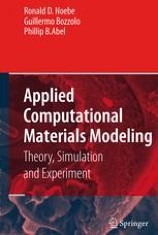
Applied computational materials modeling : Theory, simulation and experiment
this book provides the average person working in the materials field with a more balanced perspective of the role that computational modeling can play in every day research and development efforts. This is done by presenting a series of examples of the successful application of various computational modeling procedures (everything from first principles to quantum approximate to CALPHAD methods) to real life surface and bulk alloy problems.This book should have a large appeal in the materials community, both for experimentalists who would greatly benefit from adding computational methods to their everyday research regimes, as well as for those scientists/engineers familiar with a particular computational method who would like to add complementary techniques to their arsenal of research and development tools

Advances of novel formulations in drug delivery
This is an endeavor to bring all the nanotechnology-based drug carriers under the umbrella of a single text. The drug carriers made up using natural as well as synthetic polymers are described in detail. The drug carriers include (though not limited to) particulates, vesicular, dendrimers, quantum dots, carbon nano tubes, nanocrystals, nanoemulsions, nanofibers

Advances in Mass Data Analysis of Signals and Images in Medicine, Biotechnology and Chemistry ; International Conference, MDA 2006/2007, Leipzig, Germany, July 18, 2007, Selected Papers
The automatic analysis of images and signals in medicine, biotechnology, and chemistry is a challenging and demanding field. Signal-producing procedures by microscopes, spectrometers, and other sensors have found their way into wide fields of medicine, biotechnology, economy, and environmental analysis. With this arises the problem of the automatic mass analysis of signal information. Signal-interpreting systems which generate automatically the desired target statements from the signals are therefore of compelling necessity. The continuation of mass analyses on the basis of classical procedures leads to investments of proportions that are not feasible. New procedures and system architectures are therefore required. The goals of this: Provide a forum for identifying important contributions and opportunities for research on mass data analysis on microscopic images Promote the systematic study of how to apply automatic image analysis and interpretation procedures to that field Show case applications of mass data analysis in biology, medicine, and chemistry Topics of interest include (but are not limited to): Techniques and developments of signal and image producing procedures Object matching and object tracking in microscopic and video microscopic images 1D, 2D, and 3D shape analysis and description

Advanced computer simulation approaches for soft matter sciences I
Soft matter science is nowadays an acronym for an increasingly important class of materials, which ranges from polymers, liquid crystals, colloids up to complex macromolecular assemblies, covering sizes from the nanoscale up the microscale. Computer simulations have proven as an indispensable, if not the most powerful, tool to understand properties of these materials and link theoretical models to experiments. In this first volume of a small series recognized leaders of the field review advanced topics and provide critical insight into the state-of-the-art methods and scientific questions of this lively domain of soft condensed matter research.
