


Refine Results
Sort By
From
To


This book is the first comprehensive guideline for the beryllium-7 (Be-7) technique that can be applied to evaluate short-term patterns and budgets of soil redistribution in agricultural landscapes. While covering the fundamental and basic concepts of the approach, this book distinguishes itself from other publications by offering step-by-step instructions on how to use this isotopic technique effectively. It covers experimental design considerations and clear instruction is given on data processing. As accurate laboratory measurement is crucial to ensure successful use of Be-7 to investigate soil erosion, a full chapter is devoted to its specific determination by gamma spectrometry.

In the twentieth century bridge engineers have seen many changes. Advances in technology, materials and engineers understanding of structural behaviour and methods of analysis has presented opportunities for innovation and have led to increasingly sophisticated solutions to the basic problem of providing a bridge over an obstacle. However, despite these innovative technological changes, the masonry arch bridge has shown itself to be a durable, cost-effective structure, tolerant of its modern environment and out-performing many of its competitors.
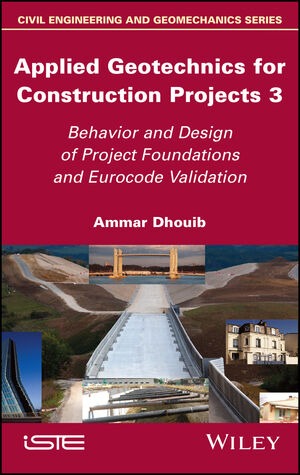
Applied Geotechnics for Construction Projects 3 first presents the basic theoretical principles and rules governing the designing and validation of foundations; shallow, semi-deep and deep, then presents real foundation projects with a detailed comparison of the approaches and methods of calculating foundations in relation to the reference systems and rules in force, closely compared to and validated by the Eurocodes. The third chapter presents examples of foundation projects, covering high-side building rafts, strip footings, piles and embankments, enriched by an unprecedented level of experience in the field of foundations for civil and industrial construction projects.
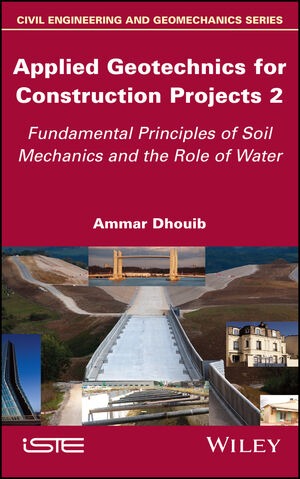
Addresses the fundamental principles of soil mechanics and the role of water in geotechnical projects and assessments. Applied Geotechnics for Construction Projects 2 outlines the hydraulic properties of soils and the basic concepts of water in soil, detailing the principles of permeability measurement tests and giving concrete test cases, and then goes on to outline the basic notions of soil mechanics as applied in geotechnics: from consolidation to short- and long-term notions via the swelling phenomena of clayey soils, soil shear strength and slope stability. The third chapter presents a comprehensive overview of geotechnical expertise using examples of concrete projects either with or without damage in the context of geotechnical construction works.
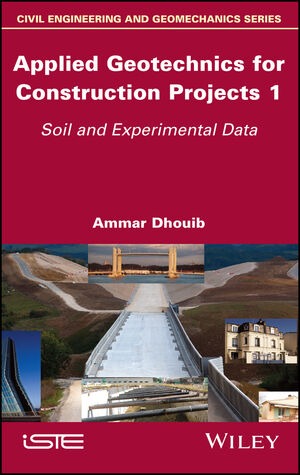
Applied Geotechnics for Construction Projects 1 first defines, identifies and classifies soils, exploring their complexities and weaknesses, and then outlines the basic principles of stresses and strains that establish and develop within soils. The third chapter of the book introduces and develops methods of soil investigation in order to experimentally determine the geotechnical parameters that are useful in the design stage of construction projects.
Offers a superb introduction to theoretical and practical soil mechanics. Special attention is given to the risks of failure in civil engineering, and themes covered include stresses in soils, groundwater flow, consolidation, testing of soils, and stability of slopes. The basic principles of applied mechanics, that are frequently used, are offered in the appendices. The author’s considerable experience of teaching soil mechanics is evident in the many features of the book: it is packed with supportive color illustrations, helpful examples and references.
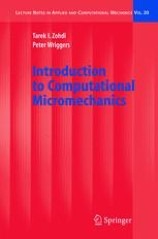
This book presents a comprehensive introduction to computational micromechanics, including basic homogenization theory, microstructural optimization and multifield analysis of heterogeneous materials. "An Introduction to Computational Micromechanics".
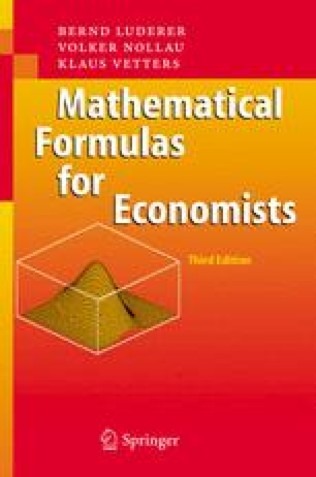
The present collection of formulas has been composed for students of economics or management science at universities, colleges and trade schools. It contains basic knowledge in mathematics, financial mathematics and statistics in a compact and clearly arranged form. This volume is meant to be a reference work to be used by students of undergraduate courses together with a textbook and by researchers in need of exact statements of mathematical results. People dealing with practical or applied problems will also find this collection to be an efficient and easy-to-use work of reference.

Strong emphasis is placed on things that happen before, around, and after the project itself. So, while the basic disciplines like engaging with stakeholders, managing scope, schedules, costs, risks, issues, changes, and communication, are thoroughly explained, other important aspects are covered. These include: governance of a project and of a portfolio of projects, project selection with its financial and non-financial aspects, effective use of the business case through to benefits realization, procurement, outsourcing and partnership, and also the agile mindset that is valuable beyond Agile projects.
Explains key aspects of management, including: business strategy and how to use it to meet goals; how successful marketing works; how organizations are structured and function; fundamentals of corporate finance; human resource management’s role in the management and development of people; the importance of knowledge and culture to management.management.
This book deals with such complex scheduling problems and methods to solve them. It consists of three parts: The ?rst part (Chapters 1 and 2) contains a description of basic scheduling models with applications and an introduction into discrete optimization (covering complexity, shortest path algorithms, linear programming, network ?ow algorithms and general optimization methods). In the second part (Chapter 3) resource-constrained project scheduling problems are considered. Especially, methods like constraint propagation, branch-a- bound algorithms and heuristic procedures are described. Furthermore, lower bounds and general objective functions are discussed.
Stefano Borzillo examines a large variety of CoPs by means of six success factors and identifies three basic types: innovating strategic, operational excellence, and social and productive space CoPs.
Characteristics are used in SAP as attributes, e.g. to specify the configuration of products or the properties of batches. In many industries – engineering, automotive, mill, pharmaceutical and foods to name the most typical – supply chain planning has to consider these characteristics. APO offers many different functionalities for planning with characteristics, where each of the functionalities has some prerequisites and incompatibilities. This book offers help and advice for the basic design of the implementation by explaining the processes and scenarios (process chains) for planning with characteristics, the functionalities for planning with characteristics in APO including their prerequisites and incompatibilities and the entities, dependencies and system configuration determinants for planning with characteristics in R/3 and APO. This book is based on the releases R/3 4.7 and mySAP SCM 4.1.

CELLULAR GENETIC ALGORITHMS defines a new class of optimization algorithms based on the concepts of structured populations and Genetic Algorithms (GAs). The authors explain and demonstrate the validity of these cellular genetic algorithms throughout the book. This class of genetic algorithms is shown to produce impressive results on a whole range of domains, including complex problems that are epistatic, multi-modal, deceptive, discrete, continuous, multi-objective, and random in nature. The focus of this book is twofold. On the one hand, the authors present new algorithmic models and extensions to the basic class of Cellular GAs in order to tackle complex problems more efficiently. On the other hand, practical real world tasks are successfully faced by applying Cellular GA methodologies to produce workable solutions of real-world applications.
Hellermann addresses in his dissertation one of the most interesting - pects of this evolution for OR/MS, the parallel development of long-term and short-term markets for capacity and output, accompanied by a range of option and ?xed-commitment (i. e. , forward) contracts as the basic mec- nisms supporting transactions. This has been a fascinating topic for OR/MS research because it builds on the powerful framework of real options, while connecting directly to key operations decisions (capacity planning, network design, staf?ng, routing, maintenance, and so forth) of the equipment and technologies whose output is the focus of contracts.
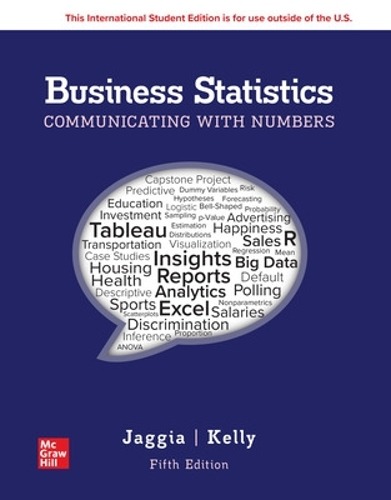
Takes a comprehensive and contemporary approach that aims to bridge the gap between how statistics is taught and applied in the business world. this title not only prepares students in basic statistics but also gets them excited about further exploration of data analytics. the authors emphasize communicating with numbers rather than number crunching, through relatable case studies with relevant statistical methods and takeaways. this title incorporates timely examples from various fields, reinforces core features from previous editions, uses Excel and R to analyze data and solve problems, and includes new improvements, such as a revised chapter on data visualization, an exclusive chapter on logistic regression, and digital enhancements such as a big data capstone project with algorithmic exercises that span across multiple chapt.
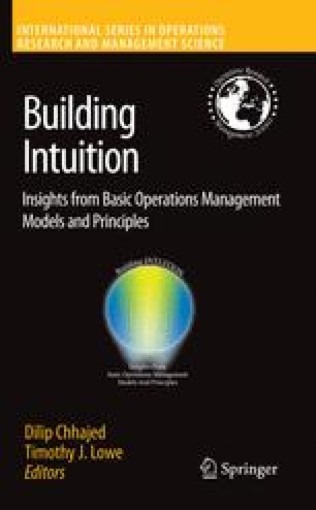
"‘This user-friendly book will help the reader to develop insights with respect to a number of models that are important in the study and practice of operations management’. … all the chapters are extremely well written and a pleasure to read. … This would be a good book to use as a text in any operations management course, and in particular for operations management courses which are part of a ‘liberal studies’ program. It would also be good book for managers … ." (R Bharath, Journal of the Operational Research society, Vol. 60 (7), 2009)

Covers the basics of business-to-business (B2B) eCommerce, where similar principles of customer targeting can be observed as in B2C eCommerce. Gerrit Heinemann highlights the specifics and business models of B2B eCommerce, analyzes the digital challenges and shows the consequences and opportunities for online sales in B2B. Recognised best-practice examples illustrate how successful B2B eCommerce can work and which risks have to be considered.
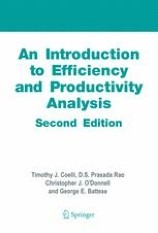
It is designed to be a "first port of call" for people wishing to study efficiency and productivity analysis. The book provides an accessible introduction to the four principal methods involved: econometric estimation of average response models; index numbers; data envelopment analysis (DEA); and stochastic firontier analysis (SFA). For each method, we provide a detailed introduction to the basic concepts, give some simple numerical examples, discuss some of the more important extensions to the basic methods, and provide references for further reading. In addition, we provide a number of detailed empirical applications using real-world data.
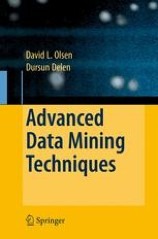
This book covers the fundamental concepts of data mining, to demonstrate the potential of gathering large sets of data, and analyzing these data sets to gain useful business understanding. The book is organized in three parts. Part I introduces concepts. Part II describes and demonstrates basic data mining algorithms. It also contains chapters on a number of different techniques often used in data mining. Part III focusses on business applications of data mining. Methods are presented with simple examples, applications are reviewed, and relativ advantages are evaluated.

Daraa Highway - Ghabagheb - Syria
+963-15 2050 - 15 860 380 /1/2/3 - 11 662 3900