


Refine Results
Sort By
From
To

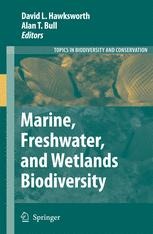
Marine, coastal and wetland habitats are threatened, not only through exploitation, but also by the prospect of climate change – as ocean currents change course, sea levels rise, and rainfall patterns change. Even the once-common cod is now under threat from the combined effects of over-fishing and a dramatic change-induced decrease in the plankton that cod larvae feed on. Meanwhile, coral reefs remain especially vulnerable to rapid sea-level changes exacerbated by the effects of tourism and disease. This book gathers together a wide range of papers reporting on key research into the biodiversity conservation of these critical and increasingly threatened habitats. Collectively these papers provide a snap-shot of the types of problems they are experiencing, and offer a wealth of topical examples which render this volume especially valuable to teachers of courses in marine, freshwater and wetlands ecology, biological conservation and ecological restoration.
Understanding the functioning of Marine Ecosystems is the first step to measure and predict the influence of Man, and to find solutions for the enormous array of problems we face today. This volume is organised according to the four subthemes of the symposium and to issues commonly perceived as relevant by scientists concerned with the study, protection and management of Marine Biodiversity: patterns and processes, assessment, threats and management and conservation.
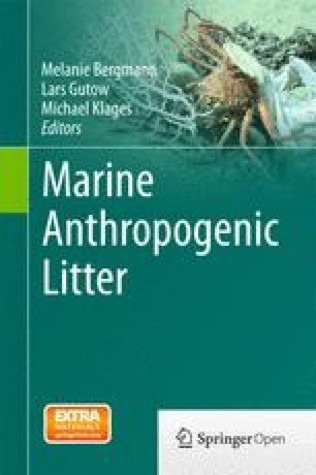
This book describes how man-made litter, primarily plastic, has spread into the remotest parts of the oceans and covers all aspects of this pollution problem from the impacts on wildlife and human health to socio-economic and political issues. Marine litter is a prime threat to marine wildlife, habitats and food webs worldwide. The book illustrates how advanced technologies from deep-sea research, microbiology and mathematic modelling as well as classic beach litter counts by volunteers contributed to the broad awareness of marine litter as a problem of global significance. The authors summarise more than five decades of marine litter research, which receives growing attention after the recent discovery of great oceanic garbage patches and the ubiquity of microscopic plastic particles in marine organisms and habitats.

This volume presents the proceedings of the eighth Colloquium Crustacea Decapoda Mediterranea, which was held at the Ionian University on Corfu Island, Greece, from 2 to 6 September 2002, and reflects recent advancements in decapod crustacean research. The meeting is the oldest European carcinological event, organized regularly at 3-year intervals since 1972. Although focused on the Mediterranean Sea, worldwide contributions provided a forum for fruitful contact and scientific exchange. The book covers up-to-date issues in decapod crustacean research, including genetics, morphology, reproduction, ecology, behaviour and fisheries, and it is primarily aimed at scientists interested in decapod crustacean research, but other scientists and decision-makers working on marine ecology and fisheries will also find up-to-date information on relevant issues.
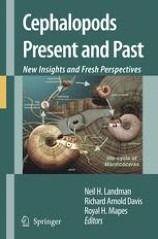
Cephalopods are diverse, highly developed molluscs capable of swimming and jet propulsion. These animals are an important component of present-day marine ecos- tems throughout the world and comprise approximately 900 species. They also have an extraordinary fossil record, extending back to the Cambrian Period, with as many as 10,000 extinct species. Throughout their long history, they have experienced sp- tacular radiations and near-total extinctions. Because of their superb fossil record, they also serve as ideal index fossils to subdivide geologic time. This book touches on many of these themes, and it treats both fossil and present-day cephalopods.
Many plants, animals, and microbes use adhesive polymers and structures to attach to inert substrates, to each other, or to other organisms. This is the first major review that brings together research on many of the well-known biological adhesives. Emphasizing the diversity of biological adhesives and associated adhesion processes, it deals with bacteria, fungi, algae, and marine and terrestrial animals. It bridges a variety of disciplines including biochemistry, molecular biology, biomechanics, bioengineering, microbiology, organism structure and function, and ultrastructure. As we learn more about the molecular and mechanical properties of these adhesives, we begin to understand why they adhere so well and how they develop cohesive strength. With this understanding comes the prospect of developing synthetic or semi-synthetic adhesives with broad applications in areas such as medicine, dentistry, and biotechnology. The book is suitable for both industrial and academic researchers.
This book, written by world experts in aquaponics and related technologies, provides the authoritative and comprehensive overview of the key aquaculture and hydroponic and other integrated systems, socio-economic and environmental aspects. Aquaponic systems, which combine aquaculture and vegetable food production offer alternative technology solutions for a world that is increasingly under stress through population growth, urbanisation, water shortages, land and soil degradation, environmental pollution, world hunger and climate change.

Increasing awareness of the deleterious effects of toxic components in antifouling coatings has raised interest in the potential for nontoxic alternatives. This book examines how marine organisms from bacteria to invertebrates and plants use chemicals to communicate and defend themselves. Chemicals that prevent colonisation of living surfaces are particularly pertinent to antifouling technology and may inspire new solutions. The challenge is to identify such compounds, identify the means for sustainable production and incorporate them into coatings to give long-term antifouling efficacy.
This volume provides an overview of climate change data, its effects on the structure and functioning of Antarctic ecosystems, and the occurrence and cycling of persistent contaminants. It discusses the unique physico-chemical characteristics of the Antarctic environment, ecophysiological adaptations of terrestrial and marine organisms, the transfer of contaminants in pelagic and neritic food chains and the possible consequences for animals at higher trophic levels.
This book provides a practical introduction to analysing ecological data using real data sets collected as part of postgraduate ecological studies or research projects. The first part of the book gives a largely non-mathematical introduction to data exploration, univariate methods (including GAM and mixed modelling techniques), multivariate analysis, time series analysis (e.g. common trends) and spatial statistics. The second part provides 17 case studies, mainly written together with biologists who attended courses given by the first authors. The case studies include topics ranging from terrestrial ecology to marine biology.
This is the first ever book devoted entirely to the chemical ecology of algae. Algae from both marine and freshwater habitats are covered, as are macroalgae (seaweeds) and microalgae (including phytoplankton). While its main emphasis is on the ecological rather than chemical aspects of the field, the book also includes a unique introductory chapter intended as a primer on algal natural products chemistry for ecologists. It elucidates the roles of chemical defenses in various regions and habitats, of DMSP, oxidative burst responses, and herbivore offense. Topics such as algal sensory chemical ecology and defenses against ultraviolet radiation are also treated, and an introduction to the chemical ecology of phytoplankton is provided.
A Sea Change in a Changing Sea The oceans, seas and coastal areas encompass over 70% of the earth’s surface. They are a critical driver of the earth’s hydrologic cycle and climate system, important for c- merce, transport, and tourism, a source of economically important living marine resources, minerals such as hydrocarbons, as well as new pharmaceutical compounds. The marine environment provides essential habitats for thousands of marine living 1 2 resources, which in turn contribute significantly to global food security, employment, 3 and trade. Overall, the sea’s contribution to human welfare, in terms of market and non-market resources and environmental services, has been estimated at US$21 trillion/year (Costanza, 2000). However, despite the importance of the ocean realm to humans, there is a growing sense that human impacts are destabilizing this system. Some experts believe that current fishing levels are approaching or exceeding the total 4 productivity of the ocean ecosystem (National Research Council, 1999).
Embedded systems are ubiquitous. They appear in cell phones, microwave ovens, refrigerators, consumer electronics, cars, and jets. Some of these embedded s- tems are safety- or security-critical such as in medical equipment, nuclear plants, and X-by-wire control systems in naval, ground and aerospace transportation - hicles. With the continuing shift from hardware to software, embedded systems are increasingly dominated by embedded software. Embedded software is complex. Its engineering inherently involves a mul- disciplinary interplay with the physics of the embedding system or environment. Embedded software also comes in ever larger quantity and diversity. The next generation of premium automobiles will carry around one gigabyte of binary code. The proposed US DDX submarine is e?ectively a ?oating embedded so- ware system, comprising 30 billion lines of code written in over 100 programming languages. Embedded software is expensive. Cost estimates are quoted at around US$15– 30 per line (from commencement to shipping). In the defense realm, costs can range up to $100, while for highly critical applications, such as the Space Shuttle, the cost per line approximates $1,000. In view of the exponential increase in complexity, the projected costs of future embedded software are staggering.
This book introduces readers to a new methodology for assessing the risks to the marine environment following accidental oil spills. The methodology will soon be implemented on the Norwegian Continental Shelf and will be complemented by guidelines for its use in a regulatory framework.
Includes recording and analysis of maritime archaeology through emerging technologies, including both practical and theoretical contributions. Topics include photogrammetric recording, laser scanning, marine geophysical 3D survey techniques, virtual reality, 3D modelling and reconstruction, data integration and Geographic Information Systems. This convergence of digital technologies such as underwater photography and photogrammetry, 3D sonar, 3D virtual reality, and 3D printing has highlighted a pressing need for these new methodologies to be considered together, both in terms of defining the state-of-the-art and for consideration of future directions.
Despite the social, nutritional, economical and environmental importance of Tanzanian coastal areas, yet they are vulnerable to both over-exploitation and degradation of their habitats. Using the data from two coastal villages and econometric methods as well as Stochastic Production Frontier techniques, the book demonstrates the extent which various socio-economic dimensions of rural coastal households influence livelihood pathways, production efficiency and attitudes towards conservation initiatives. Thus, attention to differential patterns of rural coastal households presents more viable possibilities for coastal villages to have conservation-development policies/programs that lead to poverty reduction.

This book is the first comprehensive overview of maritime spatial planning. Situated at the intersection between theory and practice, the volume draws together several strands of interdisciplinary research, reflecting on the history of MSP as well as examining current practice and looking towards the future. The authors and contributors examine MSP from disciplines as diverse as geography, urban planning, political science, natural science, sociology and education; reflecting the growing critical engagement with MSP in many academic fields. This innovative and pioneering volume will be of interest and value to students and scholars of maritime spatial planning, as well as planners and practitioners.
Since the late 1960s, various groups have investigated the influence of marine surface films on mechanisms dominating energy and mass transfer across the ocean/atmosphere interface. However, a compendium summarizing the state-of-the-art research in this field is still missing. The book fills this gap and transfers the accumulated knowledge to the scientific community. After a brief historical chapter basic chemical insights are presented, followed by theoretical and experimental approaches carried out in laboratory facilities. Air-sea interaction experiments are then described and finally, remote sensing applications with sea slicks and crude oil spills are presented.
MARE-DASM research focused on: (i) the estimation and distribution of marine contaminants in order to assess their long term effects (ecotoxicology); (ii) the integration of these result into a Biological Effects SubModel and a mathematical model assessing the risks associated with accidental spillage of oil at sea and the damage this can cause (modelling); (iii) the assessment of the willingness to pay for ecological damage, based on the Contingent Valuation Method (economics); (iv) the development and evaluation of measures to be taken in order to guarantee a sustainable use of the Belgian part of the North Sea, taking into account the economic and social interests and values (social economics); (v) the potential to develop technical and legal procedures that allow ecological damage to the marine environment to be evaluated and compensated, taking into account constraints in national and international liability legislation (legal).
The oceans contain a great biodiversity of marine organisms. They include a rich variety of unusual genes and biochemistries and hence a diverse array of organic compounds ranging from colourful carotenoids and chlorophylls to lipids with structures ranging from the simple to the complex. This volume brings together ten chapters on the occurrence and identification of the lipid biomarkers and of pigments in marine waters. It describes how they can be used in conjunction with stable isotopes and molecular biology to ascertain the sources and fate of organic matter (both natural and pollutant) in the sea and underlying sediments. The authors are each experts in their field and the chapters provide both an overview of the state-of-the-art and knowledge gaps together with abundant detail to satisfy the needs of specialists and non-specialists alike.

Daraa Highway - Ghabagheb - Syria
+963-15 2050 - 15 860 380 /1/2/3 - 11 662 3900