


Refine Results
Sort By
From
To

Contains the Proceedings of the 1st International Conference on Cognitive Neurodynamics held in Shanghai, November 17-21, 2007. The participants were treated to an exciting and stimulating conference that left everyone with an enthusiastic vision for the future of the field. The latest important progress was covered by 13 mini-symposia including: Models of Mental Disorders; Cognitive Machines; Dynamics in learning and memory; Central nervous system synchronization; Neuroinformatics; Cognitive Computational Modeling of Human Language Processing; Cognitive Neurodynamics of Attention; Bottom-Up and Top-Down; Brain Networks; From Anatomy to Dynamics; Translational Cognitive Neuroimaging; K-sets; Theory and Applications; Advanced Signal Processing Techniques for Brain Data Analysis; Visual cortex: information processing and dynamics; Dynamics of Firing Patterns and Synchronization in Neuronal Systems.
Challenges in complexity and variability of multimedia data have led to revolutions in machine learning techniques. Multimedia data, such as digital images, audio streams and motion video programs, exhibit richer structures than simple, isolated data items. A number of pixels in a digital image collectively conveys certain visual content to viewers. A TV video program consists of both audio and image streams that unfold the underlying story. To recognize the visual content of a digital image, or to understand the underlying story of a video program, we may need to label sets of pixels or groups of image and audio frames jointly.
Every C# programmer needs to learn about LINQ (Language–Integrated Query), Microsoft's breakthrough technology for simplifying and unifying data access from any data source. With LINQ, you can write more elegant and flexible code—not just to access databases and files, but to manipulate data structures and XML. This book is a short, yet comprehensive guide to the major features of LINQ and the significant enhancements introduced with .NET 3.5. There is no better source for getting a head–start on the future of these technologies than this book.
LINQ for Visual C# 2005 is a short, yet comprehensive guide to the major features of LINQ. It thoroughly covers LINQ to Objects, LINQ to SQL, LINQ to DataSet, and LINQ to XML. It also details significant enhancements to C#, .NET, and ADO.NET.
C++/CLI: The Visual C++ Language for .NET introduces Microsoft's extensions to the C++ syntax that allow you to target the common language runtime the key to the heart of the .NET 3.0 platform. In 12 no-fluff chapters, Microsoft insider Gordon Hogenson takes you into the core of the C++/CLI language and explains both how the language elements work and how Microsoft intends them to be used.
Wright took the same approach with this book that he did with the VB titles, and inside you'll find a fast–paced guide to the essentials to get you programming fast. You'll learn the C# language and the tools Visual C# 2005 Express provides. He covers everything from simple console programs to code that talks to the Internet, and even how to write your own database programs. Whatever your reasons for wanting to learn to program with C#, this book will get you where you want to be quickly, and hopefully with a smile on your face. So dive in and change the way you use computers forever.
The book also provides a detailed introduction, maps, timeline, glossary, and guides for further reading. This book offers accessible answers to key questions in the scholarship on Islamic art and architecture from its earliest times to the present. The issues dealt with in each of the stories include iconography, attitudes towards representation, the role of script, the elaboration of geometric decoration, the creation of sacred and secular spaces in architecture, and the socio-cultural context of art production and consumption.
Bringing together an international team of scholars, this book offers new perspectives on the impact that the Bauhaus and its teaching had on a wide range of artistic practices.
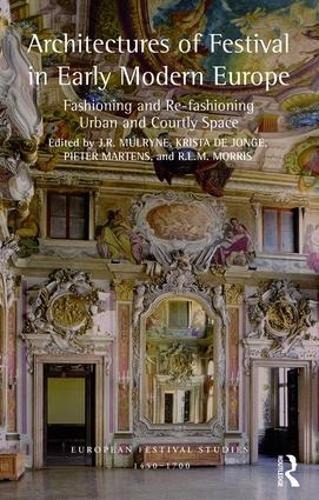
Draws on up-to-date research by a Europe-wide group of academic scholars and museum and gallery curators to provide a unique, intellectually-stimulating and beautifully-illustrated account of temporary architecture created for festivals of the sixteenth and seventeenth centuries, together with permanent architecture pressed into service for festival occasions across major European locations including Italian, French, Austrian, Scottish and German.
Provides an index of ideas, theories, projects, and definitions that string into a methodology for evaluating the contemporary language of architecture described as “contemporism” through a review of topology (form) and typology (system and elements). Trying to answer the postmodern question of how to move beyond modernism through a thread of architectural styles that tried to respond to deficiencies from the modern promise and contextual changes. Yet, the question remains, should this ongoing struggle to move beyond modernism be a stylistic battle? Has the present architectural practice ever left the modernist tendencies, and is there a structure for a contemporary language in architecture? Presents a collection of highly illustrated projects that have worked under these parameters to break away from modernism in order to present a holistic integration of topology and typology as a language for “contemporism.” The index is illustrated with individual spreads, which can be read sequentially or independently, and encourages the reader to make their own connections. It also includes interviews and contributions from Toyo Ito, Anthony Vidler, Ben van Berkel, Christian Kerez, and Greg Lynn.
This book offers a rich and nuanced analysis of digitally networked socialities as culturally meaningful relationships of Touch. Focusing on the ways Touch is practised in everyday social interactions serves as a basis for understanding how Touch is multiply significant – physically, emotionally, intellectually and politically. Fiona Andreallo initiates a map of the fundamentals of Touch and how they can be considered for future research in considering digitally networked cultures. This map also serves as a basis for closely examining selfies and memes.

Daraa Highway - Ghabagheb - Syria
+963-15 2050 - 15 860 380 /1/2/3 - 11 662 3900