


Refine Results
Sort By
From
To

Understanding the functioning of Marine Ecosystems is the first step to measure and predict the influence of Man, and to find solutions for the enormous array of problems we face today. This volume is organised according to the four subthemes of the symposium and to issues commonly perceived as relevant by scientists concerned with the study, protection and management of Marine Biodiversity: patterns and processes, assessment, threats and management and conservation.
Brings together the works of radiation biologists and ecologists to provide reliable radioecology data and gives insight into future radioprotection. The book examines the environmental pollution and radiation exposure, and contains valuable data from abandoned livestock in the ex-evacuation zone and from wild animals including invertebrates and vertebrates, aqueous and terrestrial animals, and plants that are subjected to long-term exposure in the area still affected by radiation. It also analyzes dose evaluation, and offers new perspectives gained from the accident, as well as an overview for future studies to promote radioprotection of humans and the ecosystem.
All over the world, sustainable river basin management is a leading principle of policy plans and legal instruments for water management (e.g. the European Water Framework Directive). The evidence, however, to underpin the full scope of sustainability is rather scanty. In this book an integrative perspective on trends and challenges in river science and management is demonstrated. The three pillars underneath sustainable water management, ecology, economy and sociology, are elaborated by experts in their fields. A number of papers integrate the current knowledge on the structure, functioning and management of ‘living rivers’. The book includes data and experiences concerning the rivers Allier, Meuse, Rhine, Sava and Tagliamento in Europe and the river Illinois in the USA. Sustainable river basin management asks for un-orthodox rehabilitation programmes and ecosystem based and transboundary management approaches.
A host of studies has unravelled the involvement of many genes in the left right patterning pathway. Based on this knowledge the genetic basis of human laterality defects are beginning to be revealed. It is a major challenge now to understand how all these genes control left right development as well as the complex set of interactions established between them.

Science produces fascinating puzzles: why is there such a range of placental structures when other mammalian organs are so structurally uniform ? Why and how did the different placental structures evolve ? Comparative placental studies can facilitate the identification of the common factors in placental growth, differentiation and function and their relevance to possible evolutionary pathways. Comparative Placentation is the only book presenting up-to-date data illustrating the great variety of structure but uniform function of vertebrate placentas from fish to man. This information is essential for selection of suitable models to investigate particular practical problems of impaired or anomalous growth in human and animal placentation. The unique collection of the best light and electron micrographs from the last thirtyfive years which precisely illustrate the structural range in each taxon, make the book the most authoritative publication in this field and a vital source of information for anyone interested on reproductive physiology, anatomy and medicine.
Fungal comparative genomics started in 2000 by the genome sequencing of several yeast species other than the canonical Saccharomyces cerevisiae. Since then, over 30 fungal genome sequences have become available. This set represents a total evolutionary divergence comparable to that between vertebrates and arthropods, but also contains closely related genomes. This volume describes how we can use this set of genomes to trace large and small-scale events in genome evolution, to extract information about highly conserved and less conserved sequence elements, and to develop novel methods in genomics that will have an impact on genomics at large.
Presents the proceedings of "Chemical Signals in Vertebrates 11", hosted by the University of Liverpool and held July 25 - 28, 2006 at the University of Chester in the United Kingdom. Chemical Signals in Vertebrates 11 contains the latest research on chemical communication relevant to vertebrates, particularly focusing on new research since the last meeting in 2003. Topics covered include chemical ecology, biochemistry, behavior and neurobiology of both the main olfactory and vomeronasal systems of vertebrates, from amphibia to mammals including humans. A broad range of taxonomic groups and topics are discussed, including sections on new directions in semiochemistry, olfactory response and function, recognition within species, sexual communication, maternal-offspring communication, communication between species, and applications for zoo animal enrichment and pest control. The volume is dedicated to the memory of Dr. Bets Rasmussen and includes a special tribute chapter on her ground-breaking research on elephant communication.
This book also represents the tenth in a series of books on chemical communication, chemical ecology, olfactory and vomeronasal research in vertebrate species. The species covered in the chapters herein range from fish to mammals including humans. By taxonomic breakdown the mammals are the most represented in number of species and chapter contributions. However, the hosts of the meeting endeavored to have some representative contributions covering all of the major vertebrate taxa.
Contemporary research on genetic control of disease-transmitting insects knows two kinds of scientists: those that work in the laboratory and those known as ‘field people’. Over the last decade, both groups seem to have developed differing research priorities, address fundamentally different aspects within the overall discipline of infectious-disease control, and worse, have developed a scientific ‘language’ that is no longer understood by the ‘other’ party. This gap widens every day, between the North and the South, between ecologists and molecular biologists, geneticists and behaviourists, etc. The need to develop a common research agenda that bridges this gap has been identified as a top priority by all parties involved. Only then shall the goal of developing appropriate genetic-control strategies for vectors of disease become reality.
Branching morphogenesis, the creation of branched structures in the body, is a key feature of animal and plant development. This book brings together, for the first time, expert researchers working on a variety of branching systems to present a state-of-the-art view of the mechanisms that control branching morphogenesis. Systems considered range from single cells, to blood vessel and drainage duct systems to entire body plans, and approaches range from observation through experiment to detailed biophysical modelling. The result is an integrated overview of branching.
This book presents a comprehensive account of all aspects of biological invasions in South Africa, where research has been conducted over more than three decades, and where bold initiatives have been implemented in attempts to control invasions and to reduce their ecological, economic and social effects.
he most conspicuous biological invasions in terrestrial ecosystems have been by exotic plants, insects and vertebrates. Less conspicuous but possibly of equal importance are invasions by soil invertebrates, which are occurring literally beneath our feet. Familiar examples include the South American fire ant (Solenopsis invicta) which has invaded North America and Australia, and the New Zealand flatworm (Arthurdendyus triangulatus) which has become wide-spread in the United Kingdom; both have caused considerable ecological and economic damage. There is now evidence that exotic earthworm invasions are increasing world-wide and may be having significant impacts on soil processes and plant communities in some regions. Much remains to be learned about these ‘cryptic’ biological invasions. The papers in this book are based on efforts by an international group of soil ecologists to assess the biological and ecological mechanisms of earthworm invasions, their geographic extent and impacts on terrestrial ecosystems, and possible means by which earthworm invasions might be mitigated.
This book follows a precursor volume devoted to biological calci?cation, - sued by the CRC Press, Boca Raton (Florida) in 1992. Several basic aspects of the calci?cation process were analyzed in it by outstanding authors who had unquestioned competence in their respective research areas. Its main aim was that of giving readers access to a series of papers which, even though they discussed divergent aspects of biological calci?cations drawn from the study of systems as different as vertebrate skeletons and mollusks, in vitro cultures and unicellular organisms, ectopic calci?cation and urinary stones, provided elements permitting a coherent approach to a comprehensive view of the calci?cation process in biological tissues.
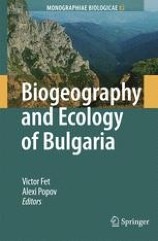
The book includes 22 chapters by 28 authors united by the single theme: biogeography and ecology of Bulgaria. From the single-celled organisms in the Black Sea sand to the endemic cave crustaceans, from the mountain glacial relict insects to the most diverse bird fauna in Europe, the unique fauna of Bulgaria has been a subject of study of mostly Bulgarian zoologists for more than a century. This is the first monograph in English broadly addressing all vertebrate and many key invertebrate groups of Bulgaria, their faunistics, origin, geographical and ecological distribution, and conservation issues are addressed by the experts on each group.
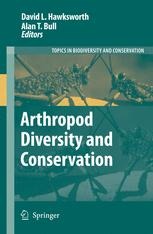
Despite their enormous bulk and complexity of architecture, plants make up only around a quarter of a million of the 8 million or so species on Earth. The major components of biodiversity, instead, are the smaller, largely unseen, silent majority of invertebrates – most of which are arthropods. Vertebrates, a mere blip on the biotic horizon, are elevated in importance in the bigger scheme of things only by the human psyche. This collection of more than 30 peer-reviewed papers focuses on the diversity and conservation of arthropods, whose species inhabit virtually every recess and plane – and feature somewhere in virtually every food web – on the planet. Highlighting issues ranging from large-scale disturbance to local management, and from spatial heterogeneity to temporal patterns, these papers reflect some of the most exciting new research taking place today – and in some of the most biodiverse corners of the planet.

Increasing awareness of the deleterious effects of toxic components in antifouling coatings has raised interest in the potential for nontoxic alternatives. This book examines how marine organisms from bacteria to invertebrates and plants use chemicals to communicate and defend themselves. Chemicals that prevent colonisation of living surfaces are particularly pertinent to antifouling technology and may inspire new solutions. The challenge is to identify such compounds, identify the means for sustainable production and incorporate them into coatings to give long-term antifouling efficacy.
Advances in Algal Biology: A Commemoration of the Work of Rex Lowe was written by students and colleagues of Rex Lowe to acknowledge his esteemed career that included exceptional contributions to research and teaching. Papers in the book cover a variety of topics in algal ecology, focusing on benthic algal ecology in freshwater ecosystems. The studies provide an unusual combination of small-scale experiments and large-scale regional surveys that bridge both basic and applied ecology. Ecologists, limnologists, phycologists, and environmental scientists will find valuable contributions to the development and application of algal research.
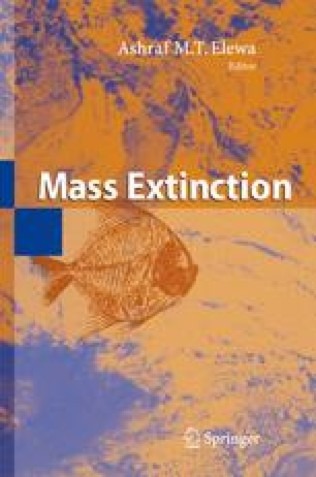
The present book combines three main aspects: five major mass extinctions; contributions on some other minor extinctions; and more importantly contributions on the current mass extinction.
Bioactive Marine Natural Products is the first book available that covers all aspects of bioactive marine natural products. It fills the void in the literature for bioactive marine natural products. The book covers various aspects of marine natural products and it is hoped that all the major classes of bioactive compounds are included. Different classes of marine organisms and the separation and isolation techniques are discussed. The chemistry and biology of marine toxins, peptides, alkaloids, nucleosides and prostanoids are discussed in detail. Biological, toxicological and clinical evaluations are also dealt with to ensure that the book may be adopted at any stage by any practicing organic chemist or biologist, working in academia or in R&D divisions of pharmaceutical companies. Each chapter in the book includes an abstract to highlight the major points discussed in the text and concluding remarks are given. References to books, monographs, review articles and original papers are provided at the end of each chapter.

Daraa Highway - Ghabagheb - Syria
+963-15 2050 - 15 860 380 /1/2/3 - 11 662 3900