



Page 1
Page 1

Sustainable Concrete Made with Ashes and Dust from Different Sources
Focuses on individual materials, addressing material characterization, their role in the strength and durability of construction materials, and structural applications. Each chapter reflects the current state-of-the-art in terms of the effective and efficient use of the material. Types of ashes covered are Coal Fly Ash, Coal Bottom Ash, Bagasse Ash, MSW Ash, Red Mud, Waste Marble Dust, Sewage Sludge Ash, and Cement Kiln Dust. This book is useful for civil engineers in the design and development of sustainable concrete by utilizing such types of ashes and researchers involved in the design and formulation of new cementitious materials.

Soil and Water Pollution Monitoring, Protection and Remediation
Soil, surface waters/sediments and shallow unprotected groundwater aquifers are interrelated compartments of the environment that are particularly easy to compromise, sensitive to short- and long-term pollution and directly affect sustainability of ecosystems and human health. Routine human activity such as application of fertilizers and pesticides in agriculture and forestry, or wet and dry deposition of atmospheric pollutants emitted from industrial plants, waste disposal and other practices adversely affect soil and water quality that already increasingly suffers from mismanagement in many areas. The predominant sources of pollution result in non-point contamination that is particularly difficult to reduce and control. Wars, accidents and natural emergency cases such as catastrophic floods that occur partly due to anthropogenically disturbed global water balance also add to overall increase of diverse contaminant loads in soil and water. Beneficial properties of some bulk waste materials such as biosolids (sewage sludge), biowaste (e. g. municipal waste composts) or fly ash from coal combustion xi xii Preface encourage applying these waste to land as a source of nutrients and organic matter, or as a soil amendment.

Environmental Bioremediation Technologies
Environmental contamination from both natural and anthropogenic sources is, today, a major environmental concern due to pervasiveness and persistence of many toxicants. It is considered as an inevitable evil of our progress and modernization. To decontaminate the soils, sediments and waters, polluted by anthropogenic activities, the scientists and technologists have evolved different technologies over the years. Although we have to pay high cost for physical and chemical environmental technologies, but they are not eco-friendly and safe. Hence, it was deeply realized to develop viable technologies employing microbes and plants to remediate not only metallic residues and radionuclides, but also the xenobiotic compounds like PCBs, PAHs, PCPs, petroleum sludge and the military wastes. No doubt, the scientists have also got some success in this endeavour and as the result, many companies are in place today to promote the sale of plant or microbe-based technologies to deal with specific environmental contamination challenges. Besides, these technologies are se- driven and do not disturb the sites in cleaning process.

Emerging Organic Pollutants in Waste Waters and Sludge
Over the past fifteen years regulatory agencies have relied on their approaches to characterise and control the release of toxic substances into the aquatic environment: a GC/MS analysis for U.S. EPA designated 126 priority pollutants and 132 dangerous substances according to the European 76/464/CEE Directive and on the bioassays with aquatic bioorganisms. "Emerging Contaminants" correspond in most cases to irregulated contaminants, e.g. surfactants, pharmaceuticals and personal care products (PPCP), or gasoline additives. These two volumes, 5/I and 5/O, of this Handbook deal with the analytical, toxicological and environmental issues of these toxicants. Based on results of up-to-date research they give the reader a balanced view on this rapidly developing and complex subject.
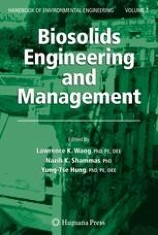
Biosolids engineering and management
Biosolids Engineering and Management, is a collection of methods of practical design, calculation and numerical examples that illustrate how organized, analytical reasoning can lead to the discovery of clear, direct solutions, especially in the areas of biosolids management, treatment, disposal and beneficial use. The book’s including sludge and biosolids transport, pumping and storage, sludge conversion to biosolids, chlorination, stabilization, regulatory requirements, costs, agricultural land application, landfill, ocean disposal, combustion, incineration and sludge treatment process selection.

Aquatic Oligochaete biology IX : Selected papers from the 9th Symposium on Aquatic Oligochaeta, 6-10 October 2003, Wageningen, The Netherlands
This volume contains selected papers from the 9th Symposium on Aquatic Oligochaeta, 6–10 October 2003, Wageningen, The Netherlands. 18 contributions deal with the biology of aquatic oligochaetes, and represents a mixture of the fields of taxonomy, anatomy, morphology and physiology, life history, ecology, sludge studies and toxicology. This wide scope is in line with the recent trends in oligochaete research, with a special interest in sludge studies.
