


Refine Results
Sort By
From
To

This book describes a number of applications of Artificial Intelligence in the field of Customer Relationship Management with the focus of solving customer problems. We design a system that tries to understand the customer complaint, his mood, and what can be done to resolve an issue with the product or service. To solve a customer problem efficiently, we maintain a dialogue with the customer so that the problem can be clarified and multiple ways to fix it can be sought. We introduce dialogue management based on discourse analysis: a systematic linguistic way to handle the thought process of the author of the content to be delivered. We analyze user sentiments and personal traits to tailor dialogue management to individual customers. We also design a number of dialogue scenarios for CRM with replies following certain patterns and propose virtual and social dialogues for various modalities of communication with a customer.
Introduces a novel approach to the design and operation of large ICT systems. It views the technical solutions and their stakeholders as complex adaptive systems and argues that traditional risk analyses cannot predict all future incidents with major impacts. To avoid unacceptable events, it is necessary to establish and operate anti-fragile ICT systems that limit the impact of all incidents, and which learn from small-impact incidents how to function increasingly well in changing environments. The book applies four design principles and one operational principle to achieve anti-fragility for different classes of incidents. It discusses how systems can achieve high availability, prevent malware epidemics, and detect anomalies. Analyses of Netflix’s media streaming solution, Norwegian telecom infrastructures, e-government platforms, and Numenta’s anomaly detection software show that cloud computing is essential to achieving anti-fragility for classes of events with negative impacts.
This book summarizes work being pursued in the context of the CIPRNet (Critical Infrastructure Preparedness and Resilience Research Network) research project, co-funded by the European Union under the Seventh Framework Programme (FP7). The project is intended to provide concrete and on-going support to the Critical Infrastructure Protection (CIP) research communities, enhancing their preparedness for CI-related emergencies, while also providing expertise and technologies for other stakeholders to promote their understanding and mitigation of the consequences of CI disruptions, leading to enhanced resilience.
This book focuses on a challenging application field of cellular automata: pattern formation in biological systems, such as the growth of microorganisms, dynamics of cellular tissue and tumors, and formation of pigment cell patterns. These phenomena, resulting from complex cellular interactions, cannot be deduced solely from experimental analysis, but can be more easily examined using mathematical models, in particular, cellular automaton models.

Lays out a vision for a coherent framework for understanding complex systems'' (from the foreword by J. Doyne Farmer). By developing the genuine idea of Brownian agents, the author combines concepts from informatics, such as multiagent systems, with approaches of statistical many-particle physics. This way, an efficient method for computer simulations of complex systems is developed which is also accessible to analytical investigations and quantitative predictions. The book demonstrates that Brownian agent models can be successfully applied in many different contexts, ranging from physicochemical pattern formation, to active motion and swarming in biological systems, to self-assembling of networks, evolutionary optimization, urban growth, economic agglomeration and even social systems.
This Bayesian modeling book provides an operational methodology for conducting Bayesian inference, rather than focusing on its theoretical justifications. Special attention is paid to the derivation of prior distributions in each case and specific reference solutions are given for each of the models.
R's open source nature, free availability, and large number of contributor packages have made R the software of choice for many statisticians in education and industry. Bayesian Computation with R introduces Bayesian modeling by the use of computation using the R language.
"Auralization" is the technique of creation and reproduction of sound on the basis of computer data. With this tool is it possible to predict the character of sound signals which are generated at the source and modified by reinforcement, propagation and transmission in systems such as rooms, buildings, vehicles or other technical devices. This book is organized as a comprehensive collection of the basics of sound and vibration, acoustic modelling, simulation, signal processing and audio reproduction. Implementations of the auralization technique are described using examples drawn from various fields in acoustic’s research and engineering, architecture, sound design and virtual reality.
ANEMONA is a multi-agent system (MAS) methodology for holonic manufacturing system (HMS) analysis and design, based on HMS requirements. The development process of ANEMONA provides clear and HMS-specific modeling guidelines for HMS designers, and complete development phases for the HMS life cycle.
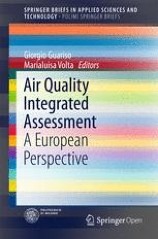
This book reports on the results of an extended survey conducted across Europe within the framework of the APPRAISAL FP7 project to determine the extent to which an integrated assessment approach to air quality is being adopted, on the one hand, by regional and local authorities to develop air quality plans and, on the other, by researchers. Following a detailed analysis of the role and structure of the components of an integrated assessment study, the results of the survey are considered from a variety of perspectives.

Daraa Highway - Ghabagheb - Syria
+963-15 2050 - 15 860 380 /1/2/3 - 11 662 3900