



Page 1
Page 1

Immunoinformatics
Immunoinformatics is an emerging subdiscipline of bioinformatics. It utilizes mathematics, information science, computer engineering, genomics, proteomics and immunological methods to bridge immunology and informatics. Similar to bioionformatics which became a driving force in genome research, immunoinformatics enables data-driven research strategies and systems approaches that aim at understanding the networks regulating the immune system. Considering the breath of topic, Immunoinformatics was composed to provide a cross-section of research ranging from data integration, epitope predictions to systems level applications. In ten chapters experts in the field introduce and discuss research strategies for immunologists and bioinformaticians who wish to endeavour existing and new approaches to gain insight into the workings of the immune system.

From herbs to healing : Pharmacognosy - phytochemistry - phytotherapy - biotechnology
Demonstrates the place of phytotherapy in healing, the role of herbs in complementary and traditional therapy, and research strategies for the development of drugs of natural plant origin. This book is primarily designed for scientific researchers, but is also very useful for undergraduate and postgraduate students in their professional training. As this book discusses herbs from all over the world, it is specifically drafted to be useful not only in Hungary and Europe, but also for people in other continents as an English language encyclopaedia of medicinal plants and their biologically active compounds.

Contemporary Qualitative Research : Exemplars for Science and Mathematics Educators
This volume offers a unique set of research exemplars for science, mathematics and technology educators. The volume explores the important challenge of how to translate leading-edge methodologies into practical research strategies and techniques. The book is divided into three major sections, The Golden Age of Research, Meeting the Research Crises and A New Era of Research, with chapters exploring a variety of methodologies and representational forms and texts. These include historical, narrative, literary, phenomenological, autobiographical, virtual and performance texts, among others. Qualitative Research in Postmodern Times is an exciting and accessible book that will be essential reading for science, mathematics and technology educators interested in new forms of educational research. Beginning researchers will find it practically helpful in planning and conducting their research studies, while experienced researchers will welcome new theoretical insights into postmodern methodologies.

Consumer perception of product risks and benefits
Reflects the current thinking and research on how consumers’ perception of product risks and benefits affects their behavior. It provides the scientific, regulatory and industrial research community with a conceptual and methodological reference point for studies on consumer behavior and marketing. The contributions address various aspects of consumer psychology and behavior, risk perception and communication, marketing research strategies, as well as consumer product regulation. The book is divided into 4 parts: Product risks; Perception of product risks and benefits; Consumer behavior; Regulation and responsibility.

Computers and Games ; 5th International Conference, CG 2006, Turin, Italy, May 29-31, 2006, Revised Papers
This book covers all aspects of artificial intelligence in computer-game playing. Topics addressed are evaluation and learning, search, combinatorial games and theory opening and endgame databases, single-agent search and planning, and computer Go.
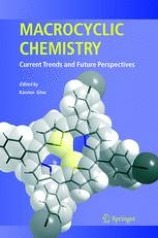
Macrocyclic Chemistry : Current Trends and Future Perspectives
Macrocyclic Chemistry: Current Trends and Future Perspectives illustrates essential concepts in this expanding research field covering both basic and applied studies. Written by well-known experts from around the world, the topics of the chapters range from new macrocyclic architectures with different functions and self-assembly processes through to the modeling and dynamics of such systems. The content also reflects on application possibilities in analytical chemistry, separation processes, material preparation and medicine. Thus this book serves as a creative source of research strategies and methodic tools.
