



Page 1
Page 1

Understanding society and natural eesources : Forging new strands of integration across the social sciences
In this edited open access book leading scholars from different disciplinary backgrounds wrestle with social science integration opportunities and challenges. This book explores the growing concern of how best to achieve effective integration of the social science disciplines as a means for furthering natural resource social science and environmental problem solving. The chapters provide an overview of the history, vision, advances, examples, and methods that could lead to integration.

Risks in Modern Society
The main goal of this book is to make the reader familiar with the complexity and multi-dimensionality of the subject RISK, focusing on the changing character of work in a globalised economy. The main emphasis is on providing practical guidelines for improved risk governance, i.e., how to find adequate solutions through integrated methods of risk assessment, risk handling and risk communication for the benefit of everyone: employers, workers, other stakeholders as well as shareholders and society at large.

Risk Communication for the Future : Towards Smart Risk Governance and Safety Management
The conventional approach to risk communication, based on a centralized and controlled model, has led to blatant failures in the management of recent safety related events. In parallel, several cases have proved that actors not thought of as risk governance or safety management contributors may play a positive role regarding safety. Building on these two observations and bridging the gap between risk communication and safety practices leads to a new, more societal perspective on risk communication, that allows for smart risk governance and safety management.

Risk assessment : Theory, methods, and applications
The book begins with an introduction of risk analysis, assessment, and management, and includes a new section on the history of risk analysis. It covers hazards and threats, how to measure and evaluate risk, and risk management. It also adds new sections on risk governance and risk-informed decision making; combining accident theories and criteria for evaluating data sources; and subjective probabilities. The risk assessment process is covered, as are how to establish context; planning and preparing; and identification, analysis, and evaluation of risk. Risk Assessment also offers new coverage of safe job analysis and semi-quantitative methods, and it discusses barrier management and HRA methods for offshore application. Finally, it looks at dynamic risk analysis, security and life-cycle use of risk.

Integrated Risk and Vulnerability Management Assisted by Decision Support Systems : Relevance and Impact on Governance
This book includes terms of reference and offers an augmented volume of relevant work initiated within the comprehensive concept of “Knowledge Management and Risk Governance”.

Global Risk Governance : Concept and Practice Using the IRGC Framework
This book innovative risk governance framework, the careful reviews it received from internationally recognized scientists, and the results of several case studies in which the framework has been applied to a number of significant but different risks.

Fundamentals of operational risk management : Understanding and implementing effective tools, policies and frameworks
Threats to an organization's operations, such as fraud, IT disruption or poorly designed products, could result in serious losses. Understand the key components of effective operational risk management with this essential book for risk professionals and students. Outlines how to implement a sound operational risk management framework which is embedded in day-to-day business activities. It covers the main operational risk tools including categorisation, risk and control self-assessment and scenario analysis, and explores the importance of risk appetite and tolerance.

Contracting and safety : Exploring outsourcing practices in high-hazard industries
This book examines the increase in outsourcing, contracting and subcontracting as ways of organising work. It explores the impact of these employment arrangements on public safety, particularly when they are linked to complex supply networks in a range of engineering industries including oil and gas, nuclear power and aviation.
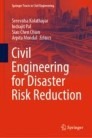
Civil engineering for disaster risk reduction
Brings together all diverse disciplines of civil engineering and related areas (for example, geotechnical engineering, water resources engineering, structural engineering, transportation engineering, environmental engineering, construction management, GIS, and remote sensing) towards a common goal of disaster resilience through an interdisciplinary approach. It contains methods and case studies focusing on civil engineering solutions to reduce the disaster risk. The book contents are aligned in line with the priorities set by UN-Sendai Framework for Disaster Risk Reduction and UN-SDGs to promote a global culture of risk-awareness and disaster reduction. The book will be a useful comprehensive reference for disaster risk reduction beneficial for engineering students, teaching faculty, researchers, industry professionals and policymakers.
