


Refine Results
Sort By
From
To

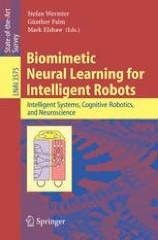
This book presents research performed as part of the EU project on biomimeticmultimodal learning in a mirror neuron-based robot (MirrorBot) and contribu-tions presented at the International AI-Workshop on NeuroBotics. The over-all aim of the book is to present a broad spectrum of current research intobiomimetic neural learning for intelligent autonomous robots. In this book we show the development of newtechniques using cell assemblies, associative neural networks, and Hebbian-typelearning in order to associate vision, language and motor concepts. We havedeveloped biomimetic multimodal learning and language instruction in a robotto investigate the task of searching for objects. As well as the research performedin this area for the MirrorBot project, the second part of this book incorporatessignificant contributions from other research in the field of biomimetic robotics.This second part of the book concentrates on the progress made in neuroscienceinspired robotic learning approaches (in short: NeuroBotics). We hope that this book stimulates and encourages new research in this in-teresting and dynamic area.
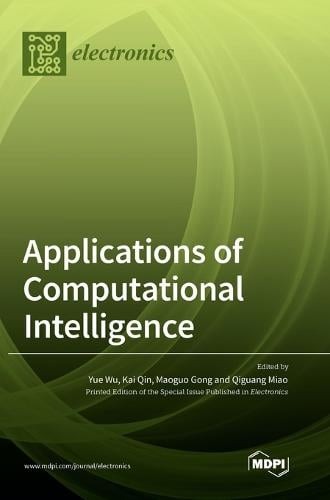
Computational intelligence (CI) is the theory, design, application, and development of biologically and linguistically motivated computational paradigms. Traditionally, the three main pillars of CI have been neural networks, fuzzy systems, and evolutionary computation. However, in time, many nature-inspired computing paradigms have evolved. Thus, CI is an evolving field, and, at present, in addition to the three main constituents, it encompasses computing paradigms such as ambient intelligence, artificial life, cultural learning, artificial endocrine networks, social reasoning, and artificial hormone networks. CI plays a major role in developing successful intelligent systems, including games and cognitive developmental systems.
The papers in this volume are the refereed application papers presented at AI-2007, the Twenty-seventh SGAI International Conference on Innovative Techniques and Applications of Artificial Intelligence, held in Cambridge in December 2007.
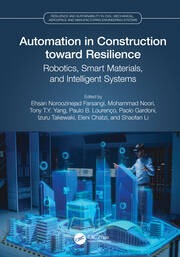
Presents all aspects of automation in construction pertaining to the use of information technologies in design, engineering, construction technologies, and maintenance and management of constructed facilities. The broad scope encompasses all stages of the construction life cycle from initial planning and design, through the construction of the facility, its operation, and maintenance, to the eventual dismantling and recycling of buildings and engineering structures
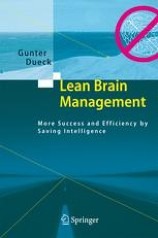
Intelligence is wasted on problems that themselves have been caused by an excess of intelligence. Lean Brain Management strives toward uncompromising Lean Brain Quality. Lean Brain stands for consistent economization of intelligence in all realms of life: Intelligent systems will only be operated by unskilled workers. Education, universities, and schools would become obsolete. A week of training would be enough for virtually any job. ("You are now the physician for the measles in the State of Ohio. In response to phone calls, send this prescription.") Lean Brain is not aimed at dumbing down! Lean Brain can survive on just a very small amount of central intelligence. Potential savings amount to trillions! This is demonstrated using Germany as an example. With this book, Dueck presents a radical suggestion for world improvement. The desire to laugh infinitely about it will eventually segue into a collective rude awakening. The book contains concrete advice for managers to economize on intelligence, and is thus--in keeping with the theme--written in an easy-to-read fashion.
This book comprises a selection of papers from IFSA 2007 on new methods for analysis and design of hybrid intelligent systems using soft computing techniques. Soft Computing (SC) consists of several computing paradigms, including fuzzy logic, neural networks, and genetic algorithms, which can be used to produce powerful hybrid intelligent systems for solving problems in pattern recognition, time series prediction, intelligent control, robotics and automation. Hybrid intelligent systems that combine several SC techniques are needed due to the complexity and high dimensionality of real-world problems. Hybrid intelligent systems can have different architectures, which have an impact on the efficiency and accuracy of these systems, for this reason it is very important to optimize architecture design. The architectures can combine, in different ways, neural networks, fuzzy logic and genetic algorithms, to achieve the ultimate goal of pattern recognition, time series prediction, intelligent control, or other application areas.
Evolutionary computing paradigms offer robust and powerful adaptive search mechanisms for system design. This book includes thirteen chapters covering a wide area of topics in evolutionary computing and applications including: -Introduction to evolutionary computing in system design - Evolutionary neuro-fuzzy systems - Evolution of fuzzy controllers - Genetic algorithms for multi-classifier design -Evolutionary grooming of traffic -Evolutionary particle swarms -Fuzzy logic systems using genetic algorithms - Evolutionary algorithms and immune learning for neural network-based controller design - Distributed problem solving using evolutionary learning -Evolutionary computing within grid environment -Evolutionary game theory in wireless mesh networks - Hybrid multiobjective evolutionary algorithms for the sailor assignment problem - Evolutionary techniques in hardware optimization
Computational intelligence paradigms offer many advantages in maintaining and enhancing the field of healthcare. This volume presents seven chapters selected from the rapidly growing application areas of computational intelligence to healthcare systems, including intelligent synthetic characters, man-machine interface, menu generators, analysis of user acceptance, pictures archiving and communication systems.This book will serve as a useful resource for the health professionals, professors, students, and the computer scientists, who are working on or interested in learning healthcare systems, to overview the current stat-of-the-art of diverse applications of computational intelligence to healthcare practice.
This book presents some of the most recent research results on the applications of computational intelligence in healthcare. The contents include: Information model for management of clinical content State-based model for management of type II diabetes Case-based reasoning in medicine Assessing the quality of care in artificial intelligence environment Electronic medical record to examine physician decisions Multi-agent systems for the management of community healthcare Assistive wheelchair navigation Modelling treatment processes using information extraction Neonatal pain detection using face classification techniques Medical education interfaces using virtual patients The book is directed to the computer scientists, medical practitioners, scientists, professors and students of health science, computer science and related disciplines.
Advanced Computational Intelligence (CI) paradigms are increasingly used for implementing robust computer applications to foster safety, quality and efficacy in all aspects of healthcare. This research book covers an ample spectrum of the most advanced applications of CI in healthcare.

Daraa Highway - Ghabagheb - Syria
+963-15 2050 - 15 860 380 /1/2/3 - 11 662 3900