


Refine Results
Sort By
From
To

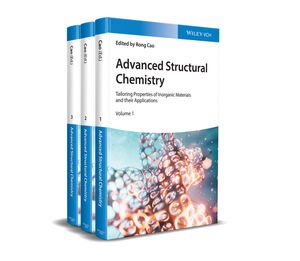
Advanced Structural Chemistry clarifies the relationships between synthesis and structure, as well as structure and property, both of which are central to the creation of new materials with unique functions. In addition to subjects like the syntheses of metal-oxide clusters, metal-organic cages, and metal-organic frameworks with tailored optical, electric, ferroelectric, magnetic, adsorption, separation, and catalytic properties, the accomplished editor Rong Cao provides readers with information on a wide variety of topics
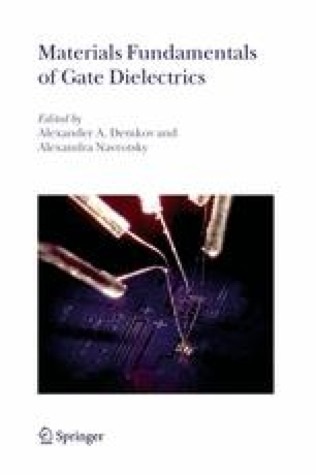
This book presents materials fundamentals of novel gate dielectrics that are being introduced into semiconductor manufacturing to ensure the continuous scalling of the CMOS devices. This is a very fast evolving field of research so we choose to focus on the basic understanding of the structure, thermodunamics, and electronic properties of these materials that determine their performance in device applications. Most of these materials are transition metal oxides. Ironically, the d-orbitals responsible for the high dielectric constant cause sever integration difficulties thus intrinsically limiting high-k dielectrics. Though new in the electronics industry many of these materials are wel known in the field of ceramics, and we describe this unique connection. The complexity of the structure-property relations in TM oxides makes the use of the state of the art first-principles calculations necessary. Several chapters give a detailed description of the modern theory of polarization, and heterojunction band discontinuity within the framework of the density functional theory. Experimental methods include oxide melt solution calorimetry and differential scanning calorimetry, Raman scattering and other optical characterization techniques, transmission electron microscopy, and x-ray photoelectron spectroscopy.

Using the spin-Hamiltonian formalism the magnetic parameters are introduced through the components of the Lambda-tensor involving only the matrix elements of the angular momentum operator. The energy levels for a variety of spins are generated and the modeling of the magnetization, the magnetic susceptibility and the heat capacity is done. Theoretical formulae necessary in performing the energy level calculations for a multi-term system are prepared with the help of the irreducible tensor operator approach. The goal of the programming lies in the fact that the entire relevant matrix elements (electron repulsion, crystal field, spin-orbit interaction, orbital-Zeeman, and spin-Zeeman operators) are evaluated in the basis set of free-atom terms. The modeling of the zero-field splitting is done at three levels of sophistication. The spin-Hamiltonian formalism offers simple formulae for the magnetic parameters by evaluating the matrix elements of the angular momentum operator in the basis set of the crystal-field terms. The magnetic functions for dn complexes are modeled for a wide range of the crystal-field strengths.
This book presents critical reviews of the present position and future trends in modern chemical research concerned with chemical structure and bonding. It contains short and concise reports, each written by the world's renowned experts.
Both experimental and theoretical studies of nearly every aspect of the LDH structure are discussed, including the range of metal cations and interlayer anions, M 3+ /M 2+ ratios, LDH polytypes, arrangement of the "interlayer" anions and water molecules, molecular modeling and molecular dynamics simulations, and the long- and short-range order in both the layers and interlayer galleries. Of especial value is the treatment of the more detailed aspects of the LDH structure that are still unresolved.
Chalcogenocarboxylic acid derivatives are a large class of compounds including more than one chalcogenocarboxyl group in which one or two oxygen atoms of the carboxyl group are replaced with sulfur, selenium or tellurium atoms. The chemistry of metal chalcogenocarboxylates has not been explored extensively as that of carboxylates and dithiocarbamates. This volume presents a comprehensive overview of the syntheses and their limitations, structures and reactions of chalcogenocarboxylic acid derivatives, by emphasizing the developments in organic and inorganic chalcogen chemistry over the last 5 to 20 years.
In nature, biological organisms produce mineralized tissues such as bone, teeth, diatoms, and shells. Biomineralization is the sophisticated process of production of these inorganic minerals by living organisms. Construction of organic–inorganic hybrid materials with controlled mineralization analogous to those produced by nature has recently received much attention because it can aid in understanding the mechanisms of the biomineralization process and development of biomimetic materials processing. The biomineralization processes use aqueous solutions at temperatures below 100 ◦C and no toxic intermediates are produced in these systems. This series presents critical reviews of the present position and future trends in modern chemical research. The short and concise reports on chemistry are each written by world renowned experts. This series is still valid and useful after 5 or 10 years.

The book begins with a brief introduction to binary rare earth oxides, their physical and chemical stabilities, polymorphism, crystal structures and phase transformation and the association with current applications. The book goes on to present the band structure of the oxides using several quantum chemical calculations, which belong to a newly developed area in the binary rare earth oxides. Central to this chapter are the characterizations of electrical, magnetic and optical properties, as well as details of single crystal growth and particle preparation methods that have progressed in recent years. Later chapters concentrate on thermo-chemical properties and trace determination techniques. The final chapter contains a variety of useful applications in various fields such as phosphors, glass abrasives, automotive catalysts, fuel cells, solid electrolytes, sunscreens, iron steels, and biological materials.
This treatise on anion sensing and recognition represents a new addition to a very small number of books in this area, Although this Topics volume does not cover all the different classes fo receptors, it does provide new and timely perspectives to anion chemistry by highlighting several areas that have been generally overlooked in other reviews. The individual chapters are well-written and include references from earlier works up to the present. As such, this volume will be of interest to the community of researchers interested in anions as well as to those who wish to learn about the host-guest chemistry of anion recognition and its applications.
This is the first handbook on zeolites and other microporous materials. It is an up-to-date, highly sophisticated collection of information for those who deal with zeolites in industry or at academic institutions as well as being a guide for newcomers.

Daraa Highway - Ghabagheb - Syria
+963-15 2050 - 15 860 380 /1/2/3 - 11 662 3900