



Page 1
Page 1

Ondansetron Patches
The objective of this study was to develop the matrix of transdermal drug delivery system (TDDS) of ondansetron hydrochloride (ODH), in which ondansetron is the first serotonin subtype 3 receptor antagonist indicated for the treatment and/or prophylaxis of postoperative, chemotherapy or radiotherapy induced emesis. It has been proven efficient and safe to treat such symptoms, by using in vitro drug release study and evaluate the effect of eucalyptus oil and different percentage of carbopol 940. The result of drug release decreased by increasing the percentage of carbopol 940 which achieved the purpose of the study by prolonging the release of the ondansetron . The patch provides a means to reduce the side effects associated with its oral therapy, avoidence of the first-pass metabolism and minimize inconsistency in absorption across GIT. Various types of transdermal patches are used to incorporate the active ingredients into the circulatory system via skin.

Nicotine addiction and its treatment = إدمان النيكوتين وكيفية علاجه
Nicotine is the main cause of smoking addiction, and the custom of preparation for smoking itself and smell of cigarettes create addictive behavior among smokers. Today, nicotine is socially most widely accepted legal drug in the world, and its uptake into the organism through the respiratory tract is 10 times stronger than heroin. Addiction and necessity for cigarettes are constant and intense, and the treatment for smoking addicts is long and difficult. Smoking is a worldwide epidemic, which is closely connected to other addictions such as coffee, alcohol, drugs, and gambling. Smoking cessation is associated with clear health benefits. Cigarette smoking is the leading preventable cause of death in worldwide. In this project we will discuss the nicotine, the mechanism of its addiction and medications used for smoking cessation

Multicomponent reactions towards heterocycles : Concepts and applications
Heterocycles are a central component in natural product chemistry, pharmaceuticals, agrochemicals, and material science. New synthetic methodologies integrating the sequencing of multicomponent reactions (MCRs) are today being used for the rapid synthesis of diversified heterocycles in just one step. Multicomponent Reactions towards Heterocycles presents an up-to-date summary MCR chemistry with a focus on the conjugation between modern synthetic methodologies and MCRs.

Heterocyclic Antitumor Antibiotics
Heterocyclic Compounds Includes aspects such as synthesis, reaction mechanisms, structure complexity, properties, reactivity, stability, fundamental and theoretical studies, biology, biomedical studies, pharmacological aspects, applications in material sciences etc. Metabolism will be also included which will provide information useful in designing pharmacologically active agents. Pathways involving destruction of heterocyclic ring will also be dealt with so that synthesis of specifically functionalized non-heterocyclic molecules can be designed. Overall scope is to cover topics dealing with most of the areas of current trends in heterocyclic chemistry which will suit to a larger heterocyclic community.

Heterocycles from Carbohydrate Precursors
This book is a volume in the series Topics in Heterocyclic Chemistry.Itc- ers the key methods used for designing synthetic approaches to heterocycles from carbohydrates and the value and scope of these methods. Carbohydrates are widely distributed in nature and constitute the largest part of renewable biomasses. Moreover, many carbohydrates and their derivatives are comm- cially available at relatively cheap prices. Consequently their utilization is highly encouraged and economically they are of great signifcance. Moreover, carbohydrates are highly functionalized compounds that can be readily deritized and/or cyclized to provide heterocyclic compounds. This book provides a modern account and an up-to-date description of the advancement in the synthesis of diverse heterocycles from carbohydrates. Carbohydrates can be considered as a source of chiral centers in addition to the variable modifcation thereof.

Chemistry of selected natural products and heterocyclic compounds
Covers the fundamental classification, nomenclature, occurrence, isolation, extraction, occurrence, detection, biosynthesis, medicinal/industrial significance, conversion and inter-conversions, etc.

Chemistry for pharmacy students : General, organic and natural product chemistry ; 2nd ed.
Opens with an overview of the general aspects of chemistry and their importance to modern life, with emphasis on medicinal applications. The text then moves on to discuss the concepts of atomic structure and bonding and the fundamentals of stereochemistry and their significance to pharmacy in relation to drug action and toxicity. Various aspects of organic functional groups, organic reactions, heterocyclic chemistry, nucleic acids and their pharmaceutical importance are then covered in subsequent chapters, with the final chapter dealing with drug discovery and development, and natural product chemistry. Provides a student-friendly introduction to the main areas of chemistry required by pharmacy degree courses. Written at a level suitable for non-chemistry students in pharmacy, but also relevant to those in life sciences, food science, and the health sciences Includes learning objectives at the beginning of each chapter Focuses on the physical properties and actions of drug molecules
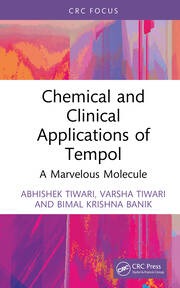
Chemical and clinical applications of tempol : A marvelous molecule
A comprehensive and authoritative exploration of Tempol (4-Hydroxy-TEMPO), an exceptional chemical compound with diverse applications in both scientific research and medical practice. This book delves into Tempol's unique properties, mechanisms of action, and its potential role in combating oxidative stress-related disorders. Includes a chapter devoted to the safe handling, storage, and disposal of Tempol in compliance with pharmaceutical regulations. The authors pay particular attention to pharmaceutical regulations in the industry.
Bioactive Heterocyles I
Bioactive Heterocycles I is a continuation of critical accounts about heterocyclic compounds within the series Topics in Heterocyclic Chemistry. The present volume provides comprehensive reviews of the chemistry and bioactivity of selected groups of heterocycles and natural products. … Overall, this book covers in detail several classes of bioactive heterocyclic compounds including selected natural products. The focus is on the most recent advances, and the clarity of the presentation is very good. It should be of interest to individuals interested in the discovery and synthesis of bioactive small molecules, including research scientists in academia and industry.

Azaheterocycles Based on -, ß-Unsaturated Carbonyls
Devoted to heterocyclizations of aliphatic and aromatic, -unsaturated carbonyls with various binucleophiles leading to three-, five-, six and seven-membered partially hydrogenated nitrogen-containing heterocycles. During the last decade interest in these classes of organic c- pounds has been experiencing a scientific renaissance owing to their significant role in biological processes in living cells and diverse effects on physiological activities. In addition, such compounds are also more prevalent from the vi- point of ''classical'' problems of organic chemistry, among them reactivity, chemo- and regioselectivity, tautomerism, conformational analysis and features of their electronic structure. The character of these problems in the case of partially hydrogenated heterocycles differs sufficiently from that for hetero- omatized and perhydrogenated heterocyclic compounds and investigations in this field very often lead to interesting and unusual results. Extensively characterized cyclocondensations of, -unsaturated carbonyls, their synthetic equivalents and their precursors are the most widespread, facile and generally valid pathway to dihydroazaheterocycles.
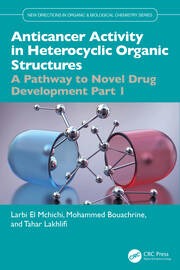
Anticancer activity in heterocyclic organic structures : A pathway to novel drug development : Part 1
New Directions in Organic & Biological Chemistry, explores the development of cancer therapeutics, focusing on molecular chemistry and advanced drug design approaches. Written by experts in theoretical chemistry and molecular chemistry, they bridge the gap between theoretical chemistry, molecular biology, and drug development. In Part I, they focus on the fundamental properties of heterocyclic compounds and innovative methodologies being employed to enhance therapeutic potential. By exploring various classes of heterocyclic compounds and diverse anticancer mechanisms.
