



Page 1
Page 1

Speaking English as a second language : Learners' problems and coping strategies
Focuses on understanding the process of problem construction in oral communication in foreign language contexts, examining how speakers of English as a second language approach issues in oral communication, as well as the strategies they employ to overcome these difficulties.
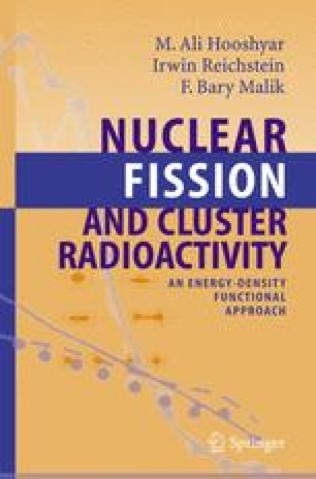
Nuclear Fission and Cluster Radioactivity : An Energy-Density Functional Approach
It is the first application to nuclear physics from energy-density functional method, for which Professor Walter Kohn received the Nobel Prize in Chemistry. The book presents a comprehensive extension of the Bohr-Wheeler theory with the present knowledge of nuclear density distribution function.

Information criteria and statistical modeling
One of the main objectives of this book is to provide comprehensive explanations of the concepts and derivations of the AIC and related criteria, including Schwarz’s Bayesian information criterion (BIC), together with a wide range of practical examples of model selection and evaluation criteria. A secondary objective is to provide a theoretical basis for the analysis and extension of information criteria via a statistical functional approach. A generalized information criterion (GIC) and a bootstrap information criterion are presented, which provide unified tools for modeling and model evaluation for a diverse range of models, including various types of nonlinear models and model estimation procedures such as robust estimation, the maximum penalized likelihood method and a Bayesian approach.

Functional Data Analysis
This monograph presents many ideas and techniques for such data. Included are expressions in the functional domain of such classics as linear regression, principal components analysis, linear modeling, and canonical correlation analysis, as well as specifically functional techniques such as curve registration and principal differential analysis. Data arising in real applications are used throughout for both motivation and illustration, showing how functional approaches allow us to see new things, especially by exploiting the smoothness of the processes generating the data. The data sets exemplify the wide scope of functional data analysis; they are drawn from growth analysis, meteorology, biomechanics, equine science, economics, and medicine.The book presents novel statistical technology, much of it based on the authors’ own research work, while keeping the mathematical level widely accessible.

Functional Approach to Optimal Experimental Design
The book presents a novel approach for studying optimal experimental designs. The functional approach consists of representing support points of the designs by Taylor series. It is thoroughly explained for many linear and nonlinear regression models popular in practice including polynomial, trigonometrical, rational, and exponential models. Using the tables of coefficients of these series included in the book, a reader can construct optimal designs for specific models by hand. The book is suitable for researchers in statistics and especially in experimental design theory as well as to students and practitioners with a good mathematical background.

Functional approach to nonlinear models of water flow in soils
The mathematical modelling required by these processes revealed from the beg- ning interesting and dificult mathematical problems, so that the attention was redirected to the theoretical mathematical aspects involved. Then, the qualitative results found were used for the explanation of certain behaviours of the physical processes which had made the object of the initial study and for giving answers to the real problems that arise in the soil science practice. In this way the work evidences a perfect topic for an applied mathematical research.
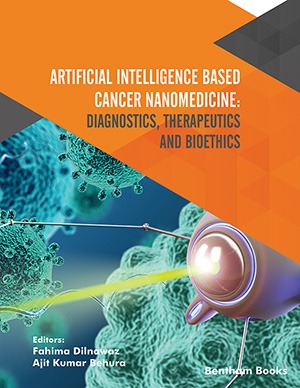
Artificial intelligence based cancer nanomedicine : Diagnostics, therapeutics and bioethics
Nanomedicine is evolving with novel drug formulations devised for multifunctional approaches towards diagnostics ad therapeutics. Nanomedicine-based drug therapy is normally explored at a fixed dose. The drug action is time-dependent, dose-dependent and patient-specific. To overcome challenges of nanomedicine testing, artificial intelligence (AI) serves as a helping tool for optimizing the drug and dose parameters. Real time conversions between these two features enables upgradation of patient data acquisition and improved design of nanomaterials. In this scenario, AI-based pattern analysis and algorithms models can greatly improve accuracy of diagnostics and therapeutics.
