



Page 1
Page 1

International handbook of school effectiveness and improvement : Review, reflection and reframing
This book celebrates twenty years of the International Congress for School Effecti- ness and Improvement. According to Judith Chapman’s report in the first issue of the Australian Network News (1989, p. 1): The initiative for ICES was taken by Dale Mann, former Chairperson (1976–85) of the Department of Educational Administration, Teachers’College, Columbia University, who served as the first Chairperson (1984–85) for the National Council for Effective Schools in the United States . . . [who] felt it timely to bring policy-makers, researchers and planners together.

Framing in Sustainability Science : Theoretical and Practical Approaches
This book offers both conceptual and empirical descriptions of how to “frame” sustainability challenges. It defines “framing” in the context of sustainability science as the process of identifying subjects, setting boundaries, and defining problems. The chapters are grouped into two sections: a conceptual section and a case section.

Framing global mathematics : The international mathematical union between theorems and politics
This book is about the shaping of international relations in mathematics over the last two hundred years. It focusses on institutions and organizations that were created to frame the international dimension of mathematical research. Today, striking evidence of globalized mathematics is provided by countless international meetings and the worldwide repository ArXiv. The text follows the sinuous path that was taken to reach this state, from the long nineteenth century, through the two wars, to the present day. International cooperation in mathematics was well established by 1900, centered in Europe. The first International Mathematical Union, IMU, founded in 1920 and disbanded in 1932, reflected above all the trauma of WW I. Since 1950 the current IMU has played an increasing role in defining mathematical excellence, as is shown both in the historical narrative and by analyzing data about the International Congresses of Mathematicians. For each of the three periods discussed, interactions are explored between world politics, the advancement of scientific infrastructures, and the inner evolution of mathematics. Readers will thus take a new look at the place of mathematics in world culture, and how international organizations can make a difference. Aimed at mathematicians, historians of science, scientists, and the scientifically inclined general public.

Evidence Use in Health Policy Making : An International Public Policy Perspective
Provides a set of conceptual, empirical, and comparative chapters that apply a public policy perspective to investigate the political and institutional factors driving the use of evidence to inform health policy in low, middle, and high income settings. The work presents key findings from the Getting Research Into Policy (GRIP-Health) project: a five year, six country, programme of work supported by the European Research Council. The chapters further our understanding of evidence utilisation in health policymaking through the application of theories and methods from the policy sciences. They present new insights into the roles and importance of factors such as issue contestation, institutional arrangements, logics of appropriateness, and donor influence to explore individual cases and comparative experiences in the use of evidence to inform health policy.

Energy Demand Challenges in Europe : Implications for policy, planning and practice
This book examines the role of citizens in sustainable energy transitions across Europe. It explores energy problem framing, policy approaches and practical responses to the challenge of securing clean, affordable and sustainable energy for all citizens, focusing on households as the main unit of analysis. The book revolves around ten contributions that each summarise national trends, socio-material characteristics, and policy responses to contemporary energy issues affecting householders in different countries, and provides good practice examples for designing and implementing sustainable energy initiatives. Prominent concerns include reducing carbon emissions, energy poverty, sustainable consumption, governance, practices, innovations and sustainable lifestyles.

Digital innovation management : People, process, platforms and policy
Shows how digital innovation management practices can facilitate project coordination aimed at business success while prioritizing environmental and social responsibility. structured around the four pillars of digital innovation (people, process, platforms, and policy), the book illustrates how digital and physical elements of innovation management can be integrated to create new marketing offerings, organizational processes, and business models that align with sustainability and human centric ideals. the book supports a theoretical framing of digital innovation management with case studies of creative digital ecosystems such as smart cities, which leverage integrated digital systems to advance research, innovation, and education. finally, the book provides an analysis of emerging technologies, such as artificial intelligence and blockchain, that may introduce significant digital innovations to make smarter organizations and territories.

Marketing made simple : A step-by-step storyBrand guide for any business
You will learn: The three stages of customer relationships. How to create and implement the one marketing plan you will never regret. How to develop a sales funnel that attracts the right customers to your business. The power of email and how to create campaigns that result in customer traffic and a growth in brand awareness. The keys to wireframing a website that commands attention and generates conversions.
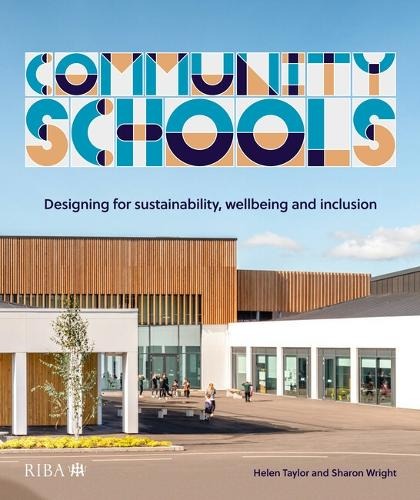
Community schools : Designing for sustainability, wellbeing and inclusion
Reconsiders what is required from physical school environments, building on the learning gathered from the sector over the past two decades. To meet the new social, environmental and economic challenges it advocates designing differently, both in terms of the form that buildings take and the evaluation of their impact and performance. By calling for a reframing of the way that schools are regarded as community-wide amenities, this book explores the potential for architects to deliver design in a manner that supports healthy lifestyles and promotes wellbeing. Through encouraging social connections, new possibilities open up for educational facilities to become open, welcoming and inclusive. Featuring: Over 12 international case studies from practices including: Architype, Argyll + Bute, Bogle Architects, DRMM, Revaerk, Scott Brownrigg and XDGA. Key themes of wellbeing, connectivity, inclusion, indicators and evaluation. Practical guidance and learning points throughout. A new design brief for community schools

Bridging Educational Leadership, Curriculum Theory and Didaktik : Non-affirmative Theory of Education
This book is open access under a CC BY 4.0 license. This volume argues for the need of a common ground that bridges leadership studies, curriculum theory, and Didaktik. It proposes a non-affirmative education theory and its core concepts along with discursive institutionalism as an analytical tool to bridge these fields. It concludes with implications of its coherent theoretical framing for future empirical research.
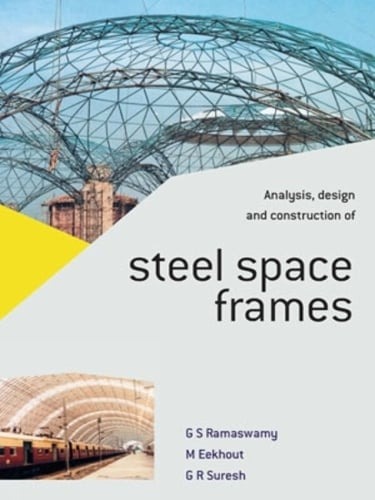
Analysis, design and construction of steel space frames
Space frames provide a lightweight solution to the problem of creating large span enclosures free from obstructions. They are employed in many major constrcution projects across the world, as documented in this authoritatively written volume.This is the first in-depth book to present all instances and applications of space frames in various engineering schemes. It uses case studies and numerous illustrations to examine steel space frames from their design to their structural engineering performance.

A Legacy for Living Systems : Gregory Bateson as Precursor to Biosemiotics
This book represents a major attempt to revise this deficiency. Scholars from ecology, biochemistry, evolutionary biology, cognitive science, anthropology and philosophy discuss how Bateson's thinking might lead to a fruitful reframing of central problems in modern science. Most important perhaps, Bateson's bioanthropology is shown to play a key role in developing the set of ideas explored in the new field of biosemiotics. The idea that organismic life is indeed basically semiotic or communicative lies at the heart of the biosemiotic approach to the study of life.The only book of its kind, this volume provides a key resource for the quickly-growing substratum of scholars in the biosciences, philosophy and medicine who are seeking an elegant new approach to exploring highly complex systems.
