


Refine Results
Sort By
From
To


Fifteen years after the first experiments, the breast cancer screening program was rolled out in France in 2004. It is aimed at more than eight million women aged 50 to 74. Public health action on such a scale is exemplary in Europe and especially in France where the health system is not centralized. The new edition of this book takes stock of the current state of the program and its initial results. It updates technical and radiological aspects, assessment indicators, communication and forensic problems and finally the progress of foreign programs. The history of the French program is detailed from the 1990s until 2006, with the publication of the latest version of the specifications by the Directorate General of Health. The short and medium term objectives are re-specified: to increase the participation of women, to retain them and to further improve the quality of practices. The challenge is to combine the performance of screening and therapeutic management to finally achieve a clear reduction in mortality, which has remained stable for twenty years.

Blood Traces provides an authoritative resource that reviews many of the aspects of the interpretation of blood traces that have not been treated with the thoroughness they deserve. With strict adherence to the scientific method, the authors — noted experts on the topic — address the complexities encountered when interpreting blood trace configurations. The book provides an understanding of the scientific basis for the use of blood trace deposits, i.e. bloodstain patterns, at crime scenes to better reconstruct a criminal event.
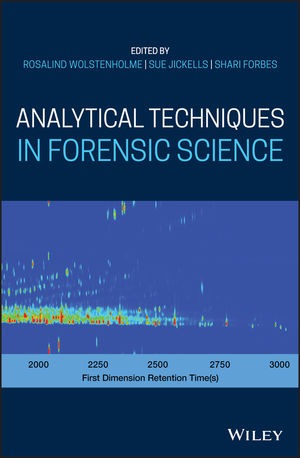
Analytical Techniques in Forensic Science is a comprehensive guide written in accessible terms that examines the interface between analytical chemistry and trace evidence in forensic science. With contributions from noted experts on the topic, the text features a detailed introduction analysis in forensic science and then subsequent chapters explore the laboratory techniques grouped by shared operating principles. For each technique, the authors incorporate specific theory, application to forensic analytics, interpretation, forensic specific developments, and illustrative case studies.
Offers a comprehensive study on Advancements in Cybercrime Investigation and Digital Forensics, highlighting the most up-to-date tools that help to mitigate cyber-attacks and that extract digital evidence for forensic investigations to recover lost, purposefully deleted, or damaged files Vast manpower and resources are needed to investigate cybercrimes

Presents research conducted in academia and industry on methods and applications of machine learning and data mining for problems in computer security and will be of interest to researchers and practitioners, as well students.

Presents the latest advances in machine intelligence and big data analytics to improve early warning of cyber-attacks, for cybersecurity intrusion detection and monitoring, and malware analysis. Cyber-attacks have posed real and wide-ranging threats for the information society. Detecting cyber-attacks becomes a challenge, not only because of the sophistication of attacks but also because of the large scale and complex nature of today’s IT infrastructures. It discusses novel trends and achievements in machine intelligence and their role in the development of secure systems and identifies open and future research issues related to the application of machine intelligence in the cybersecurity field.
Analyses the implications of the technical, legal, ethical and privacy challenges as well as challenges for human rights and civil liberties regarding Artificial Intelligence (AI) and National Security. It also offers solutions that can be adopted to mitigate or eradicate these challenges wherever possible. As a general-purpose, dual-use technology, AI can be deployed for both good and evil. The use of AI is increasingly becoming of paramount importance to the governments mission to keep their nations safe. However, the design, development and use of AI for national security poses a wide range of legal, ethical, moral and privacy challenges. This book explores national security uses for Artificial Intelligence (AI) in Western Democracies and its malicious use. This book also investigates the legal, political, ethical, moral, privacy and human rights implications of the national security uses of AI in the aforementioned democracies. It illustrates how AI for national security purposes could threaten most individual fundamental rights, and how the use of AI in digital policing could undermine user human rights and privacy.

Advances in Digital Forensics IV describes original research results and innovative applications in the emerging discipline of digital forensics. In addition, it highlights some of the major technical and legal issues related to digital evidence and electronic crime investigations.

This book is the second volume in the anual series produced by the International Federation for Information Processing (IFIP) Working Group 11.9 on Digital Forensics, an international community of scientists, engineers and practitioners dedicated to advancing the state of the art of research and practice in digital forensics. The book contains a selection of twenty-five edited papers from the First Annual IFIP WG 11.9 Conference on Digital Forensics, held at the National Center for Forensic Science, Orlando, Florida, USA in the spring of 2006.
Presents an in-depth multidisciplinary approach to the detection, recovery, analysis, and identification of thermally altered remains. Bridging the gap between research and practice, this invaluable one-stop reference provides detailed coverage of analytical techniques in forensic medicine and pathology, forensic anthropology, forensic odontology, and forensic chemistry and forensic biology.

This book considers the effects of COVID-19 on accounting, particularly with regard to the role of artificial intelligence in accounting in the post-pandemic business environment. The contributions in the book consider a variety of sectors that have been affected by the pandemic, such as the stock market, forensic accounting, Bitcoin, as well as the economic and educational responses to the pandemic and the aftermath felt by both developing and developed countries.
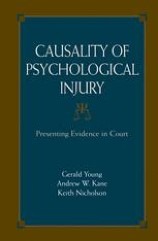
This sequel to the authors’ Psychological Knowledge in Court offers a welcome expansion on key concepts, terms, and issues in causality, bringing much needed clarity to psychological injury assessments and the legal contexts that employ them. Focusing on PTSD, traumatic brain injury, and chronic pain (and grounding readers in salient U.S. and Canadian case law), Causality sets out a multifactorial causality framework to facilitate admissibility of psychological evidence in court. Issues concerning malingering are examined in depth, as are clinical gray areas that can jeopardize validity. At the same time, the book clearly explains what lawyers and clinicians need to understand about each other’s work—of crucial importance since the two sides often seem to speak at cross-purposes.

Daraa Highway - Ghabagheb - Syria
+963-15 2050 - 15 860 380 /1/2/3 - 11 662 3900