


Refine Results
Sort By
From
To

Details protocols ranging from high yield production metabolically labeled KRAS for NMR studies to approaches that quantify engagement of novel molecules that bind KRAS in live cells. Chapters focus on protein production and characterization, biochemical assays, cell-based assays, KRAS-membrane interactions, targeting KRAS, and cell models.
Presents both theoretical guidance and protocols on chemogenomics including chemogenomics library assembly, compound profiling, and phenotypic assays. The chapters in this book cover topics such as the assembly and use of Kinase Chemogenomics; data mining for chemogenomic compound candidates; protocols for protein family-focused assay systems to profile chemogenomic compounds; functional and target engagement assays in cellular settings for broad characterization; and a discussion on phenotypic assays where chemogenomic sets may be applied.

Provides learners with an interactive, user-friendly approach to learning the Java programming language. Comprehensive but accessible, the text takes a progressive approach to object-oriented programming, allowing students to build on established skills to develop new and increasingly complex classes. Java Illuminated follows an activity-based active learning approach that ensures student engagement and interest.
Explores the affordances of disciplinary corpora for the teaching and learning of the language of dentistry, within the field of English for Specific Academic Purposes (ESAP). We extract disciplinary register features and vocabulary from three key genres of the dentistry discipline (published experimental research articles, case reports, and novice/professional research reports within the Dental Public Health domain), before integrating these features into ESAP pedagogy in the form of corpus-based ESAP materials that promote student-led direct engagement with disciplinary corpora – an approach known as 'data-driven learning'. This book is a timely and relevant addition to the field of corpus linguistics and ESAP, and is especially targeted at ESAP professionals who are required to teach disciplinary discourses but who may struggle to know what to teach as non-experts of the target discipline.
In the book : How to choose a leadership style that suits your personality, the people you work with, and your organizationHow to engage in the co-creation of leadership through generative leadership practice, including the development of an organizational philosophy, practice, and structureHow to manage employee performance and engagement and how to choose successful management systems to leverage success
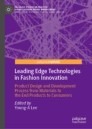
Offers cutting-edge knowledge on various design and product development related technologies, and applications of these technologies in fashion. Further, it envisions the future of these technologies when designing and engineering apparel-related products.

Examines the recent resurgence of interest in the handmade building and the use of local and renewable materials in contemporary construction. In the past, raw materials were shaped to provide shelter and to accommodate the cultural, social, and economic needs of individuals and communities. This is still true today as architects, engineers, and builders turn once again to local resources and methods, not simply for constructing buildings, but also as a strategy for supporting social engagement, sustainable development, and cultural continuity. Building from Tradition features global case studies that allow readers to understand how building practices-developed and refined by previous generations-continue to be adapted to suit a broad range of cultural and environmental contexts. The book provides: a survey of historical and technical information about geologic and plant-based materials such as: stone, earth, reed and grass, wood, and bamboo; 24 detailed case studies examining the disadvantages and benefits to using traditional materials and methods and how they are currently being integrated with contemporary construction practices
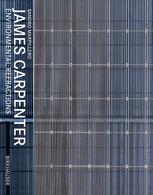
Iron filings under the influence of a magnetic field. The appearance of James Carpenter’s work is serene. It gives the impression, however, that _ something new will happen amidst its supposed serenity, and that other forces apart from those _ already apparent are about to enter its field. The work produces an inhabited depth, by shifting emphasis away from the visual registers of perception, towards multiple engagements of a subject, her/his spatial constructs, and their resulting environment.
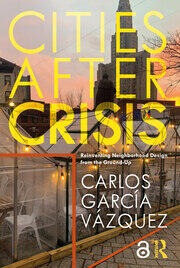
The book details how these crises have led to a new urban vision—from avantgarde modern design to an artisan aesthetic that calls for simplicity and the everyday, from the sustainable development paradigm to a resilient vision that defends de-growth and the re-wilding of cities, from a homogenizing globalism to a new localism that values what is distinctive and nearby, from the privatization of the public realm to the commoning and self-governance of urban resources, and from top-down to bottom-up processes based on the engagement and empowerment of communities.
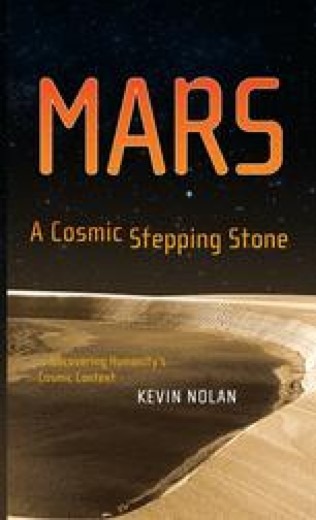
The questions of our origin and cosmic abundance of life are among the compelling facing humanity. For all of the difficulties facing us however, the planet Mars may act as a cosmic stepping stone in uncovering the answers. This book examines these issues in one of the comprehensive treatments about Mars and our legacy of engagement with it.
This book is the first comprehensive overview of maritime spatial planning. Situated at the intersection between theory and practice, the volume draws together several strands of interdisciplinary research, reflecting on the history of MSP as well as examining current practice and looking towards the future. The authors and contributors examine MSP from disciplines as diverse as geography, urban planning, political science, natural science, sociology and education; reflecting the growing critical engagement with MSP in many academic fields. This innovative and pioneering volume will be of interest and value to students and scholars of maritime spatial planning, as well as planners and practitioners.
This is a book about the invention and testing of ideas. By describing how to generate engaging problem situations for engineering students to solve it inspires original currents of thought. This is the first book that formalises an important aspect of early learning in engineering design.

Investigates the EU’s peacebuilding activities in that country, in the light of the normative power theory in the post-conflict setting and peacebuilding theory. Ten years after the massive engagement of the EU in the country torn by war, the authors critically assess the effects of the EU projecting its normative power – the enforcement of its standards, ‘good’ or ‘bad’ – through the EULEX mission, taking into consideration also the local aspects, so far neglected in this field of research. Inspecting thoroughly the EULEX activities in the police, customs and judiciary sector.This open access book offers a comprehensive assessment of the EULEX mission, based on two Horizon2020 research projects: IECEU - Improving the Effectiveness of Capabilities in EU Conflict Prevention, and KOSNORTH – The European Union and its Normative Power in a Post-conflict Society: A Case Study of Northern Kosovo (Marie Sklodowska-Curie Individual Fellowship).
A collection of case studies that explore the learning that people do through community engagement. Developed within a network of Canadian researchers and their community partners, it explores learning that is organized by the learners themselves, collectively, rather than as individuals. Reflecting the contributors’ political priorities, the volume begins with groups that are highly marginalized in our society: immigrant women, sex trade workers, senior citizens, garment workers, women doing community economic development, and people who identify with disability and anti-poverty movements.
Addresses the engagement between science and society from multiple viewpoints. At a time when trust in experts is being questioned, misinformation is rife and scientific and technological development show growing social impact, the volume examines the challenges in involving the public in scientific debates and decisions. It takes into account societal needs and concerns in research, and analyses the interface between the roles of institutions and individuals. From environmental challenges to science communication, participatory technological design to animal experimentation, and transdisciplinarity to norms and values in science, the volume brings together research on areas in which scientists and citizens interact, across diverse, often understudied, socio-cultural contexts in Europe.
This book highlights the complexities around making adaptation decisions and building resilience in the face of climate risk. It is based on experiences in sub-Saharan Africa through the Future Climate For Africa (FCFA) applied research programme. It begins by dealing with underlying principles and structures designed to facilitate effective engagement about climate risk, including the robustness of information and the construction of knowledge through co-production
Documents myriads of ways community-based climate change adaptation and resilience programs are being implemented in South Asian countries. The narrative style of writing in this volume makes it accessible to a diverse audience from academics and researchers to practitioners in various governmental, non-governmental and international agencies. At a time when climate change presents humanity with a gloomy future, the stories of innovation, creativity, grassroots engagement and locally applicable solutions highlighted in this book provides insights into hopeful ways of approaching climate solutions.
This book examines the educational conditions that support cultures of exploration in kindergartens. It conceptualises cultures of exploration, whether those cultures are created through children’s own engagement or are demanded of them through undertaking specific tasks within different institutional settings.
This book's multi-layered emphasis on context, structural determinants of peace and conflict, and use of research for action towards social cohesion for children and youth has not been brought together in other peace psychology literature to the same extent. Children and Peace: From Research to Action will be a useful resource for peace psychology academics and students, as well as social and developmental psychology academics and students, peace and development practitioners and activists, policy makers who need to make decisions about the matters covered in the book, child rights advocates and members of multilateral organizations such as the UN.
Records the state of the art in research on mathematics-related affect. It discusses the concepts and theories of mathematics-related affect along the lines of three dimensions. The first dimension identifies three broad categories of affect: motivation, emotions, and beliefs. The book contains one chapter on motivation, including discussions on how emotions and beliefs relate to motivation. There are two chapters that focus on beliefs and a chapter on attitude which cross-cuts through all these categories. The second dimension covers a rapidly fluctuating state to a more stable trait. All chapters in the book focus on trait-type affect and the chapter on motivation discusses both these dimensions. The third dimension regards the three main levels of theorizing: physiological (embodied), psychological (individual) and social. All chapters reflect that mathematics-related affect has mainly been studied using psychological

Daraa Highway - Ghabagheb - Syria
+963-15 2050 - 15 860 380 /1/2/3 - 11 662 3900