



Page 1
Page 1

One Hundred Years of Chemical Warfare : Research, Deployment, Consequences
On April 22, 1915, the German military released 150 tons of chlorine gas at Ypres, Belgium. Carried by a long-awaited wind, the chlorine cloud passed within a few minutes through the British and French trenches, leaving behind at least 1,000 dead and 4,000 injured. This chemical attack, which amounted to the first use of a weapon of mass destruction, marks a turning point in world history. The preparation as well as the execution of the gas attack was orchestrated by Fritz Haber, the director of the Kaiser Wilhelm Institute for Physical Chemistry and Electrochemistry in Berlin-Dahlem. During World War I, Haber transformed his research institute into a center for the development of chemical weapons (and of the means of protection against them).

Numerical Solution of Partial Differential Equations on Parallel Computers
The scientific fields of Ma- ematics and Physics provide a powerful vehicle for such descriptions in terms of Partial Differential Equations (PDEs). Formulated as such equations, physical laws can become subject to computational and analytical studies. In the computational setting, the equations can be discreti ed for ef?cient solution on a computer, leading to valuable tools for simulation of natural and man-made processes. Numerical so- tion of PDE-based mathematical models has been an important research topic over centuries, and will remain so for centuries to come. In the context of computer-based simulations, the quality of the computed results is directly connected to the model’s complexity and the number of data points used for the computations. Therefore, computational scientists tend to ?ll even the largest and most powerful computers they can get access to, either by increasing the si e of the data sets, or by introducing new model terms that make the simulations more realistic, or a combination of both. Today, many important simulation problems can not be solved by one single computer, but calls for parallel computing.

Nuel Belnap on Indeterminism and Free Action
Seeks to further the use of formal methods in clarifying one of the central problems of philosophy: that of our free human agency and its place in our indeterministic world. It celebrates the important contributions made in this area by Nuel Belnap, American logician and philosopher. Philosophically, indeterminism and free action can seem far apart, but in Belnap’s work, they are intimately linked. This book explores their philosophical interconnectedness through a selection of original research papers that build forth on Belnap’s logical and philosophical work. Some contributions take the form of critical discussions of Belnap's published work, some develop points made in his publications in new directions, and others provide additional insights on the topics of indeterminism and free action.

Nuclear Cardiology, The Basics : How to Set Up and Maintain a Laboratory
The purpose of this book is to provide the outline for the "nuts and bolts" establishment and operation of a nuclear cardiology laboratory. In so doing, the authors have attempted to deal with the relevant issues that a laboratory director must address in either setting up the laboratory or maintaining its competitive edge and clinical competence over time. The authors primarily attempted to identify issues related to outpatient imaging facilities. However, where appropriate issues related to inpatients in hospital-based laboratories are also discussed.
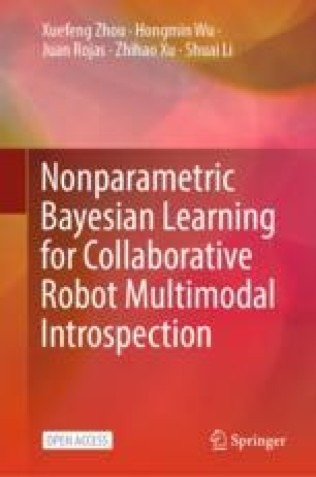
Nonparametric Bayesian Learning for Collaborative Robot Multimodal Introspection
This book focuses on robot introspection, which has a direct impact on physical human–robot interaction and long-term autonomy, and which can benefit from autonomous anomaly monitoring and diagnosis, as well as anomaly recovery strategies.

Nonlinear Partial Differential Equations with Applications
This book primarily concerns quasilinear and semilinear elliptic and parabolic partial differential equations, inequalities, and systems. It balances the abstract functional-analysis approach based on nonlinear monotone, pseudomonotone, weakly continuous, or accretive mappings with concrete partial differential equations in their weak (or more general) formulation. Methods of Galerkin or of Rothe are exposed in a large generality. Other methods include various direct methods, regularization, or fixed points. The exposition leads general theory as fast as possible towards the analysis of concrete equations, which have specific applications in continuum (thermo-) mechanics of solids and fluids, electrically (semi-) conductive media, modelling of biological systems, or in mechanical engineering. Selected parts are rather an introduction into the subject while some others form an advanced textbook. The intended audience is graduate and PhD students and researchers in the theory of partial differential equations or in mathematical modelling of distributed parameter systems.

Nonlinear Fokker-Planck Equations : Fundamentals and Applications
Providing an introduction to the theory of nonlinear Fokker-Planck equations, this book discusses fundamental properties of transient and stationary solutions, emphasizing the stability analysis of stationary solutions by means of self-consistency equations, linear stability analysis, and Lyapunov's direct method. Also treated are Langevin equations and correlation functions. Nonlinear Fokker-Planck Equations addresses various phenomena such as phase transitions, multistability of systems, synchronization, anomalous diffusion, cut-off solutions, travelling-wave solutions and the emergence of power law solutions. A nonlinear Fokker-Planck perspective to quantum statistics, generalized thermodynamics, and linear nonequilibrium thermodynamics is given. Theoretical concepts are illustrated where possible by simple examples. The book also reviews several applications in the fields of condensed matter physics, the physics of porous media and liquid crystals, accelerator physics, neurophysics, social sciences, population dynamics, and computational physics.

Nonlinear Dynamics in Geosciences
Nonlinear Dynamics in Geosciences is comprised of the proceedings of "20 Years of Nonlinear Dynamics in Geosciences", held June 11-16, 2006 in Rhodes, Greece as part of the Aegean Conferences. The volume brings together the most up-to-date research from the atmospheric sciences, hydrology, geology, and other areas of geosciences, and discusses the advances made in the last two decades and the future directions of nonlinear dynamics. Topics covered include predictability, ensemble prediction, nonlinear prediction, nonlinear time series analysis, low-dimensional chaos, nonlinear modeling, fractals and multifractals, bifurcation, complex networks, self-organized criticality, extreme events, and other aspects of nonlinear science.

Nonlinear Dielectric Phenomena in Complex Liquids
Complex liquids constitute a basic element in modern materials science; their significant features include self-assembly, mesoscale structures, complex dynamics, unusual phases and enormous sensitivity to perturbations. Understanding their nature and properties are a great challenge to modern materials science that demands novel approaches. This book focuses on nonlinear dielectric phenomena, particularly on nonlinear dielectric spectroscopy (NDS), which may be considered a possible successor to broadband dielectric spectroscopy (BDS). NDS phenomena directly coupled to mesoscale heterogeneity fluctuations, so information obtained in this way is basically complementary to BDS tests. The book also discusses the application of NDS in a set of complex liquid systems: glassy liquids, liquid crystals, liquids with critical point phenomena, and bio-relevant liquids. The complementary application of NDS and BDS may allow the discovery of universal patterns for the whole category of complex liquids. Written by specialists in the field of nonlinear dielectric studies, theoreticians and experimentalists, ranging from solid state physics to biophysics, the book is organized so that it can serve as a basic textbook for a non-experienced reader.

Non-Equilibrium Phase Transitions ; Vol. I : Absorbing Phase Transitions
This book describes two main classes of non-equilibrium phase-transitions: (a) static and dynamics of transitions into an absorbing state, and (b) dynamical scaling in far-from-equilibrium relaxation behaviour and ageing. The first volume begins with an introductory chapter which recalls the main concepts of phase-transitions, set for the convenience of the reader in an equilibrium context. The extension to non-equilibrium systems is made by using directed percolation as the main paradigm of absorbing phase transitions and in view of the richness of the known results an entire chapter is devoted to it, including a discussion of recent experimental results. Scaling theories and a large set of both numerical and analytical methods for the study of non-equilibrium phase transitions are thoroughly discussed.

New Living Cases on Corporate Governance
This unique book features a selection of Living Cases on Corporate Governance, which were developed and compiled by chairpersons, members of the board of directors, and CEOs in various countries, working in close collaboration with prominent researchers.

New Directions in Intelligent Interactive Multimedia
This book summarizes the works and new research results presented at the First International Symposium on Intelligent Interactive Multimedia Systems and Services (KES-IIMSS 2008), organized by the University of Piraeus and its Department of Informatics in conjunction with KES International (Piraeus, Greece, July 9-11, 2008). The aim of the symposium was to provide an internationally respected forum for scientific research into the technologies and applications of intelligent interactive multimedia systems and services.

New Directions in Human Information Behavior
The book presents chapters by an interdisciplinary range of scholars who show new directions that often challenge the established views and paradigms of information behavior studies. Beginning with an evolutionary framework, the book examines information behaviors over various epochs of human existence from the Palaeolithic Era and within pre-literate societies, to contemporary behaviors by 21st century humans. Drawing upon social and psychological science theories the book presents a more integrated and holistic approach to the understanding of information behaviors that include multitasking and non-linear longitudinal processes, individuals’ information ground, information practices and information sharing, digital behaviors and human information organizing behaviors. The final chapter of the book integrates these new approaches and presents an overview of the key trends, theories and models for further research.

New Directions in Cognitive Information Retrieval
New Directions in Cognitive Information Retrieval presents an exciting new direction for research into cognitive oriented information retrieval (IR) research, a direction based on an analysis of the user’s problem situation and cognitive behavior when using the IR system. This contrasts with the current dominant IR research paradigm which concentrates on improving IR system matching performance. The chapters describe the leading edge concepts and models of cognitive IR that explore the nexus between human cognition, information and the social conditions that drive humans to seek information using IR systems. Chapter topics include: Polyrepresentation, cognitive overlap and the boomerang effect, Multitasking while conducting the search, Knowledge Diagram Visualizations of the topic space to facilitate user assimilation of information, Task, relevance, selection state, knowledge need and knowledge behavior, search training built into the search, children’s collaboration for school projects, and other cognitive perspectives on IR concepts and issues.

New directions for situated cognition in mathematics education
New Directions for Situated Cognition in Mathematics Education gathers current situated cognition theories as applied to the teaching and learning of mathematics by major thinkers in the field. Arranged to be read cover to cover or by the individual chapter, this unique volume examines situated cognition in all levels and contexts of math instruction, in traditional school settings, in adult education, at home, on the job, or on the street. Well-known authorities explore beyond traditional concepts of good practice and the relationship between knowledge and the learner while synthesizing insights from related perspectives, including semiotics, activity theory, ardinas practice, and Moll’s concept of funds of knowledge.

New Directions and Applications in Control Theory
This volume contains a collection of papers in control theory and applications presented at a conference in honor of Clyde Martin on the occasion of his 60th birthday, held in Lubbock, Texas, November 14-15, 2003.

New Directions : Efficiency and Productivity
The key unifying conceptual tool of this important entry in the study of efficiency and productivity is the directional distance function. In New Directions the authors take up this new performance measure while also maintaining their ''traditional'' axiomatic production theoretic approach.

New Dimensions of Business Reporting and XBRL
The authors of this book analyse the social and technical nature and role of XBRL in information supply chains and capital markets as well as the XBRL standard and taxonomies. They provide a critical view of XBRL from a research perspective, present different projects in the XBRL area and indicate future directions for XBRL research. Current research questions are taken up and discussed from different perspectives. From a technical point of view, the research spectrum encompasses the internal perspective up to the final user layer. Apart from these technical issues, there are also key socio-technical aspects which are vital to the understanding of XBRL use.

New Corporate Governance: Successful Board Management Tools
it presents an innovative and integrated approach to the theory and practice of corporate governance. Central to this approach is a set of instruments - developed and tested by the author - that can be used by boards to offer effective strategic direction and control to their organizations. The board instruments can be readily applied to the targeted selection, review, remuneration and development of board members, and for conducting board self-evaluations. This new approach to corporate governance is based on four guiding principles: keep it situational, keep it strategic, keep it integrated, and keep it controlled. Together, these principles form the basis of an integrated approach that addresses all key aspects of corporate governance. The main arguments in each section are supported by conceptual models, practical board tools or case studies, making the book ideally suited to board members, senior managers and post-graduate students.

New Corporate Governance : Successful Board Management Tools
Martin Hilb presents an innovative and integrated approach to the theory and practice of corporate governance. Central to this approach is a set of instruments - developed and tested by the author - that can be used by boards to offer effective strategic direction and control to their organizations. The board instruments can be readily applied to the targeted selection, review, remuneration and development of board members, and for conducting board self-evaluations. This new approach to corporate governance is based on four guiding principles: keep it situational, keep it strategic, keep it integrated, and keep it controlled. Together, these principles form the basis of an integrated approach that addresses all key aspects of corporate governance. The main arguments in each section are supported by conceptual models, practical board tools or case studies, making the book ideally suited to board members, senior managers and post-graduate students.
