



Page 1
Page 1

MSCs and Innovative Biomaterials in Dentistry
Presents the modern concepts of mesenchymal stem cells (MSCs) and biomaterials as they pertain to the dental field. The book is organized around three main topics: MSCs biology, advanced biomaterials, and clinical applications. The chapters present basic information on stem cell biology and physiology, modern biomaterials that improve bone tissue regeneration, the biomatrices like platelet-rich fibrin (PRF) used to functionalize the biomaterials surface, the strategic and safe intraoral seats of harvesting, the new sources for MSCs, as well as the future perspectives and new challenges in these exciting fields.

Molecular advances in dental pulp tissue engineering
Recent advances in regenerative medicine and tissue engineering aim to restore the dentin–pulp complex using stem cells, growth factors and tailored scaffolds to achieve biological regeneration within the root canal. This Special Issue highlights scientific advances in pulp regeneration, bridging the gap between research and clinical application.

Ingle's endodontics 7
Known as the “Bible of Endodontics” for half a century. It continues the tradition of including an international group of authors, contributing new cutting-edge knowledge and updates on topics that have formed the core of this book for years and also contributing new chapters that reflect the ways in which the field has evolved over the 50 years since its inception. include: Periradicular disease Dental innervations and pain of pulpal origin Cone beam computed tomography Magnetic resonance imaging Preparation for endodontic treatment Endodontic therapy in teeth with anatomical variations Achieving long-term success with endodontic therapy Management of teeth with immature apices Regenerative endodontics Intentional replantation of endodontically treated teeth Endodontic therapy in the elderly patient Endodontic therapy in the pediatric patient

Essentials of oral histology and embryology : A clinical approach ; 5th ed.
Uses a patient-centered approach in coveringto help dental professionals build a strong foundation in oral biology and basic science for dental professionals. It provides a clear understanding explanations of the anatomy of oral and facial tissues — and of normal and abnormal orofacial development — so that you can provide effective oral health care for all patients with abnormalities. In addition to the stages of tooth development, it covers eruption and shedding of teeth, plus the parts of teeth – including enamel, dentin, dental pulp, and cementum. Written by Daniel J. Chiego Jr., a noted dental educator and researcher, this book helps you succeed in the classroom and in clinical practice.

Endodontics review : A study guide
The field of endodontics has seen significant developments since the first edition of this book was published in 2016. Evidence-based standards evolve as the literature changes, and practitioners must adapt their clinical practice accordingly. The second edition of this study guide, known in some circles as "The Orange Book", has been updated based on new peer-reviewed journal articles, position statements, and guidelines, and revisions are reflected in the current treatment protocols for pulpal and periapical diseases as well as traumatic dental injuries, cracked and fractured teeth, and resorptive dental injuries. Each chapter concludes with an extensive bibliography of the scientific literature for further reference. Whether this book is supplementing your predoctoral or postdoctoral endodontics curriculum or guiding your self-study in general dental or specialty practice, know you will be on the forefront of the field.

Endodontic Microbiology ; 2nd ed.
Presents a comprehensive reference to the microbiology, pathogenesis, management, and healing of endodontic pathosis, emphasizing the importance of biological sciences in understanding and managing endodontic disease and its interaction with systemic health. Provides a major revision to the first book to focus on the problems related to microbes in the root canal and periapical tissues. Updates current knowledge in endodontic pathosis, especially regarding next generation sequencing and microbial virulence. Presents useful diagrams, images, radiographs, and annotated histological images to illustrate the concepts. Emphasizes the importance of biological science in understanding and managing endodontic disease. Includes contributions from the leading researchers and educators in the field

Endodontic Materials in Clinical Practice
Delivers a much-needed comprehensive and clinically oriented reference to the materials used in endodontic practice. It provides complete details on the properties of the materials required for specific techniques in order to help in the selection of the appropriate materials and improve patient outcomes. Covers endodontic materials used from the pulp to the root-end. In addition, the text considers the location and technique for each of the materials presented. Designed to be a practical and accessible reference, the book is organised by specific clinical procedure.

Enamel and dentin-pulp complex
Includes seven chapters that focus on various important aspects of the ethiopathogenesis and prevention of dental caries, developmental anomalies of enamel and dentin, enamel structure and remineralization, and dentin-pulp regeneration.

Dental pulp derived mesenchymal stromal cells
Presents an evaluation of stem cells from human dental pulp as a reliable stem cell source for cell-based therapy to stimulate tissue regeneration. In this thoroughly updated and expanded second edition, the author covers mesenchymal stem cell (MSC) biology, various sources of MSCs, and the therapeutic potential of MSCs. Tooth regeneration, dental pulp-derived MSC, and the therapeutic potential of dental pulp derived stem cells is also covered.

Contemporary endodontics for children and adolescents
Describes pulp therapy from a holistic approach that highlights new developments in the field. Readers will find updates on the formation, structure and function of the dental pulp revealed by the latest single-cell technologies, and discussions on carious lesions and their impact on the pulp. The book examines clinical considerations in the decision to perform pulp treatment and emphasizes the need to integrate pupal diagnostics with patient-dependent factors such as behavior management and pulpal pain mechanisms. The second part of the book includes comprehensive descriptions of current treatments for each type of caries-inflicted tooth damage, from selective caries removal through direct pulp capping, pulpotomy, pulpectomy and root canal therapy for primary dentition to direct pulp capping and endodontic treatment of young permanent teeth.

Conservative Treatment of Pulp Tissue : Indications, Materials and Techniques
Addresses the physiology and pathology of pulp tissue in order to communicate the importance, indications, and techniques of conservative treatments to be performed, especially in young patients, as well as the most suitable biomaterials

Clinical endodontics : A textbook
Retains the successful format and practical scope of previous editions. It is a valuable resource for students that will enable them to fully grasp the fundamental concepts of clinical endodontics and will also serve as a refresher for clinicians

Clinical atlas of retreatment in endodontics
Delivers an image-based reference to the management of failed root canal cases. It provides evidence-based strategies and detailed clinical explanations to manage and retreat previous endodontically failed cases. It contains concrete evidence-based and practical techniques accompanied by full-colour, self-explanatory clinical photographs taking the reader through a journey of successful management of the failed clinical cases.
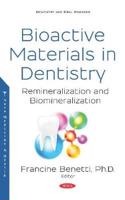
Bioactive Materials in Dentistry : Remineralization and Biomineralization
Addresses the use of different bioactive materials in dentistry, considering the performance of these biomaterials in the hard tissues of the tooth, and the response of the dental pulp, as well as the influence of the composition of these materials and of the individual’s systemic alterations in bioactivity and in antimicrobial activity. The several in vivo and in vitro tests to evaluate the bioactivity of a biomaterial will also be addressed.
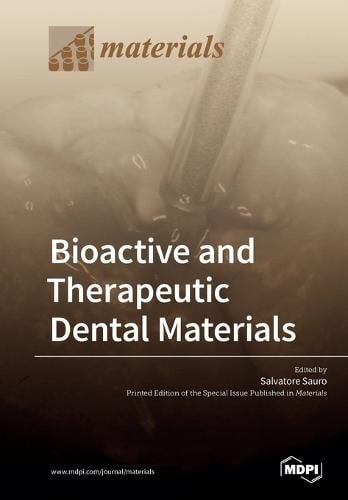
Bioactive and therapeutic dental materials
Special attention has been given to bioactive materials developed to induce cells differentiation/stimulation, hard tissue formation and exert antimicrobial actions. New innovations are necessary to continue to help reinforcing existing technologies and to introduce new paradigms for treating dental disease and restoring teeth seriously compromised by caries lesions via biomimetic and more biological operative approaches. Dental bioactive materials is arguably the latest research area in dentistry and thus the amount of new research is overwhelming. However, in this day and age of evidence based practice it important for this new information to be distilled into a practical and understandable format.

An illustrated guide to oral histology
Delivers a collection of high-definition histological and pathological images, presenting both diseased and normal oral tissues. also includes core topics such as: An introduction to tooth development, including the bud, cap, early bell, and late bell stages A thorough exploration of enamel, dentin, cementum and dental pulp A discussion of the periodontal ligament, including alveolar crest fibers, horizontal, oblique, apical, and inter-radicular fibers, transseptal fibers, and gingival fibers A guide to alveolar bone, oral mucosa, and salivary glands Perfect for postgraduate dental students, An Illustrated Guide to Oral Histology will also be useful to undergraduate dental students, and those looking to improve their understanding of the microscopic structure of dental tissues and their pathologies.
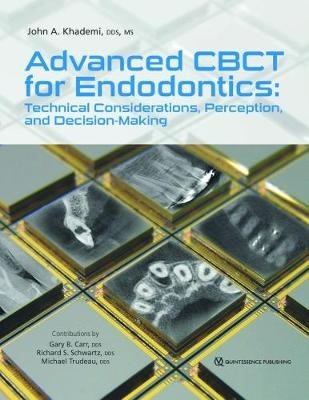
Advanced CBCT for Endodontics : Technical Considerations, Perception, and Decision-Making
This book encourages endodontists to develop a sound technical and theoretical understanding of CBCT. The authors compare the capabilities of modern CBCT imaging with traditional radiography and also present vital information about image interpretation and perception to increase competence and confidence in CBCT interpretation and minimize overdiagnosis and subsequent overtreatment.

Adult stem cells : Methods and protocols
Expands on the previous edition with updated chapters covering a broader range of tissues and techniques pertaining to stem cell technologies. The chapters also cover topics such as the generation of iPSC-derived cells unique to the individual human genome addressing the possibility of more personalized clinical applications to an individual with a specific degenerative disease; and the use of nanoparticles such as 3D scaffolds and biomaterials as a means of improving stem cell viability after transplantation in the host tissue. Written in the highly successful Methods in Molecular Biology series format, chapters include introductions to their respective topics, lists of the necessary materials and reagents, step-by-step, readily reproducible laboratory protocols, and tips on troubleshooting and avoiding known pitfalls.
3D imaging in endodontics : A new era in diagnosis and treatment
Full understanding of the role of cone beam computed tomography (CBCT) in helping to solve many of the most challenging problems in endodontics. It will shorten the learning curve in application of this exciting imaging technology in a variety of contexts: difficult diagnostic cases, treatment planning, evaluation of internal tooth anatomy prior to root canal therapy, nonsurgical and surgical treatments, early detection and treatment of resorptive defects, and outcomes assessment. The ability to obtain an accurate 3D representation of a tooth and the surrounding structures by means of noninvasive CBCT imaging is changing the approach to clinical decision making in endodontics. Clinicians long accustomed to working in very small, three-dimensional spaces are no longer constrained by the limitations of two-dimensional imaging. The challenges of mastering the new technology can, however, be daunting. The detailed guidance contained in this book will help endodontists to take full advantage of the important benefits offered by CBCT.
3D imaging in endodontics : A new era in diagnosis and treatment
Provides readers with a full understanding of the role of cone beam computed tomography (CBCT) in helping to solve many of the most challenging problems in endodontics. It will shorten the learning curve in application of this exciting imaging technique in a variety of contexts: difficult diagnostic cases, treatment planning, evaluation of internal tooth anatomy prior to root canal therapy, nonsurgical and surgical treatments, early detection and treatment of resorptive defects, and outcomes assessment.
