


Refine Results
Sort By
From
To


States, analyses, illuminates and evaluates the law of civil jurisdiction and the enforcement of foreign judgments in English law, with this new edition taking into account the implications of the new Brussels I Regulation recast, Regulation (EU) 1215/2012, as well as the great number of developments in the case law which have taken place since 2009. This book looks in detail at: the jurisdictional rules put in place by the (recast) Brussels I Regulation; the common law rules of jurisdiction.
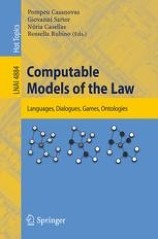
This book originate from a workshop held at the European University Institute of Florence, Italy, in December 2006. The workshop was devoted to the discussion of the different ways of understanding and explaining contemporary law, for the purpose of building computable models of it -- especially models enabling the development of computer applications for the legal domain.

In this work Dr. Taylor surveys the federal countries of the world and asks how they divide power among the constituent units of the federation. In so doing, he considers not only the formal constitutional text, but, far more importantly, the case law that has grown up around it as the Courts develop approaches to interpreting provisions for the distribution of powers. This enables conclusions to be drawn about the effectiveness of various structural and interpretative approaches to the distribution of powers within federations.
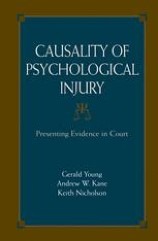
This sequel to the authors’ Psychological Knowledge in Court offers a welcome expansion on key concepts, terms, and issues in causality, bringing much needed clarity to psychological injury assessments and the legal contexts that employ them. Focusing on PTSD, traumatic brain injury, and chronic pain (and grounding readers in salient U.S. and Canadian case law), Causality sets out a multifactorial causality framework to facilitate admissibility of psychological evidence in court. Issues concerning malingering are examined in depth, as are clinical gray areas that can jeopardize validity. At the same time, the book clearly explains what lawyers and clinicians need to understand about each other’s work—of crucial importance since the two sides often seem to speak at cross-purposes.

Daraa Highway - Ghabagheb - Syria
+963-15 2050 - 15 860 380 /1/2/3 - 11 662 3900