


Refine Results
Sort By
From
To


In this book, the author develops a novel justificatory framework for making judgments of decisional competence to consent to biomedical research with reference to five groups of cognitively vulnerable individuals - older children and adolescents, adults with intellectual disabilities, adults with depression, adults with schizophrenia and adults with dementia, including Alzheimer’s disease.

This book serves to gain new insights into the molecular determinants of neuronal death and to establish new targets for therapeutic intervention.
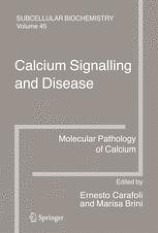
This topic is a new entry in the area of cellular calcium signaling: yet, it now spans the entire area, with discoveries that cover both genetic and acquired pathologies, even offering glimpses in the direction of therapy.Cellular calcium homeostasis, and thus calcium signalling, is mainly regulated by membrane intrinsic proteins and calcium sensor proteins. Both classes may be involved in pathological processes that affect both human and animals, ranging from common and important diseases (e.g. migraine, diabetes, epilepsia, manic depression, infertility, various types of cancer, Alzheimer’s disease, muscular dystrophy) to rare genetic conditions (e.g., a number of genetic heart conditions, autoimmune retinopathies, night blindness, hereditary amyloid polyneuropathy, malignant hyperthermia, cerebellar ataxia, atherothrombotic disease).
Helping to accelerate Alzheimer’s disease drug development. Addressing the latest advances in preclinical and clinical research, including new insights into the molecular mechanisms and emerging therapeutic strategies, the book continues by exploring digital biomarkers and advanced neuroimaging analysis which will transform how clinical trials in the Alzheimer’s disease field are performed.
Aims to build a new generation of experts with a broader understanding of key topics in the Alzheimer’s disease field. Chapters guide readers through innovative approaches to the discovery of novel biomarkers in cerebrospinal fluid, innovation in blood-based biomarkers, a comprehensive overview of magnetic resonance imaging and molecular imaging approaches and their value for developing drugs for Alzheimer’s disease, cutting-edge developments in neuropathology and their relevance for Alzheimer’s disease trials, novel genomic strategies for biomarker development, and related topics including neuropsychological testing and advanced analytical methods.Written in the highly successful Methods in Molecular Biology series format, chapters include introductions to their respective topics, lists of the necessary materials and reagents, step-by-step, readily reproducible laboratory protocols, and tips on troubleshooting and avoiding known pitfalls.
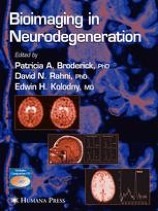
offers both the physician and researcher a critical survey of the best new technologies for studying neurodegeneration, as well as describing their optimal use in the diagnosis and treatment of specific neurodegenerative diseases

This book contains a survey of present-day research into the biomedical fundamentals of Alzheimer’s disease (AD). It contains 20 chapters dealing with widely ranging topics, all of which have a bearing upon the understanding and treatment of AD. Starting with a broad survey of the contribution that the various microscopical techniques (light microscopy, electron microscopy, atomic force microscopy)
Alzheimer’s Disease: Advances in Genetics, Cellular and Molecular Biology provides exciting, comprehensive and up-to-date summaries of the most important recent advances in the genetic, molecular, biochemical, and cell biological studies of AD. The studies and advances described in this volume will help to accelerate the process of rational drug discovery and soon serve to extend and enhance the mental health and lifespan of our burgeoning elderly population.
Few medical or scientific addresses have so unmistakeably made history as the presentation delivered by Alois Alzheimer on November 4th, 1906 in Tübingen. The celebratory event, "Alzheimer 100 Years and Beyond" organized on the initiative of the Alzheimer community in Germany and worldwide, in collaboration with the Fondation Ipsen, at the very site of the original lecture, namely the Institute of Psychiatry at the University of Tübingen in Germany from November 2nd to 5th, 2006, was the highlight of the Alzheimer Year. Over the last century of Alzheimer research (1906-2006), remarkable progress has been achieved. Most of the authors of the major discoveries and the people involved in research in this field will present, during the meeting and in this volume, the pioneering research explaining the conditions under which they were conducted. The goal of this book is to honor the work accomplished, to summarize the most important knowledge and to provide material for the history of science.
Proceedings of the 7th International Conference on Alzheimer’s Disease and Parkinson’s Disease (ADPD), held March 9-13, 2005 in Sorrento, Italy.The subject matter of the ADPD conferences is unique in that it deals not only with issues related individually to Alzheimer’s disease and Parkinson’s disease, but also with the integration of these and other related diseases. The most up-to-date techniques and research findings are illustrated in this volume, covering topics such as immunology, neuroscience, pharmacology, genetics, molecular biology, biochemistry and the history, epidemiology, clinical phenomenology, diagnosis, imaging, treatment ,and future perspectives of Alzheimer’s and Parkinson’s Diseases.
Abeta Peptide and Alzheimer’s Disease summarizes current knowledge of beta-amyloid peptide (Aß) and its role as the major culprit in Alzheimer’s Disease (AD), shown by recent advances in genetics and brain biochemistry.the book covers fundamental biochemical studies on the Aß peptide, the genetic impact on Aß expression and processing, and various AD therapeutic strategies that target Aß. Although specifically focusing on Aß and AD, there is also some discussion on the similarity and differences of this peptide and AD with other amyloidogenic diseases.
Alzheimer’s disease (AD) is a neurodegenerative disease that robs the minds of our elderly population. Approximately one in every eight adults over the age of 65 and nearly half of those over 85 are afflicted with this disease. The aging population in developed societies will impose an ever increasing socioeconomic threat in the future. Current medicines for AD patients are mainly symptomatic treatments and a huge unmet medical need exists to slow the progression of this disease. A great deal of research has been dedicated to understanding the pathogenesis of AD from which comes many ideas for intervening with its progression. Some of these ideas have been fast-tracked to clinical trials due to the availability of medicines with proven clinical efficacies for other diseases (e.g. atorvastatin, simvastatin, rosiglitazone and clioquinol) while others represent novel chemical entities (e.g. glycogen synthase kinase-3 inhibitors).

Daraa Highway - Ghabagheb - Syria
+963-15 2050 - 15 860 380 /1/2/3 - 11 662 3900