


Refine Results
Sort By
From
To

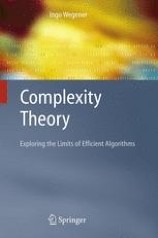
Complexity theory is the theory of determining the necessary resources for the solution of algorithmic problems and, therefore, the limits of what is possible with the available resources. An understanding of these limits prevents the search for non-existing efficient algorithms. This textbook considers randomization as a key concept and emphasizes the interplay between theory and practice: New branches of complexity theory continue to arise in response to new algorithmic concepts, and its results - such as the theory of NP-completeness - have influenced the development of all areas of computer science. The topics selected have implications for concrete applications, and the significance of complexity theory for today's computer science is stressed throughout.
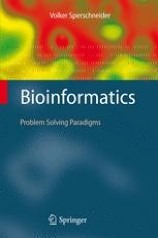
This book highlights basic paradigms of problem analysis and algorithm design in the context of core bioinformatics problems. Mathematically demanding themes are put across to the reader by properly chosen representations with the aid of lots of illustrations.
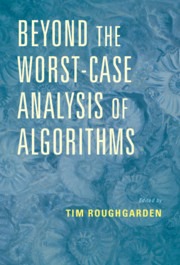
There are no silver bullets in algorithm design, and no single algorithmic idea is powerful and flexible enough to solve every computational problem. Nor are there silver bullets in algorithm analysis, as the most enlightening method for analyzing an algorithm often depends on the problem and the application. However, typical algorithms courses rely almost entirely on a single analysis framework, that of worst-case analysis, wherein an algorithm is assessed by its worst performance on any input of a given size. The purpose of this book is to popularize several alternatives to worst-case analysis and their most notable algorithmic applications, from clustering to linear programming to neural network training. Forty leading researchers have contributed introductions to different facets of this field, emphasizing the most important models and results, many of which can be taught in lectures to beginning graduate students in theoretical computer science and machine learning.
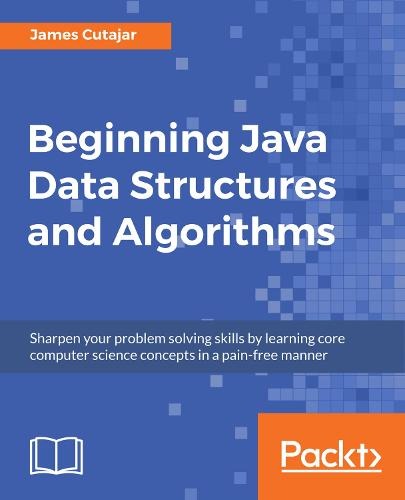
Teaches you tools that you can use to build efficient applications. It starts with an introduction to algorithms and big O notation, later explains bubble, merge, quicksort, and other popular programming patterns. You’ll also learn about data structures such as binary trees, hash tables, and graphs. The book progresses to advanced concepts, such as algorithm design paradigms and graph theory. By the end of the book, you will know how to correctly implement common algorithms and data structures within your applications.
This book presented submissions in the engineering and applications track. The papers address all current subjects in algorithmics reaching from design and analysis issues of algorithms over to real-world applicat.
This volume contains the 75 contributed papers and the abstracts of the threeinvited lectures presented at the 13th Annual European Symposium on Algo-rithms (ESA 2005), held in Spain, 2005. respectively.Papers were solicited in all areas of algorithmic research, including but notlimited to algorithmic aspects of networks, approximation and on-line algo-rithms, computational biology, computational geometry, computational financeand algorithmic game theory, data structures, database and information re-trieval, external memory algorithms, graph algorithms, graph drawing, machinelearning, mobile computing, pattern matching and data compression, quantumcomputing, and randomized algorithms. The algorithms could be sequential,distributed, or parallel. Submissions were especially encouraged in the area ofmathematical programming and operations research, including combinatorialoptimization, integer programming, polyhedral combinatorics, and semidefiniteprogramming.Each extended abstract was submitted to one of the two tracks.
The book covers numerical methods for solving a wide range of problems, from integration to the numerical solution of differential equations or the stimulation of random processes. Examples of programmes that solve problems directly, as well as those that use MATLAB’s high-level commands are given. Each chapter includes extensive examples and tasks, at varying levels of complexity. For practice, the early chapters include programmes that require debugging by the reader, while full solutions are given for all the tasks. The book also includes: A glossary of MATLAB commands / Aappendices of mathematical techniques used in numerical methods / Designed as a text for a first course in programming and algorithm design, as well as in numerical methods courses, the book will be of benefit to a wide range of students from mathematics and engineering, to commerce."

Daraa Highway - Ghabagheb - Syria
+963-15 2050 - 15 860 380 /1/2/3 - 11 662 3900