


Refine Results
Sort By
From
To

Covering interesting and significant biomedical ageing topics not included in the earlier volumes. Comprehensive and cutting-edge, this book is a valuable resource for experienced researchers and early career scientist alike, who are interested in learning more about the fascinating and challenging question of why and how our cells age.
Outlines the challenges of supporting the health and wellbeing of older adults around the world and offers examples of solutions designed by stakeholders, healthcare providers, and public, private and nonprofit organizations in the United States. The solutions presented address challenges including: providing person-centered long-term care, making palliative care accessible in all healthcare settings and the home, enabling aging-in-place, financing long-term care, improving care coordination and access to care, delivering hospital-level and emergency care in the home and retirement community settings, merging health and social care, supporting people living with dementia and their caregivers, creating communities and employment opportunities that are accessible and welcoming to those of all ages and abilities, and combating the stigma of aging. The innovative programs of support and care in Aging Well serve as models of excellence that, when put into action, move health spending toward a sustainable path and greatly contribute to the well-being of older adults.
For centuries people have been puzzled by the inevitability of human aging. For most of the second half of the twentieth century aging remained a mystery, or an unsolved biological problem. At the end of the 20th century a remarkable scientific discovery emerged. It was not a single discovery in the usual sense, because it was based on a series of important interconnected insights over quite a long period of time. These insights made it possible for the very first time to understand the biological reasons for aging in animals and man. It can already be said, however, that the many observations and insights that explain aging will not be accepted as established knowledge for a long time.
Focuses on theoretical issues and empirical findings related to trends and determinants of healthy aging, including factors related to "healthy longevity" of the oldest-old, aged 80 and over. The group is the most rapidly increasing elderly sub-population and is most likely to need assistance in daily living in all countries. Chapters include both longitudinal and cross-sectional data from North America, Europe, and Asia in country-specific studies and cross-national comparisons. Part I focuses on the definition, components, concepts, measurements, and determinants of healthy aging, and discusses the trends and patterns of disability and healthy life expectancy at the macro level. Part II addresses individual healthy aging, including its biological and socio-demographic aspects. Part III focuses on issues concerning the family and healthy aging, and Part IV explores formal and informal care for healthy aging through governmental policy interventions and community service programs.
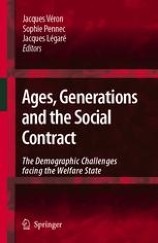
Our societies are ageing. The Family is changing. Labour force behaviour is evolving. How is the organisation of family and collective solidarity adapting in this context of longer life spans, low fertility, and work that is simultaneously scarce and abundant? The welfare states are currently facing three main challenges: ensure satisfactory living conditions for the elderly without increasing the cost burden on the active population, reduce social inequality, and maintain equity between successive generations. In this book, researchers from different countries compare their experiences and offer contrasting views on the future of social protection. They consider the theoretical aspects of the intergenerational debate, relations between generations within the family, the living standards of elderly people, and the question of social time.
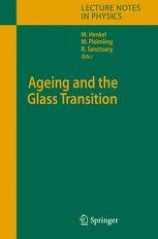
Understanding cooperative phenomena far from equilibrium is one of fascinating challenges of present-day many-body physics. Glassy behaviour and the physical ageing process of such materials are paradigmatic examples. The present volume, primarily intended as introduction and reference for postgraduate students and nonspecialist researchers from related fields, collects six extensive lectures addressing selected experimental and theoretical issues in the field of glassy systems.
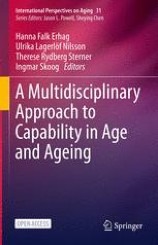
This book provides insight on how to interpret capability in ageing – one’s individual ability to perform actions in order to reach goals one has reason to value – from a multidisciplinary approach. the book describes this demographic trends as well as the large global challenges and important societal implications this will have such as a worldwide increase in the number of persons affected with dementia, and in the ratio of retired persons to those still in the labor market. Through contributions from many different research areas, it discussed how capability depends on interactions between the individual (e.g. health, genetics, personality, intellectual capacity), environment (e.g. family, friends, home, work place), and society (e.g. political decisions, ageism, historical period).

Daraa Highway - Ghabagheb - Syria
+963-15 2050 - 15 860 380 /1/2/3 - 11 662 3900