



Page 1
Page 1

Ultrascale Computing Systems
The needs of future digital data and computer systems are expected to be two to three orders of magnitude larger than for today's systems, to take account of unprecedented amounts of heterogeneous hardware, lines of source code, numbers of users, and volumes of data. Ultrascale computing systems (UCS) are a solution. Envisioned as large-scale complex systems joining parallel and distributed computing systems, which can be located at multiple sites and cooperate to provide the required resources and performance to the users, these technologies will extend individual systems to provide the resources that are very much needed.

Time Continuity in Discrete Time Models : New Approaches for Production Planning in Process Industries
Production planning problems containing special characteristics from process industries are addressed in this book. The main subject is the development of mathematical programming models that allow to model production plans which are not disrupted by discretization of time. However, discrete time models are used as a basis and are subsequently enhanced to include aspects of time continuity. Their integration is achieved by different building blocks which may be combined freely according to the specific planning situation at hand. The primary area of application of these kinds of models are process industries.

Sports Leagues Scheduling : Models, Combinatorial Properties, and Optimization Algorithms
In the context of sports leagues scheduling (SLS) several groups' interests must be taken into account. This book treats requirements for sport leagues schedules to be realizable from an operational and a security point of view, attractive for spectators and tv channels, and fair for the conampeting teams. Formal problem definitions as well as integer programming models are presented and analyzed. Additionally, several fairness concepts are developed and their operability is investigated by means of graph theory. Moreover, this book presents algorithmic concepts that can be drawn upon to construct suitable schedules. This volume provides a deep understanding of problems arising in the context of SLS as well as approaches for dealing with these problems, being relevant for both theoreticians and practitioners.

Parallel programming : for multicore and cluster systems ; 3rd ed.
Covers the new development in processor architecture and parallel hardware. It provides detailed descriptions of parallel programming techniques that are necessary for developing efficient programs for multicore processors as well as for parallel cluster systems and supercomputers. The book is structured in three main parts, covering all areas of parallel computing: the architecture of parallel systems, parallel programming models and environments, and the implementation of efficient application algorithms. The emphasis lies on parallel programming techniques needed for different architectures. In particular, this third edition includes an extended update of the chapter on computer architecture and performance analysis taking new developments such as the aspect of energy consumption into consideration.

Optimizing HPC Applications with Intel® Cluster Tools : Hunting Petaflops
Optimizing HPC Applications with Intel® Cluster Tools takes the reader on a tour of the fast-growing area of high performance computing and the optimization of hybrid programs. These programs typically combine distributed memory and shared memory programming models and use the Message Passing Interface (MPI) and OpenMP for multi-threading to achieve the ultimate goal of high performance at low power consumption on enterprise-class workstations and compute clusters. The book focuses on optimization for clusters consisting of the Intel® Xeon processor, but the optimization methodologies also apply to the Intel® Xeon Phi™ coprocessor and heterogeneous clusters mixing both architectures.

Integrated Research in GRID Computing : CoreGRID Integration Workshop 2005 (Selected Papers) November 28-30, Pisa, Italy
Integrated Research in Grid Computing presents a selection of the best papers presented at the CoreGRID Integration Workshop (CGIW2005). The aim of CoreGRID is to strengthen and advance scientific and technological excellence in the area of Grid and Peer-to-Peer technologies in order to overcome the current fragmentation and duplication of effort in this area.
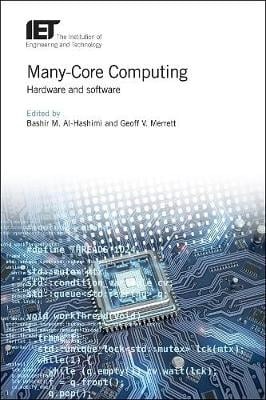
Many-Core Computing : Hardware and software
Provides a timely and coherent account of the recent advances in many-core computing research. Starting with programming models, operating systems and their applications; it presents runtime management techniques, followed by system modelling, verification and testing methods, and architectures and systems. Computing has moved away from a focus on performance-centric serial computation, instead towards energy-efficient parallel computation. This provides continued performance increases without increasing clock frequencies, and overcomes the thermal and power limitations of the dark-silicon era. As the number of parallel cores increases, we transition into the many-core computing era. There is considerable interest in developing methods, tools, architectures and applications to support many-core computing.

Making Grids Work ; Proceedings of the CoreGRID Workshop on Programming Models Grid and P2P System Architecture Grid Systems, Tools and Environments 12-13 June 2007, Heraklion, Crete, Greece
Making Grids Work includes selected articles from the CoreGRID Workshop on Grid Programming Models, Grid and P2P Systems Architecture, Grid Systems, Tools and Environments held at the Institute of Computer Science, Foundation for Research and Technology - Hellas in Crete, Greece, June 2007. This workshop brought together representatives of the academic and industrial communities performing Grid research in Europe. Organized within the context of the CoreGRID Network of Excellence, this workshop provided a forum for the presentation and exchange of views on the latest developments in Grid Technology research. This volume is the 7th in the series of CoreGRID books.

Linear Optimization Problems with Inexact Data
Linear programming attracted the interest of mathematicians during and after World War II when the first computers were constructed and methods for solving large linear programming problems were sought in connection with specific practical problems—for example, providing logistical support for the U.S. Armed Forces or modeling national economies. Early attempts to apply linear programming methods to solve practical problems failed to satisfy expectations. There were various reasons for the failure. One of them, which is the central topic of this book, was the inexactness of the data used to create the models. This phenomenon, inherent in most pratical problems, has been dealt with in several ways. At first, linear programming models used "average” values of inherently vague coefficients, but the optimal solutions of these models were not always optimal for the original problem itself. Later researchers developed the stochastic linear programming approach, but this too has its limitations. Recently, interest has been given to linear programming problems with data given as intervals, convex sets and/or fuzzy sets. The individual results of these studies have been promising, but the literature has not presented a unified theory. Linear Optimization Problems with Inexact Data attempts to present a comprehensive treatment of linear optimization with inexact data, summarizing existing results and presenting new ones within a unifying framework.

Languages and Compilers for Parallel Computing ; 19th International Workshop, LCPC 2006, New Orleans, LA, USA, November 2-4, 2006, Revised Papers
The 19th Workshop on Languages and Compilers for Parallel Computing was heldinNovember2006inNewOrleans,LouisianaUSA.Morethan40researchers from around the world gathered together to present their latest results and to exchange ideas on topics ranging from parallel programming models, code generation,compilationtechniques,paralleldatastructureandparallelexecution models,toregisterallocationandmemorymanagementinparallelenvironments.
Advances and Innovations in Systems, Computing Sciences and Software Engineering
Acollection of world class paper articles addressing the following topics: Image and Pattern Recognition: Compression, Image processing, Signal Processing Architectures, Signal Processing for Communication, Signal Processing Implementation, Speech Compression, and Video Coding Architectures. Languages and Systems: Algorithms, Databases, Embedded Systems and Applications, File Systems and I/O, Geographical Information Systems, Kernel and OS Structures, Knowledge Based Systems, Modeling and Simulation, Object Based Software Engineering, Programming Languages, and Programming Models and tools. Parallel Processing: Distributed Scheduling, Multiprocessing, Real-time Systems, Simulation Modeling and Development, and Web Applications. New trends in computing: Computers for People of Special Needs, Fuzzy Inference, Human Computer Interaction, Incremental Learning, Internet-based Computing Models, Machine Intelligence, Natural Language Processing, Neural Networks, and Online Decision Support System.
