



Page 94
Page 94
Building with earth : Design and technology of a sustainable architecture
For a number of years, the healthy and environment-friendly building material earth, in common use for thousands of years, has been enjoying increasing popularity, including in industrialized nations. In hot dry and temperate climate zones, earth offers numerous advantages over other materials. Its particular texture and composition also holds great aesthetic appeal.
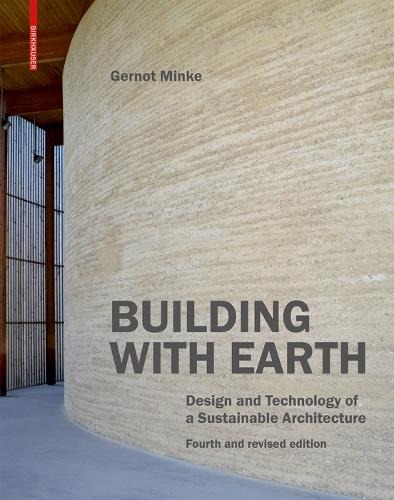
Building with earth : Design and technology of a sustainable architecture
Offers a practical systematic overview of the many uses of earth and techniques for processing it. Its properties and physical characteristics are described in informed and knowledgeable detail. The presentation reflects the rich and varied experiences gained over thirty years of building earth structures all over the world. Numerous photographs of construction sites and drawings show the concrete execution of earth architecture. Documentation of 30 international earth buildings. The characteristics of the building material earth and its applications in modern architecture
Building to suit the climate : A handbook
Serves as a concrete aid to planning and design. With the planning process as its roadmap, it accompanies the planner from the basic evaluation stage through conception and implementation planning all the way to building operation. The building-related characteristics of the various climatic zones form the basis for the made-to-measure development of integrated building solutions. Well-conceived graphics illustrate planning contexts and facilitate efficient planning decisions and realistic predimensioning. Materials, systems, and technologies are described, and their areas of application are pointed out. Reference parameters, costs, and the presentation of interrelationships equip the planner to make a strategic and well-informed selection.
Building the Foundation : Whole Numbers in the Primary Grades : The 23rd ICMI Study
This twenty-third ICMI Study addresses for the first time mathematics teaching and learning in the primary school (and pre-school) setting, while also taking international perspectives, socio-cultural diversity and institutional constraints into account. One of the main challenges of designing the first ICMI primary school study of this kind is the complex nature of mathematics at the early level. Accordingly, a focus area that is central to the discussion was chosen, together with a number of related questions. The broad area of Whole Number Arithmetic (WNA), including operations and relations and arithmetic word problems, forms the core content of all primary mathematics curricula. this study presents a meta-level analysis and synthesis of what is currently known about WNA, providing a useful base from which to gauge gaps and shortcomings, as well as an opportunity to learn from the practices of different countries and contexts.
Building systems in interior design
Takes an entirely new approach to teaching this essential topic for Architects, Designers and Building Engineers. Written to prepare students for the real world and packed with practical examples, the book will foster an understanding of specific issues that are critical to those features of technical systems that most directly affect design. The book stresses the ever-present nature of these systems: they are everywhere, all the time. Taking a design oriented view, it outlines what can and cannot be done, and provides the student with the know-how and confidence to defend and promote their design intent when working with other industry professionals.
Building Systems for Interior Designers ; 3rd ed.
The ultimate interior designer's guide to building systems and safety Building Systems for Interior Designers, Third Edition is the single-source technical reference that every designer needs, and an ideal solution for NCIDQ exam preparation. Addresses the special concerns of the interior designer within the context of the entire design team. New coverage includes the latest information on sustainable design and energy conservation, expanded coverage of security and building control systems, and a new and expanded art program with over 250 new illustrations. Covering systems from HVAC to water to waste to lighting, this book explains technical building systems and engineering issues in a clear and accessible way to help interior designers communicate more effectively with architects, engineers, and contractors.
Building Spring 2 Enterprise Applications
This book covers the first steps of using Spring while discussing the relevant technologies that Spring can be integrated with, what to be aware of, and how working with Spring makes them easier to use. Focuses on the most useful features of Spring, including persistence and transaction management as well as the complete Spring web tools portfolio. Introduces three-tier application design and how to test these designs.
Building Skins
Focuses on the wide-ranging aspects of facade design, from the selection and use of materials to the advanced technical possibilities now open to the architect. A wide array of carefully selected international examples show the theory in the practice.
Building Services Design for Energy Efficient Buildings
"The following issues are addressed: background issues on climate change, whole-life performance and design collaboration / generic strategies for energy efficient, low-carbon design / health and wellbeing and post occupancy evaluation / building ventilation / air conditioning and HVAC system selection / thermal energy generation and distribution systems / low-energy approaches for thermal control / electrical systems, data collection, controls and monitoring / building thermal load assessment / building electric power load assessment / space planning and design integration with other disciplines."
Building performance analysis
presents a comprehensive and systematic overview of the subject. It provides a working definition of building performance, and an in-depth discussion of the role building performance plays throughout the building life cycle. The book also explores the perspectives of various stakeholders, the functions of buildings, performance requirements, performance quantification (both predicted and measured), criteria for success, and the challenges of using performance analysis in practice. Assembles the current body of knowledge on building performance analysis in one unique resource Offers deep insights into the complexity of using building performance analysis throughout the entire building life cycle, including design, operation and management Contributes an emergent theory of building performance and its analysis
Building meaning : An architecture studio Primer on design, theory, and history
Introduction to the complex relationship between form making, historical analysis, and conceptual explorations. This book focuses on the relationship and interdependence between design, theory, and history for an innovative and holistic studio approach. Draws from a diverse range of thinkers and designers to highlight the many interpretations of key architectural concepts, and provides readers with the context essential for developing their own approaches to any design problem.
Building information modeling : BIM in current and future practice
"Thought leaders from universities and professional practice composed essays exploring BIM's potential to improve the products and processes of architectural design including the structure and content of the tools themselves. These authors provide insights for assessing the current practice and research directions of BIM and speculate about its future. Design Thinking and BIM / BIM Analytics / Comprehensive BIM / Reasoning with BIM / Professional BIM / BIM Speculations"
Building from waste : Recovered materials in architecture and construction
"Reduce, Reuse, Recycle, and Recover" is the sustainable guideline that has replaced the "Take, Make, Waste" attitude of the industrial age. Based on their background at the ETH Zurich and the Future Cities Laboratory in Singapore, the authors provide both a conceptual and practical look into materials and products which use waste as a renewable resource. It looks into innovative concepts of how materials usually regarded as waste can be processed into new construction elements. The products are organized along the manufacturing processes: densified, reconfigured, transformed, designed and cultivated materials.
Building for well-being : Exploring health-focused rating systems for design and construction professionals
The first introduction to health-focused building standards for design and construction professionals. More than a summary of the state of the field, this practical resource guides designers, builders, developers, and owners through considerations for incorporating WELL®, Fitwel®, and other systems from the planning phase to ground-breaking and beyond.Drawing on the authors’ backgrounds in sustainable design and public health, chapters on the evolution of the green building movement and the relationship between health and the built environment provide vital context for understanding health-focused standards and certifications. The final chapter looks toward the future of health and the built environment.

Building design, construction and performance in tropical climates
Outlines: the functional requirements of buildings in tropical climates; the challenges associated with the sustainability of the built environment, building form and whole life performance in the context of a tropical setting; the impact of potentially hostile tropical conditions upon building pathology and the durability of components, structure and fabric; the tasks which face those responsible for appraising the design, condition, maintenance and conservation of built heritage in tropical regions; the facilities management issues faced in tropical climates; and the refurbishment, upgrade and renewal of the tropical built environment.
Building construction methods and systems : principles, requirements and application details
Presents practical information about the design and construction of building projects by addressing the principles of each method, unveiling background factors for requirements, and state-of-the-art application details, and presents general design and application principles of construction methods and technologies without diving into engineering calculations and formulas to keep the content easily understandable by all AEC practitioners and participants.
Building construction illustrated
A leading visual guide to the principles of building construction. Filled with rich illustrations and in-depth content by renowned author Francis D.K. Ching, it offers students and practicing professionals the information needed to understand concepts in residential and commercial construction, architecture, and structural engineering. Includes all new sections on resilient design; diagrids; modular foundation systems; smart façade types and systems; lighting sources and systems; and mass timber materials, cross laminated timber (CLT) and nail laminated timber (NLT) Revised to reflect that latest updates in codes and standards requirements: 2018 International Building Code (IBC), LEED v4, and CSI MasterFormat 2018 Includes updated information on sustainability and green building; insulation materials; stair uses; stoves and inserts; and fire-rated wall and floor assemblies

Building construction : From principle to detail ; Vol.1 : Fundamentals
Construction is the means by which designing architects and engineers transform a design idea into built reality. It is from this perspective that the subject of 'building construction design' is dealt with by the architect José Luis Moro in three comprehensive volumes. Each is dedicated to the methodological, physical and functional fundamentals, the conception of a constructional solution, and finally its implementation in the constructional detail. Not only do the three volumes provide extensive content; they also ensure the greatest possible clarity in the text and graphics, in order to make it easier for learners to access the material. Importantly, they focus not only on conveying technical and scientific information, but also on demonstrating the complex relationships and interactions between design, material and construction.
Building codes illustrated : The basics
Delivers a concise visual introduction to the 2021 International Building Code (IBC) distilled from the industry bestseller Building Codes Illustrated. With clear language and Frank Ching's distinctive illustrations, the book offers readers a sound understanding of the foundations of the IBC. A solid understanding of the fundamentals of the 2021 International Building Code for students without a background in architecture or engineering Intuitive and memorable study material for people seeking licensure via the Architect Registration Exam Visually striking and memorable material designed to catch the reader's eye, hold attention, and improve retention

Building codes illustrated : A guide to understanding the 2018 International Building Code ; 6th ed.
Provides brand new chapters on plumbing fixture counts, elevators, special construction, and existing buildings while updating the remainder of the material to align with recent changes to the IBC. includes: Thorough introductions to navigating the Code, use and occupancy, special uses and occupancies, and building heights and areas / Full explorations of the types of construction, fire resistive construction, interior finishes, fire-protection systems, and means of egress / Practical discussions of accessibility, interior environment, exterior walls, roof assemblies, and structural provisions / In-depth examinations of special inspections and tests, soils and foundations, building materials and systems, and elevators
