



Page 7
Page 7

Aortic valve disease
Your heart has four valves to keep blood flowing in the direction. These valves include the mitral valve, tricuspid valve, pulmonary valve and aortic valve. Each valve has flaps (epiphysis or leaflets) that opens and close once during each heartbeat sometimes the valve do not open or close completely; this interferes with the flow of blood inside the heart, and may lead to impaired ability to pump blood to your body. In aortic valve disease, the aortic valve between the lower left chamber (left ventricle) and the primary artery that delivers blood from the heart to the body (the aorta) does not work completely. It may not close completely; This causes blood to leak back into the left ventricle (regurgitation), or possibly narrowing of the valve (stenosis).

Antisense RNA Technology
The following project aims to introducing the technology of RNA Antisense as new therapy for many diseases. Antisense RNA: In molecular biology, the strand complementary to a coding sequence of a nucleic acid. Antisense DNA is the non-coding strand complementary to the coding strand in double-stranded DNA. The antisense strand serves as the template for messenger RNA (mRNA) synthesis. This synthesized nucleic acid is termed an "anti-sense" oligonucleotide (AON) because its base sequence is complementary to the gene's messenger RNA (mRNA), which is called the "sense" sequence (so that a sense segment of mRNA " 5'-AAGGUC-3' " would be blocked by the anti-sense mRNA segment " 3'-UUCCAG-5' ").
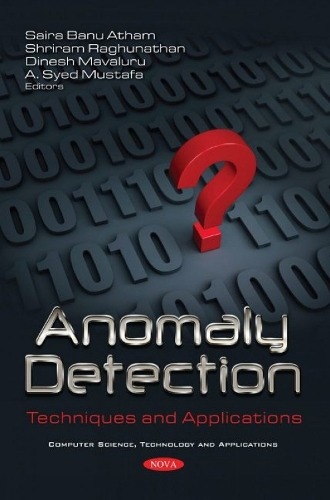
Anomaly Detection : Techniques and Applications
When information in the data warehouse is processed, it follows a definite pattern. An unexpected deviation in the data pattern from the usual behavior is called an anomaly. The anomaly in the data is also referred to as noise, outlier, spammer, deviations, novelties and exceptions. Identification of the rare items, events, observations, patterns which raise suspension by differing significantly from the majority of data is called anomaly detection. With progress in the technologies and the widespread use of data for the purpose for business the increase in the spams faced by the individuals and the companies are increasing day by day. This noisy data has boomed as a major problem in various areas such as Internet of Things, web service, Machine Learning, Artificial Intelligence, Deep learning, Image Processing, Cloud Computing, Audio processing, Video Processing, VoIP, Data Science, Wireless Sensor etc. Identifying the anomaly data and filtering them before processing is a major challenge for the data analyst. This anomaly is unavoidable in all areas of research. This book covers the techniques and algorithms for detecting the deviated data.

Alternative pseudodifferential analysis : With an application to modular forms
This volume introduces an entirely new pseudodifferential analysis on the line, the opposition of which to the usual (Weyl-type) analysis can be said to reflect that, in representation theory, between the representations from the discrete and from the (full, non-unitary) series, or that between modular forms of the holomorphic and substitute for the usual Moyal-type brackets. This pseudodifferential analysis relies on the one-dimensional case of the recently introduced anaplectic representation and analysis, a competitor of the metaplectic representation and usual analysis.

AI, data, and digitalization : First International Symposium, SAIDD 2023, Sogndal, Norway, May 9–10, 2023, Revised Selected Papers
Artificial Intelligence, Big Data and Digitalization allow us more than ever beforeto make use of the data our society and public and private sectors generate every day.Institutions around the world are increasingly turning to such methods and technologiesto help them solve complex problems, promote efficiency and improve performance anddecision-making.

Ageing : The Paradox of Life : Why We Age
For centuries people have been puzzled by the inevitability of human aging. For most of the second half of the twentieth century aging remained a mystery, or an unsolved biological problem. At the end of the 20th century a remarkable scientific discovery emerged. It was not a single discovery in the usual sense, because it was based on a series of important interconnected insights over quite a long period of time. These insights made it possible for the very first time to understand the biological reasons for aging in animals and man. It can already be said, however, that the many observations and insights that explain aging will not be accepted as established knowledge for a long time.
Aesthetic Surgery of the Facial Mosaic
This authoritative reference book assembles the experience of an international faculty of authors, each of whom has performed several thousand facelifts, i.e. procedures to rejuvenate and harmonize the human face. All procedures in this regard are covered and the text is accompanied by extensive artwork and photographs. The authors share their experience, including tips and tricks, as well as ways to avoid complications and pitfalls. Special emphasis is given to the concept of looking at the face as a mosaic, i.e. treating its individual parts in a harmonic way and maintaining mimic units. Combining different methods.

Advances in Nonlinear Speech Processing ; International Conference on Non-Linear Speech Processing, NOLISP 2007 Paris, France, May 22-25, 2007 Revised Selected Papers
This book presented numerous submissions for inclusion in the book. The papers are organized in topical sections on nonlinear and nonconventional techniques, speech synthesis, speaker recognition, speech recognition, speech analysis, and exploitation of non-linear techniques.

Advances in Evolutionary Computing for System Design
Evolutionary computing paradigms offer robust and powerful adaptive search mechanisms for system design. This book includes thirteen chapters covering a wide area of topics in evolutionary computing and applications including: -Introduction to evolutionary computing in system design - Evolutionary neuro-fuzzy systems - Evolution of fuzzy controllers - Genetic algorithms for multi-classifier design -Evolutionary grooming of traffic -Evolutionary particle swarms -Fuzzy logic systems using genetic algorithms - Evolutionary algorithms and immune learning for neural network-based controller design - Distributed problem solving using evolutionary learning -Evolutionary computing within grid environment -Evolutionary game theory in wireless mesh networks - Hybrid multiobjective evolutionary algorithms for the sailor assignment problem - Evolutionary techniques in hardware optimization

Advances in cryptology - CRYPTO -87 ; Conference on the theory and applications of cryptographic techniques : Proceedings
Zero-knowledge interactive proofsystems are a new technique which can be used as a cryptographic tool for designing provably secure protocols. Goldwasser, Micali, and Rackoff originally suggested this technique for controlling the knowledge released in an interactive proof of membership in a language, and for classification of languages. In this approach, knowledge is defined in terms of complexity to convey knowledge if it gives a computational advantage to the receiver, theory, and a message is said for example by giving him the result of an intractable computation. The formal model of interacting machines is described in. A proof-system (for a language L) is an interactive protocol by which one user, the prover, attempts to convince another user, the verifier, that a given input x is in L. We assume that the verifier is a probabilistic machine which is limited to expected polynomial-time computation, while the prover is an unlimited probabilistic machine.

Advances in conceptual modeling : Theory and practice ; ER 2006 Workshops BP-UML, CoMoGIS, COSS, ECDM, OIS, QoIS, SemWAT, Tucson, AZ, USA, November 6-9, 2006, Proceedings
Constitutes the refereed joint proceedings of seven international workshops held in conjunction with the 25th International Conference on Conceptual Modeling, ER 2006, in Tucson, AZ, USA in November 2006. The 39 revised full papers presented together with the outlines of three tutorials were carefully reviewed and selected from 95 submissions.

Advances in computer systems architecture ; Vol. 4186 : 11th Asia-Pacific Conference, ACSAC 2006, Shanghai, China, September 6-8, 2006, Proceedings
This is the 11th in a series of conferences, which started life in Australia, as the computer architecture component of the Australian Computer Science Week. In 1999 it ventured away from its roots for the first time, and the fourth Australasian Computer Architecture Conference was held in the beautiful city of Sails (Auckland, New Zealand). Perhaps it was because of a lack of any other computer architecture conference in Asia or just the attraction of traveling to the Southern Hemisphere but the conference became increasingly international during the subsequent three years and also changed its name to include Computer Systems Architecture, reflecting more the scope of the conference, which embraces both architectural and systems issues. In 2003, .

Advancement of Deep Learning and its Applications in Object Detection and Recognition
In just the past five years, deep learning has taken the world by surprise, driving rapid progress in fields as diverse as computer vision, natural language processing, automatic speech recognition, etc. This book presents an introduction to deep learning and various applications of deep learning such as recommendation systems, text recognition, diabetic retinopathy prediction of breast cancer, prediction of epilepsy, sentiment, fake news detection, software defect prediction and protein function prediction.

Abstraction, reformulation and approximation ; 6th International symposium, SARA 2005, Airth Castle, Scotland, UK, July 26-29, 2005, proceedings
This volume contains the proceedings of the 6th Symposium on Abstraction, Reformulation and Approximation (SARA 2005). the proceedings have been published in the LNAI series of Springer. Abstractions, reformulations and approximations (AR&A) have found app- cationsin avarietyofdisciplines andproblems, including constraintsatisfaction, design, diagnosis, machine learning, planning, qualitative reasoning, scheduling, resource allocation and theorem proving, but are also deeply rooted in philo- phy and cognitive science. The papers in this volume capture a cross-section of the various facets of the ?eld and of its applications. One of the primary uses of AR&A is oriented to overcome computational intractability. AR&A techniques, however, have also proved useful for knowledge acquisition, explanation and other applications.

A Theory of Shape Identification
Recent years have seen dramatic progress in shape recognition algorithms applied to ever-growing image databases. They have been applied to image stitching, stereo vision, image mosaics, solid object recognition and video or web image retrieval. More fundamentally, the ability of humans and animals to detect and recognize shapes is one of the enigmas of perception. The book describes a complete method that starts from a query image and an image database and yields a list of the images in the database containing shapes present in the query image. A false alarm number is associated to each detection. Many experiments will show that familiar simple shapes or images can reliably be identified with false alarm numbers ranging from 10-5 to less than 10-300.
