


Refine Results
Sort By
From
To


This book was originally conceived at a conference at the University of Turin in Italy. The conference was organized to examine the so-called “Malaria Hypothesis”, that is to say, the higher fitness of t- lassemia heterozygotes in a malarial environment, and to pay tribute to the proponent of that hypothesis, J.B.S. Haldane. Contributors to this book examine certain genetic and evolutionary aspects of malaria which is a major killer of human populations, especially in Africa and Asia. There were attempts to discredit Haldane’s contribution from two directions: (a) it has been suggested that the “Malaria Hypothesis” was known long before Haldane and that there was nothing original about his idea (Lederberg 1999), and that (b) the hypothesis of heterozygote su- riority was first suggested by the Italian biologist Giuseppe Montalenti who communicated his idea to Haldane (Allison 2004).

Magnetohydrodynamics (MHD) studies the interaction between the flow of an electrically conducting fluid and magnetic fields. It involves such diverse topics as the evolution and dynamics of astrophysical objects, thermonuclear fusion, metallurgy and semiconductor crystal growth, etc. Although the first ideas in magnetohydrodynamics appeared at the beginning of the last century, the "explosion" in theoretical and experimental studies occurred in the 1950s-60s. This state-of-the-art book aims at revising the evolution of ideas in various branches of magnetohydrodynamics (astrophysics, earth and solar dynamos, plasmas, MHD turbulence and liquid metals) and reviews current trends and challenges.
Probes the subject of extraterrestrial intelligent life, offering scientific and technological implications, discussing the philosophical and religious connotations and rebuffing pseudo-scientific assertions such as 'rare earth'.
The Human Condition-in-the-unity-of-everything-there-is-alive, under whose aegis the present selection of essays falls, offers the urgently needed new approach to reinvestigating humanness. While recent advances in the neurosciences, genetics and bio-engineering challenge the traditional abstract conception of "human nature", indicating its transformability, thus putting in question the main tenets of traditional philosophical anthropology, in the new perspective of the Human Creative Condition the human individual is seen in its emergence and unfolding within the dynamic networks of the logos of life, and within the evolution of living types.
Microbial activities influence water-rock interaction processes and chemical transport between the major geochemical reservoirs and the formation/transformation of minerals and rocks, whereas geological processes and geochemical controls influence the microbial ecology in extreme environments. How biological activity influences geological processes and what role these processes played in the geological evolution of the Earth are fundamental questions.

The whole volume consisting of 19 chapters is divided into 3 parts: Models and Theories; Operators and Frameworks; Applications. This edited volume will serve as a useful guide and reference for researchers who are currently working in the area of linkage. For postgraduate research students, this volume will serve as a good source of reference. It is also suitable as a text for a graduate level course focusing on linkage issues.
What is life? Has molecular biology given us a satisfactory answer to this question? And if not, why, and how to carry on from there? This book examines life not from the reductionist point of view, but rather asks the question: what are the universal properties of living systems and how can one construct from there a phenomenological theory of life that leads naturally to complex processes such as reproductive cellular systems, evolution and differentiation? The presentation has been deliberately kept fairly non-technical so as to address a broad spectrum of students and researchers from the natural sciences and informatics.
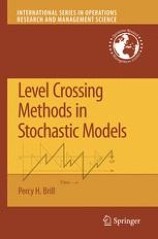
Since its inception in 1974, the level crossing approach for analyzing a large class of stochastic models has become increasingly popular among researchers. This volume traces the evolution of level crossing theory for obtaining probability distributions of state variables and demonstrates solution methods in a variety of stochastic models including: queues, inventories, dams, renewal models, counter models, pharmacokinetics, and the natural sciences. Results for both steady-state and transient distributions are given, and numerous examples help the reader apply the method to solve problems faster, more easily, and more intuitively.
this book offers the first account of the development of Huygens’ mathematical analysis of lenses and telescopes and its significance for the origin of the wave theory of light. As Huygens applied his mathematical proficiency to practical issues pertaining to telescopes – including trying to design a perfect telescope by means of mathematical theory – his dioptrics is significant for our understanding of seventeenth-century relations between theory and practice. With this full account of Huygens’ optics, this book sheds new light on the history of seventeenth-century optics and the rise of the new mathematical sciences, as well as Huygens’ oeuvre as a whole. Students of the history of optics, of early mathematical physics, and the Scientific Revolution, will find this book enlightening.
Based on material delivered at several summer schools, this book is the first comprehensive textbook at the graduate level encompassing all aspects associated with the emerging field of astrobiology. Volume II gathers another set of extensive lectures covering topics so diverse as the formation and the distribution of elements in the Universe, the concept of habitability from both the planetologists' and the biologists' point of view and artificial life. The contributions are held together by the common goal to understand better the origin of life, its evolution and possible existence outside the Earth's realm.
Just over thirty years after Holland first presented the outline for Learning Classifier System paradigm, the ability of LCS to solve complex real-world problems is becoming clear. In particular, their capability for rule induction in data mining has sparked renewed interest in LCS. This book brings together work by a number of individuals who are demonstrating their good performance in a variety of domains.
Over the next decade the gravitational physics community will benefit from dramatic improvements in many technologies critical to testing gravity. Highly accurate deep space navigation, interplanetary laser communication, interferometry and metrology, high precision frequency standards, precise pointing and attitude control, together with drag-free technologies, will revolutionize the field of experimental gravitational physics. The centennial of the general theory of relativity in 2015 will motivate a significant number of experiments designed to test this theory with unprecedented accuracy.
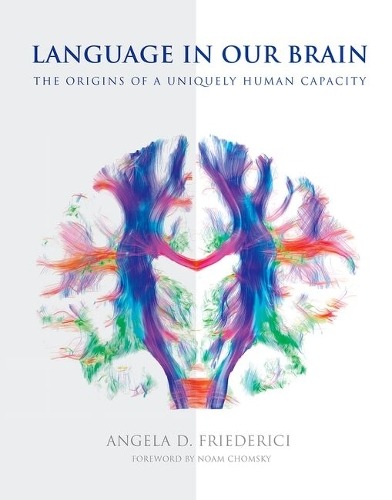
Friederici describes the basic language functions and their brain basis; the language networks connecting different language-related brain regions; the brain basis of language acquisition during early childhood and when learning a second language, proposing a neurocognitive model of the ontogeny of language; and the evolution of language and underlying neural constraints. She finds that it is the information exchange between the relevant brain regions, supported by the white matter tract, that is the crucial factor in both language development and evolution.

Amongst the thematic topics discussed are global frequency, impacts on society, analysis of initial rock slope failure, monitoring of rock slope movement, analysis and modeling of post-failure behaviour, volcanic landslides, and influences of massive rock slope failure on the geomorphological evolution of mountain regions. Regional contributions include reports on rockslides and rock avalanches in Norway, western Canada, the Andes of Argentina, the Karakoram Himalaya, the European Alps, the Appennines, and the mountains of Central Asia.
Information is a valuable resource to an organization. User-friendly, computer-controlled instrumentation and data analysis techniques are revolutionizing the way measurements are being made, allowing nearly instantaneous comparison between theoretical predictions, simulations, and actual experimental results. This book provides comprehensive coverage of fundamentals of advanced instrumentation systems based on LabVIEW concepts. This book is for those who wish a better understanding of virtual instrumentation concepts, its purpose, its nature, and the applications developed using the National Instrument’s LabVIEW software.
An analysis of Newton's ideas dismisses this hypothesis by the simple fact that the Principia sought to demonstrate the fallacy of earlier approaches. However, Newton suffered a failure in the application of his theory of gravitation to the explanation of the movement of the Moon, failure which marked the development of celestial mechanics throughout the 18th century. Clairaut, d'Alembert and Euler doubted the validity of Newtonian law almost at the same time and their ideas advanced celestial mechanics which reached the state of "normal science" with Laplace's treatise on celestial mechanics, a century after Newton.
Knowledge-Driven Computing constitutes an emerging area of intensive research located at the intersection of Computational Intelligence and Knowledge Engineering with strong mathematical foundations. It embraces methods and approaches coming from diverse computational paradigms, such as evolutionary computation and nature-inspired algorithms, logic programming and constraint programming, rule-based systems, fuzzy sets and many others. The use of various knowledge representation formalisms and knowledge processing and computing paradigms is oriented towards the efficient resolution of computationally complex and difficult problems.
Bringing together prominent educators and researchers, this book focuses on conceptual and methodical issues and state-of-the-art theoretical understanding on epistemological beliefs from educational and psychological perspectives. It is a critical and specialized source that describes recent advances in conceptualization and epistemological studies across diverse cultures.

Reviews how mathematics can be used in combination with biological data in order to improve understanding of how the immune system works. This is illustrated largely in the context of viral infections. Mathematical models allow scientists to capture complex biological interactions in a clear mathematical language and to follow them to their precise logical conclusions. This can give rise to counter-intuitive insights which would not be attained by experiments alone, and can be used for the design of further experiments in order to address the mathematical results.
Composite decisions consist of interconnected parts or subdecisions and correspond to a composite (composable, modular, decomposable) system. Composite Systems Decisions describes an educational approach that is based on systems engineering and considered modular design of composite decisions. Divided into four parts, this book contains descriptions of basic systems approaches and examines basic ‘technological’ problems for composite systems, including: modular hierarchical design; multistage design; multistage planning; redesign/improvement/adaptation; evaluation; and, combinatorial evolution/development.

Daraa Highway - Ghabagheb - Syria
+963-15 2050 - 15 860 380 /1/2/3 - 11 662 3900