


Refine Results
Sort By
From
To

This book is a blend of analytical methods based on the phenomenon of atomic and nuclear physics. It comprises comprehensive presentations about X-ray Fluorescence (XRF), Mössbauer Spectroscopy (MS), X-ray Photoelectron Spectroscopy (XPS), Neutron- Activation Analysis (NAA), Particle Induced X-ray Emission Analysis (PIXE), Rutherford Backscattering Analysis (RBS), Elastic Recoil Detection (ERD), Nuclear Reaction Analysis (NRA), Particle Induced Gamma-ray Emission Analysis (PIGE), and Accelerator Mass Spectrometry (AMS). These techniques are commonly applied in the fields of medicine, biology, environmental studies, archaeology or geology et al. and pursued in major international research laboratories.
Presents a new method of asymptotic analysis of boundary-layer problems, the Successive Complementary Expansion Method (SCEM). The first part is devoted to a general comprehensive presentation of the tools of asymptotic analysis. It gives the keys to understand a boundary-layer problem and explains the methods to construct an approximation. The second part is devoted to SCEM and its applications in fluid mechanics, including external and internal flows. The advantages of SCEM are discussed in comparison with the standard Method of Matched Asymptotic Expansions. In particular, for the first time, the theory of Interactive Boundary Layer is fully justified. With its chapter summaries, detailed derivations of results, discussed examples and fully worked out problems and solutions, the book is self-contained.
"Astrophysics Updates" is intended to serve the information needs of professional astronomers and postgraduate students about areas of astronomy, astrophysics and cosmology that are rich and active research spheres. Observational methods and the latest results of astronomical research are presented as well as their theoretical foundations and interrelations. The contributed commissioned articles are written by leading exponents in a format that will appeal to professional astronomers and astrophysicists who are interested in topics outside their own specific areas of research. This collection of timely reviews may also attract the interest of advanced amateur astronomers seeking scientifically rigorous coverage.
With some justification, many amateur astronomers believe astrophysics is a very difficult subject, requiring at least degree-level mathematics to understand it properly. This isn’t necessarily the case. Mike Inglis' quantitative approach to the subject explains all aspects of astrophysics in simple terms and cuts through the incomprehensible mathematics with which this fascinating subject is all too often associated. Astrophysics is Easy! begins by looking at the H-R diagram and other basic tools of astrophysics, then ranges across the universe, from a first look at the interstellar medium and nebulae, through the birth, evolution and death of stars, to the physics of galaxies and clusters of galaxies.
For a quantitative understanding of the physics of the universe - from the solar system through the milky way to clusters of galaxies all the way to cosmology - these edited lecture notes are perhaps among the most concise and also among the most critical ones: Astrophysics has not yet stood the redundancy test of laboratory physics, hence should be wary of early interpretations. Special chapters are devoted to magnetic and radiation processes, supernovae, disks, black-hole candidacy, bipolar flows, cosmic rays, gamma-ray bursts, image distortions, and special sources. At the same time, planet earth is viewed as the arena for life, with plants and animals having evolved to homo sapiens during cosmic time. -- This text is unique in covering the basic qualitative and quantitative tools, formulae as well as numbers, needed for the precise interpretation of frontline phenomena in astrophysical research. The author compares mainstream interpretations with new and even controversial ones he wishes to emphasize.
The book deals with collective and stochastic processes in astrophysical discs involving theory, observations, and the results of modelling. Among others, it examines the spiral-vortex structure in galactic and accretion disks , stochastic and ordered structures in the developed turbulence. It also describes sources of turbulence in the accretion disks, internal structure of disk in the vicinity of a black hole, numerical modelling of Be envelopes in binaries, gaseous disks in spiral galaxies with shock waves formation, observation of accretion disks in a binary system and mass distribution of luminous matter in disk galaxies.
This classic text, aimed at senior undergraduates and beginning graduate students in physics and astronomy, presents a wide range of astrophysical concepts in sufficient depth to give the reader a quantitative understanding of the subject. Emphasizing physical concepts, the book outlines cosmic events but does not portray them in detail: it provides a series of astrophysical sketches. For this fourth edition, nearly every part of the text has been reconsidered and rewritten, new sections have been added to cover recent developments, and others have been extensively revised and brought up to date. The book begins with an outline of the scope of modern astrophysics and enumerates some of the outstanding problems faced in the field today. The basic physics needed to tackle these questions are developed in the next few chapters using specific astronomical processes as examples. The second half of the book enlarges on these topics and shows how we can obtain quantitative insight into the structure and evolution of stars, the dynamics of cosmic gases, the large-scale behavior of the Universe, and the origins of life.
The book describes the branch of astrophysics in which processes in the universe are investigated with experimental methods known from particle physics experiments. After a historical introduction to the basics of elementary particles, their interactions and the relevant detection techniques are described. The main body of the book concerns cosmic rays. The modern aspects of astroparticle physics are described in a chapter on cosmology. The book provides an orientation in the field of astroparticle physics that many beginners might look for. The physics issues are presented with little mathematics, and the results are illustrated by many diagrams. The reader has a chance to enter this field of astrophysics with a book that closes the gap between expert and popular level.
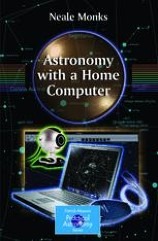
Here is a one-volume guide to just about everything computer-related for amateur astronomers!Today’s amateur astronomy is inextricably linked to personal computers. Computer-controlled "go-to" telescopes are inexpensive. CCD and webcam imaging make intensive use of the technology for capturing and processing images. Planetarium software provides information and an easy interface for telescopes. The Internet offers links to other astronomers, information, and software. The list goes on and on.
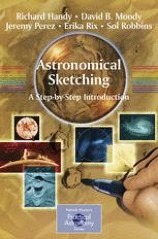
At some time we have all gazed through the telescope eyepiece at the magnificent rings and banded globe of Saturn, or seen long shadows reaching across crater floors at the Moon’s terminator – and wondered at the sheer beauty of the sight. It seems almost anachronistic to think of sketching when CCD imaging is available, but astronomical sketching provides an entirely different and deeply personal experience. It means spending time at the eyepiece to really look at what you can see, training your eye to perceive ever greater detail to take the fullest advantage of your telescope's light grasp and resolution.
With information and scale as central themes, this comprehensive survey explains how to handle real problems in astronomical data analysis using a modern arsenal of powerful techniques. It treats those innovative methods of image, signal, and data processing that are proving to be both effective and widely relevant. The coverage includes chapters or appendices on: detection and filtering; image compression; multichannel, multiscale, and catalog data analytical methods; wavelets transforms, Picard iteration, and software tools. This second edition of Starck and Murtagh's highly appreciated reference again deals with topics that are at or beyond the state of the art. It presents material which is more algorithmically oriented than most alternatives and broaches new areas like ridgelet and curvelet transforms. Throughout the book various additions and updates have been made.
Astrobiology, a new exciting interdisciplinary research field, seeks to unravel the origin and evolution of life wherever it might exist in the Universe. The current view of the origin of life on Earth is that it is strongly connected to the origin and evolution of our planet and, indeed, of the Universe as a whole. We are fortunate to be living in an era where centuries of speculation about the two ancient and fundamental problems: the origin of life and its prevalence in the Universe are being replaced by experimental science. The subject of Astrobiology can be approached from many different perspectives. This book is focused on abiogenic organic matter from the viewpoint of astronomy and planetary science and considers its potential relevance to the origins of life on Earth and elsewhere. Guided by the review papers in this book, the concluding chapter aims to identify key questions to motivate future research and stimulate astrobiological applications of current and future research facilities and space missions. Today’s rich array of new spacecraft, telescopes and dedicated scientists promises a steady flow of discoveries and insights that will ultimately lead us to the answers we seek.
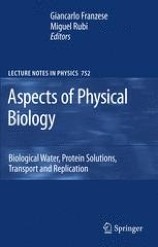
The present volume focuses on three main subtopics (biological water, protein solutions as well as transport and replication), presenting for each of the them the on-going debates on recent results. The role of water in biological processes, the mechanisms of protein folding, the phases and cooperative effects in biological solutions, the thermodynamic description of replication, transport and neural activity, all are subjects that are revised in this volume, based on new experiments and new theoretical interpretations.
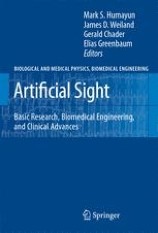
Artificial sight is a frontier area of modern ophthalmology combining the multidisciplinary skills of surgical ophthalmology, biomedical engineering, biological physics, and psychophysical testing. Many scientific, engineering, and surgical challenges must be surmounted before widespread practical applications can be realized. The goal of Artificial Sight is to summarize the state-of-the-art research in this exciting area, and to describe some of the current approaches and initiatives that may help patients in a clinical setting.
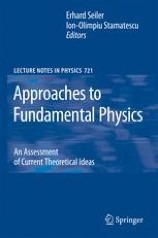
This book presents contributions on particle theory, quantum field theory, general relativity, quantum gravity, string theory and cosmology. These represent the outcome of numerous discussions, taking place among the authors over a period of several years, about the research landscape of present-day fundamental theoretical physics. Indeed, the resultant book documents their attempt, out of their respective and highly specialized scientific positions, to find a way of communicating about methods, achievements and promises of the different approaches which shape the development of this field. It is therefore also an attempt to elucidate the connections between these approaches, and present them not as disjoint ventures but rather as facets of a common quest for understanding. Readers interested in fundamental approaches of theoretical physics will find this book highly stimulating and enlightening.
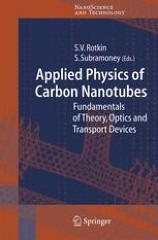
The book describes the state-of-the-art in fundamental, applied and device physics of nanotubes, including fabrication, manipulation and characterization for device applications; optics of nanotubes; transport and electromechanical devices and fundamentals of theory for applications. This information is critical to the field of nanoscience since nanotubes have the potential to become a very significant electronic material for decades to come. The book will benefit all all readers interested in the application of nanotubes, either in their theoretical foundations or in newly developed characterization tools that may enable practical device fabrication.
Topics range from the spectroscopy and characterization of dielectrics and semiconductors, to non-linear effects and electromagnetic cavities, to ion-beam applications in materials science.
Authored by a pioneer of the field, this overview of charged particle optics provides a solid introduction to the field for all physicists wishing to design their own apparatus or better understand the instruments with which they work. Applied Charged Particle Optics begins by introducing electrostatic lenses and fields used for acceleration, focussing and deflection of ions or electrons. Subsequent chapters give detailed descriptions of electrostatic deflection elements, uniform and non-uniform magnetic sector fields, image aberrations, and, finally, fringe field confinement. A chapter on applications is added.
This book demonstrates the applications of synchrotron radiation in certain aspects of cell microbiology, specifically non-destructive elemental analyses, chemical-state analyses and imaging (distribution) of the elements within a cell. The basics for understanding and applications of synchrotron radiation are also described to make the contents easier to be understood for a wide group of researchers in medical and biological sciences who might not be familiar with the physics of synchrotron radiation. The two main techniques that are discussed in this book are the x-ray fluorescence spectroscopy (XRF) and the x-ray fine structure analysis (XAFS).
Random matrices are widely and successfully used in physics for almost 60-70 years, beginning with the works of Dyson and Wigner. Although it is an old subject, it is constantly developing into new areas of physics and mathematics. It constitutes now a part of the general culture of a theoretical physicist. Mathematical methods inspired by random matrix theory become more powerful, sophisticated and enjoy rapidly growing applications in physics. Recent examples include the calculation of universal correlations in the mesoscopic system, new applications in disordered and quantum chaotic systems, in combinatorial and growth models, as well as the recent breakthrough, due to the matrix models, in two dimensional gravity and string theory and the non-abelian gauge theories. The book consists of the lectures of the leading specialists and covers rather systematically many of these topics.

Daraa Highway - Ghabagheb - Syria
+963-15 2050 - 15 860 380 /1/2/3 - 11 662 3900