


Refine Results
Sort By
From
To

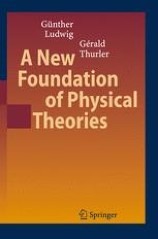
Written in the tradition of G. Ludwig’s groundbreaking works, this book aims to clarify and formulate more precisely the fundamental ideas of physical theories. By introducing a basic descriptive language of simple form, in which it is possible to formulate recorded facts, ambiguities of physical theories are avoided as much as possible. In this approach the field of physics that should be described by a theory is determined by basic concepts only, i.e. concepts that can be explained without a theory.In this context the authors introduce a new concept of idealization and review the process of discovering new concepts. They believe that, when the theories are formulated within an axiomatic basis, solutions can be found to many difficult problems such as the interpretation of physical theories, the relations between theories as well as the introduction of physical concepts. The book addresses both physicists and philosophers of science and should encourage the reader to contribute to the understanding of the lasting core of physical knowledge about the real structures of the world.

The papers in this collection are united by an approach to philosophy. They illustrate the manifold contributions that logic makes to philosophical progress, both by the application of formal methods to traditional philosophical problems and by opening up new avenues of inquiry as philosophers sort out the implications of new and often surprising technical results. Contributions include new technical results rich with philosophical significance for contemporary metaphysics, attempts to diagnose the philosophical significance of some recent technical results, philosophically motivated proposals for new approaches to negation, investigations in the history and philosophy of logic, and contributions to epistemology and philosophy of science that make essential use of logical techniques and results.

The development of thermodynamics in the second half of the 19th century has had a strong impact on both technology and natural philosophy. It is true that the steam engine for the conversion of heat into work existed before thermodynamics was developed as a branch of physics. However, the systematic theory improved the conversion process, and it succeeded in developing other processes essential to modern life, notably refrigeration and rectification. So, altogether thermodynamics has provided humanity with cheap energy, and cheap fuel, -- consequently with cheap, and abundant, and unspoiled food. Thus thermodynamics has made populations grow, and life expectancy increase beyond anything people could possibly have imagined 200 years ago.
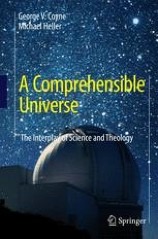
Why is our world comprehensible? This question seems so trivial that few people have dared to ask it. In this book we explore the deep roots of the mystery of rationality. The inquiry into the rationality of the world began over two-and-a-half-thousand years ago, when a few courageous people tried to understand the world with the help of reason alone, rejecting the comforting fabric of myth and legend.

This book helps readers combine history, politics, and ethics to address the most pressing problem facing the world today: environmental survival. In A Climate of Justice, Marvin Brown connects the environmental crisis to basic questions of economic, social, and racial justice. Brown shows how our current social climate maintains systemic injustices, and he uncovers resources for change through a civic ethics of repair and reciprocity.

This essays edited by Reuben Hersh contains frank facts and opinions from leading mathematicians, philosophers, sociologists, cognitive scientists, and even an anthropologist. Each essay provides a challenging and thought-provoking look at recent advances in the philosophy of mathematics, demonstrating the possibilities of thinking fresh, sticking close to actual practice, and fearlessly letting go of standard shibboleths.

Daraa Highway - Ghabagheb - Syria
+963-15 2050 - 15 860 380 /1/2/3 - 11 662 3900