



Page 6
Page 6

Nanomaterials and Nanosystems for Biomedical Applications
The book includes expert reviews on the advances and current problems associated with the implants and nanodevices along with their applications in medicine, pharmaceutics, cancer therapy, gene transfer and drug delivery. The editor, M. R. Mozafari (PhD), has been working in the field of nanobiotechnology for the past 14 years and has produced more than 60 publications.

Nanomaterials and Nanochemistry
Nanomaterials are a fast developing field of research and applications lie in many separate domains, such as in hi-tech (optics, electronics, biology, aeronautics), but also in consumer industries (automotive, concrete, surface treatments (including paints), cosmetics, etc.).
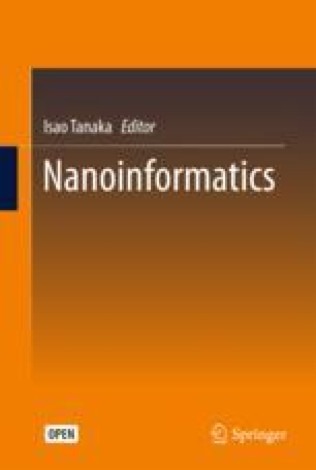
Nanoinformatics
Brings out the state of the art on how informatics-based tools are used and expected to be used in nanomaterials research. There has been great progress in the area in which “big-data” generated by experiments or computations are fully utilized to accelerate discovery of new materials, key factors, and design rules. Data-intensive approaches play indispensable roles in advanced materials characterization. "Materials informatics" is the central paradigm in the new trend. "Nanoinformatics" is its essential subset, which focuses on nanostructures of materials such as surfaces, interfaces, dopants, and point defects, playing a critical role in determining materials properties. There have been significant advances in experimental and computational techniques to characterize individual atoms in nanostructures and to gain quantitative information. The collaboration of researchers in materials science and information science is growing actively and is creating a new trend in materials science and engineering.

Nanofillers : Fabrication, characterization and applications of organic nanofillers
Explores the modifying effects of various nanofillers on mechanical and physical properties of polymer nanocomposites. Looking at the four basic aspects of processing, characterization, properties, and applications, it analyzes how their features can allow for innovative multifunction within industry. Covering design, production, and manufacture, this book focuses on meeting end-use requirements and the fabrication of materials. The importance of mindful design and the use of an appropriate synthesis method is the primary lens through which theory and practice are discussed. This volume looks at the various synthesis methods available for organic nanofillers and what characterizes them. Properties including mechanical, thermal, electrical, and tribological are thoroughly examined, along with the various computational techniques used to determine them. With important sustainable properties, nanofillers are essential to meeting the increasing demand for biodegradable and environmentally friendly materials. This book details the role nanofillers have to play in sustainability, alongside economic factors such as efficient manufacturing processes.

Nanoelectronics and Photonics : From Atoms to Materials, Devices, and Architectures
Nanoelectronics and Photonics: From Atoms to Materials, Devices, and Architectures provides a description of the core elements and challenges of advanced and future information technology. By linking the materials physics and chemistry at the atomic scale with device and circuit design and performance requirements, tutorial chapters from leaders in the field present a coherent picture of theoretical and experimental research efforts and technology development in this highly interdisciplinary area.

Nanocrystals : Synthesis, Properties and Applications
Nanocrystals and Their Mesoscopic Organization is an up-to-date monograph on an important aspect of nanoscience and technology. It opens with an elegant introduction including a brief historical account. Emphasis is then given to diverse synthetic methods, both chemical and physical, in addition to modern hybrid methods. The orientation shifts gradually to properties of nanocrystals that evolve with size; detailed discussions are to be found on mesoscalar assemblies in different dimensions, special cases of core-shell and magic nuclearity nanocrystals. The authors also address applications of nanocrystals, carefully separating out potential applications and those that have already emerged, and cite around 900 references from the literature, most from the last decade. Tables providing information at a glance and schematic diagrams at relevant places, make the monograph appealing to read.

Nanocomposites : Ionic Conducting Materials and Structural Spectroscopies
Nanocomposites have been receiving more and more attention given the improvement of synthesis techniques and the availability of powerful characterization techniques. The aim of the book is to introduce nanocomposite materials using a broad range of inorganic and organic solids. Furthermore, it is intended to present recent and not very common developments in especially spectroscopic characterization techniques, including Mössbauer, EXAFS, NMR. This should make the book attractive for a broad range of readers, including chemists and physicists.

Nanocatalysis
Nanocatalysis is one of the most exciting subfields to have emerged from nanoscience. Its central aim is the control of chemical reactions by changing the size, dimensionality, chemical composition and morphology of the reaction center and by changing the kinetics using nanopatterning of the reaction centers. This approach opens up new avenues for atom-by-atom design of nanocatalysts with distinct and tunable chemical activity, specificity, and selectivity. This book is intended to give a pedagogical and methodological overview of this exciting and growing field and to highlight specific examples of current research. In this way, it serves both as an instructive introduction for graduate students who plan to enter the field and as a reference work for scientists already active in this and related areas.

Nanocarrier Technologies : Frontiers of Nanotherapy
Nanobiotechnology is one of the key technologies of the 21st century. It is a combination of nanoscience and biotechnology and covers areas ranging from gene transfer and nanoencapsulation to food technology. Nanocarriers are a leading nanobiotechnology tool with the ability to provide protection, site-specific delivery, enhanced bioavailability and controlled release of pharmaceuticals, genetic material, imaging agents, nutraceuticals and cosmetics to name a few. For this reason, the study of nanocarriers, their properties and applications has attracted a great deal of interest over recent years. Designed as an advanced survey of the field, this book describes the key research parameters of nanocarrier technologies including their preparation methods, evaluation of their safety and efficiency, their interaction with biologicals and their application in biotechnology, drug delivery, gene therapy and food technology areas.

NanoBiotechnology : BioInspired Devices and Materials of the Future
NanoBioTechnology: BioInspired Devices and Materials of the Future is a groundbreaking text that will assist scientists and students in learning the fundamentals and cutting-edge nature of this new and emerging science. Focusing on materials and building blocks for nanotechnology, leading scientists from around the world share their knowledge and expertise in this authoritative volume. The volume is broken into five sections. The first section presents an overview of nanotechnology and describes the many aspects of the field. Section 2 details biological materials serving as nanotemplates for bottom-up fabrication. Section 3 covers the use of biological macromolecules for electron transfer and computation. Section 4 presents a brief overview of the extensive and rapidly growing field of nanomedicine. Finally, Section 5 details de-novo designed structures and the various approaches different scientific groups take with molecular level training and language

Nanobiosensors : From design to applications
Nanobiosensors - From Design to Applications covers several aspects of biosensors beginning from the basic concepts to advanced level research. It will help to bridge the gap between various aspects of biosensors development technology and applications. It covers biosensors related material in broad spectrum such as basic concepts, biosensors & their classification, biomarkers & their role in biosensors, nanostructures-based biosensors, applications of biosensors in human diseases, drug detection, toxins, and smart phone based biosensors.

Nano- and Micromaterials
The future focus of nanotechnology will be on realizing new functions over greater scales. This book describes the creation of nano- and microscale structures and functions by controlling temperature, light, pressure, or carrier injections. It covers novel nano-integration technologies such as quantum-well devices possilbe by utilizing, for example, the self-organization of surface nanostructures and optically or pressure-induced phase transitions, micro machines using microstereolithography, as well as new techniques of laser spectroscopy and new computational methods for estimating atomic and electronic structures and their functions on the nano- and microscales.

Name Reactions : A Collection of Detailed Mechanisms and Synthetic Applications
The third edition contains major improvements over the previous edition. In addition to updated references, each reaction is now supplemented with two to three representative examples in synthesis to showcase its synthetic utility. Biographical sketches for the chemists who discovered or developed those name reactions have been included. Furthemore, the subject index is significantly expanded.This is an excellent book for arrow pushing and learning organic name reactions as encountered in graduate school .

N4-Macrocyclic Metal Complexes
The study of nanoparticles is anchored in Colloid Science. Colloid Science as we consider it today was nucleated by Wolfgang Ostwald and initiated by his biological studies. The strong connection between biology and Colloid Science lost attractiveness in the last decades. The revival of this interdisciplinary science is now noted and we hope that a signal will start from the Potsdam conference. "This is an excellent and detailed book of 14 chapters that is timely in its reviews of the electrochemical and electrocatalytic properties of the porphyrinoids and is written by a range of experts in the different fields covered.

Mycotoxins in Foodstuffs
Due to the serious spoilage and health issues the presence of mycotoxins can cause, it’s imperative that the food industry has a basic understanding fungi and their corresponding mycotoxins. An indispensable resource, Mycotoxins in Foodstuffs gives an in depth overview by listing the degree of contamination, concentration and country of origin/detection for each case of mycotoxin contamination for each commodity. In addition, the book shows whether or not food is predisposed for mycotoxin contamination.

Musculoskeletal Tissue Regeneration: Biological Materials and Methods
Musculoskeletal Tissue Regeneration: Biological Materials and Methods aims to provide both basic and advanced knowledge of the newer methodologies being developed and introduced to the clinical arena.

Munson, Young and Okiishi's fundamentals of fluid mechanics ; 9th ed.
ffers comprehensive topical coverage, with varied examples and problems, application of the visual component of fluid mechanics, and a strong focus on effective learning. The authors have designed their presentation to enable the gradual development of reader confidence in problem solving. Each important concept is introduced in easy-to-understand terms before more complicated examples are discussed. The 9th Edition includes new coverage of finite control volume analysis and compressible flow, as well as a selection of new problems. Continuing this important work’s tradition of extensive real-world applications, each chapter includes The Wide World of Fluids case study boxes in each chapter. In addition, there are a wide variety of videos designed to enhance comprehension, support visualization skill building and engage students more deeply with the material and concepts.

Multiscaling in molecular and continuum mechanics : Interaction of time and size from macro to nano ; Application to biology, physics, material science, mechanics, structural and processing engineering
The manipulation of molecules and atoms has been regarded as a common base for both material and life science. Quantum and continuum mechanics are being applied side by side for exploring the behavior of small and large objects moving at fast and slow speed.

Multi-scale Modelling for Structures and Composites
Numerous applications of rod structures in civil engineering, aircraft and spacecraft confirm the importance of the topic. On the other hand the majority of books on structural mechanics use some simplifying hypotheses; these hypotheses do not allow to consider some important effects, In this connection the asymptotic analysis of equations of mathematical physics, the equations of elasticity in rod structures (without these hypotheses and simplifying assumptions being imposed) is undertaken in the present book.

Multiscale Modeling in Epitaxial Growth
Epitaxy is a very active area of theoretical research since several years. It is experimentally well-explored and technologically relevant for thin film growth. Recently powerful numerical techniques in combination with a deep understanding of the physical and chemical phenomena during the growth process offer the possibility to link atomistic effects at the surface to the macroscopic morphology of the film. The goal of this book is to summarize recent developments in this field, with emphasis on multiscale approaches and numerical methods. It covers atomistic, step-flow, and continuum models and provides a compact overview of these approaches. It also serves as an introduction into this highly active interdisciplinary field of research for applied mathematicians, theoretical physicists and computational materials scientists.
