


Refine Results
Sort By
From
To

Provides a fast introduction to symplectic geometry for graduate students with some knowledge of differential geometry, de Rham theory and classical Lie groups. This text addresses symplectomorphisms, local forms, contact manifolds, compatible almost complex structures, Kaehler manifolds, hamiltonian mechanics, moment maps, symplectic reduction and symplectic toric manifolds. It contains guided problems, called homework, designed to complement the exposition or extend the reader's understanding.
Contains two of the three lectures that were given at the 33rd Probability Summer School in Saint-Flour (July 6-23, 2003). Amir Dembo’s course is devoted to recent studies of the fractal nature of random sets, focusing on some fine properties of the sample path of random walk and Brownian motion. In particular, the cover time for Markov chains, the dimension of discrete limsup random fractals, the multi-scale truncated second moment and the Ciesielski-Taylor identities are explored. Tadahisa Funaki’s course reviews recent developments of the mathematical theory on stochastic interface models, mostly on the so-called nabla varphi interface model. The results are formulated as classical limit theorems in probability theory, and the text serves with good applications of basic probability techniques.
This book and the following second volume is an introduction into modern algebraic geometry. In the first volume the methods of homological algebra, theory of sheaves, and sheaf cohomology are developed. These methods are indispensable for modern algebraic geometry, but they are also fundamental for other branches of mathematics and of great interest in their own.In the last chapter of volume I these concepts are applied to the theory of compact Riemann surfaces. In this chapter the author makes clear how influential the ideas of Abel, Riemann and Jacobi were and that many of the modern methods have been anticipated by them.
The main focus of these lectures is basis extremal problems and inequalities – two sides of the same coin. Additionally they prepare well for approaches and methods useful and applicable in a broader mathematical context. Highlights of the book include a solution to the famous 4m-conjecture of Erdös/Ko/Rado 1938, one of the oldest problems in combinatorial extremal theory, an answer to a question of Erdös (1962) in combinatorial number theory "What is the maximal cardinality of a set of numbers smaller than n with no k+1 of its members pair wise relatively prime?", and the discovery that the AD-inequality implies more general and sharper number theoretical inequalities than for instance Behrend's inequality.
Describes in detail the practice of the Bayesian statistical approach using many examples chosen for their educational interest. The first part gives the general principles of statistical modeling making it possible to supervise but also to come to the aid of the imagination of the apprentice modeler. By examining examples of increasing difficulty, the reader forges the keys to building their own model. The second part presents the most useful calculation algorithms for estimating the unknowns of the model. Each inference method is presented and illustrated by numerous application cases.

Covers the so-called Bayesian approach to statistical inference and in particular its decision-making aspects. The bases of this axiomatics (choice of the a priori, optimal decisions, tests and regions of confidence) are discussed in detail, as well as more recent openings of Bayesian analysis such as the choice of models, the use of numerical methods. Stochastic approximation (MCMC), the theory of noninformative laws (Berger-Bernardo axioms) and the relation to the classical theory of admissibility. Each chapter is completed by an extensive series of exercises of increasing difficulty and by bibliographical notes on the themes addressed. This book can be used in a Master's program in Applied Mathematics, Biometrics, Econometrics or any other program that uses quantitative information processing techniques. It only requires a basic course in probability theory and mathematical statistics as a preliminary.
This book is intended to be a thorough introduction to the subject of ordered sets and lattices, with an emphasis on the latter. It can be used for a course at the graduate or advanced undergraduate level or for independent study. Prerequisites are kept to a minimum, but an introductory course in abstract algebra is highly recommended, since many of the examples are drawn from this area. The book has an excellent choice of topics, including a chapter on well ordering and ordinal numbers, which is not usually found in other texts. The approach is user-friendly and the presentation is lucid. There are more than 240 carefully chosen exercises.
Lattices and Ordered Algebraic Structures provides a lucid and concise introduction to the basic results concerning the notion of an order. Although as a whole it is mainly intended for beginning postgraduates, the prerequisities are minimal and selected parts can profitably be used to broaden the horizon of the advanced undergraduate. The treatment is modern, with a slant towards recent developments in the theory of residuated lattices and ordered regular semigroups.
R is rapidly growing in popularity as the environment of choice for data analysis and graphics both in academia and industry. Lattice brings the proven design of Trellis graphics (originally developed for S by William S. Cleveland and colleagues at Bell Labs) to R, considerably expanding its capabilities in the process. Lattice is a powerful and elegant high level data visualization system that is sufficient for most everyday graphics needs, yet flexible enough to be easily extended to handle demands of cutting edge research. Written by the author of the lattice system, this book describes it in considerable depth, beginning with the essentials and systematically delving into specific low levels details as necessary. No prior experience with lattice is required to read the book, although basic familiarity with R is assumed.
Large-Scale Nonlinear Optimization reviews and discusses recent advances in the development of methods and algorithms for nonlinear optimization and its applications, focusing on the large-dimensional case, the current forefront of much research.The chapters of the book including theoretical analysis, algorithmic development, implementation issues and applications.
Eigenvectors of graph Laplacians have not, to date, been the subject of expository articles and thus they may seem a surprising topic for a book. The authors propose two motivations for this new LNM volume: (1) There are fascinating subtle differences between the properties of solutions of Schrödinger equations on manifolds on the one hand, and their discrete analogs on graphs. (2) "Geometric" properties of (cost) functions defined on the vertex sets of graphs are of practical interest for heuristic optimization algorithms. The observation that the cost functions of quite a few of the well-studied combinatorial optimization problems are eigenvectors of associated graph Laplacians has prompted the investigation of such eigenvectors.
This book provides an accessible introduction to a new set of methods for the analysis of Lagrangian motion in geophysical flows. These methods were originally developed in the abstract mathematical setting of dynamical systems theory, through a geometric approach to differential equations. Despite the recent developments in this field and the existence of a substantial body of work on geophysical fluid problems in the dynamical systems and geophysical literature, this is the first introductory text that presents these methods in the context of geophysical fluid flow. The book is organized into seven chapters; the first introduces the geophysical context and the mathematical models of geophysical fluid flow that are explored in subsequent chapters. The second and third cover the simplest case of steady flow, develop basic mathematical concepts and definitions, and touch on some important topics from the classical theory of Hamiltonian systems. The fundamental elements and methods of Lagrangian transport analysis in time-dependent flows that are the main subject of the book are described in the fourth, fifth, and sixth chapters. The seventh chapter gives a brief survey of some of the rapidly evolving research in geophysical fluid dynamics that makes use of this new approach. Related supplementary material, including a glossary and an introduction to numerical methods, is given in the appendices.
Lagrangian expansions can be used to obtain numerous useful probability models, which have been applied to real life situations including, but not limited to: branching processes, queuing processes, stochastic processes, environmental toxicology, diffusion of information, ecology, strikes in industries, sales of new products, and production targets for optimum profits. This book presents a comprehensive, systematic treatment of the class of Lagrangian probability distributions, along with some of its families, their properties, and important applications.
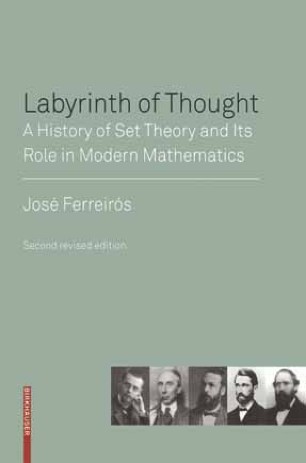
Labyrinth of Thought discusses the emergence and development of set theory and the set-theoretic approach to mathematics during the period 1850-1940. Rather than focusing on the pivotal figure of Georg Cantor, it analyzes his work and the emergence of transfinite set theory within the broader context of the rise of modern mathematics. The text has a tripartite structure.A new Epilogue for this second edition offers further reflections on the foundations of set theory, including the "dichotomy conception" and the well-known iterative conception.
This book contains a detailed and complete demonstration of the existence of an equivariate isomorphism between the Lubin-Tate and Drinfeld p-adic turns. The result is established in equal and unequal characteristics. There is also given as an application a proof that the equivariant cohomologies of these two turns are isomorphic, a result which has applications to the study of the local Langlands correspondence. During the proof, reminders and complements are given on the structure of the two preceding moduli spaces, the p-divisible formal groups and the p-adic rigid analytical geometry.
From the Preface: K-theory was introduced by A. Grothendieck in his formulation of the Riemann- Roch theorem. For each projective algebraic variety, Grothendieck constructed a group from the category of coherent algebraic sheaves, and showed that it had many nice properties. Atiyah and Hirzebruch considered a topological analog defined for any compact space X, a group K{X) constructed from the category of vector bundles on X. It is this ''topological K-theory" that this book will study. Topological K-theory has become an important tool in topology. Using K- theory, Adams and Atiyah were able to give a simple proof that the only spheres which can be provided with H-space structures are S1, S3 and S7. Moreover, it is possible to derive a substantial part of stable homotopy theory from K-theory.
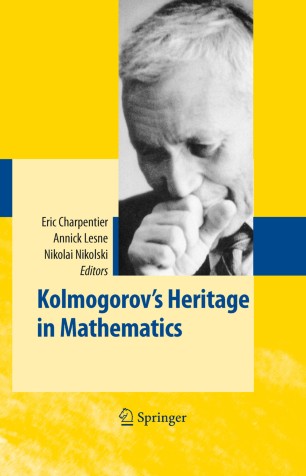
A.N. Kolmogorov (b. Tambov 1903, d. Moscow 1987) was one of the most brilliant mathematicians that the world has ever known. Incredibly deep and creative, he was able to approach each subject with a completely new point of view: in a few magnificent pages, which are models of shrewdness and imagination, and which astounded his contemporaries, he changed drastically the landscape of the subject.Most mathematicians prove what they can, Kolmogorov was of those who prove what they want. For this book several world experts were asked to present one part of the mathematical heritage left to us by Kolmogorov.
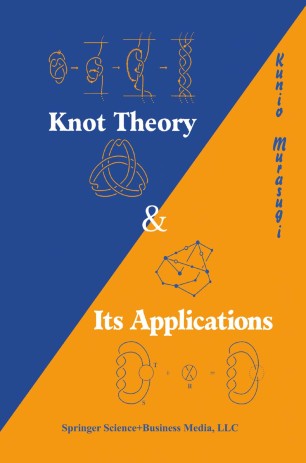
The book contains most of the fundamental classical facts about the theory, such as knot diagrams, braid representations, Seifert surfaces, tangles, and Alexander polynomials; also included are key newer developments and special topics such as chord diagrams and covering spaces. The work introduces the fascinating study of knots and provides insight into applications to such studies as DNA research and graph theory. In addition, each chapter includes a supplement that consists of interesting historical as well as mathematical comments.
Reviews how mathematics can be used in combination with biological data in order to improve understanding of how the immune system works. This is illustrated largely in the context of viral infections. Mathematical models allow scientists to capture complex biological interactions in a clear mathematical language and to follow them to their precise logical conclusions. This can give rise to counter-intuitive insights which would not be attained by experiments alone, and can be used for the design of further experiments in order to address the mathematical results.
In the city republics of Renaissance Italy, it was a common practice among the merchant class to send sons for a two-year course of study at an "abbacus school", where they learned practical, mostly commercial mathematics, known as abbaco. From this school institution, several hundred manuscripts survive, all in Italian, often containing not only what the masters needed in their teaching but also algebra or other advanced mathematical material. A signal feature of the book by Jens Høyrup is the first translation of one of these abbacus manuscripts into English.

Daraa Highway - Ghabagheb - Syria
+963-15 2050 - 15 860 380 /1/2/3 - 11 662 3900