



Page 5
Page 5

Experimental Business Research ; Vol. II: Economic and Managerial Perspectives
Experimental Business Research adopts laboratory based experimental economics methods to study an array of business and policy issues spanning the entire business domain including accounting, economics, finance, information systems, marketing and management and policy.

Examining Innovation Management from a Fair Process Perspective
Companies nowadays still differ considerably in that they interact with employees. This interaction depends on different organisational cultures, leadership styles, and the ways in which information and communication take place. A recent trend, even in economic theory, is that interactions are valued in themselves and not solely to achieve rational economic maximisation. People care about outcomes, but they also care about the interactional processes that produce those outcomes. Thomas Limberg investigates a new approach to the management of human relationships in a knowledge-based work environment and analyses the relationship between fair process and innovation performance. Key findings are that social interactions have a significant influence on execution performance in organisations, and fairness can have positive effects on innovative behaviour and therefore on innovation performance. In the transition from a production-based to a knowledge-based economy, fair process is becoming a powerful tool for managing human interactions and for influencing attitudes and behaviours that are so critical in reaching high innovation performance.

Evolutionary Swarm Robotics : Evolving Self-Organising Behaviours in Groups of Autonomous Robots
In this book the use of ER techniques for the design of self-organising group behaviours, for both simulated and real robots is introduced. This research has a twofold value. From an engineering perspective, an automatic methodology for synthesising complex behaviours in a robotic system is described.
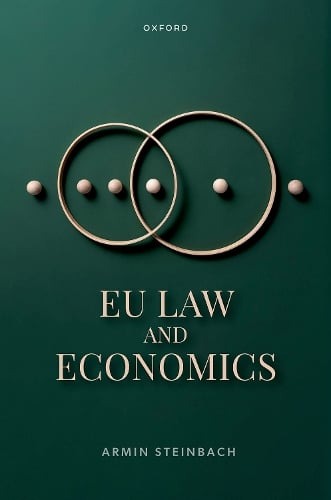
EU law and economics
Examines the design and evolution of European law from the perspective of economics. It draws on various branches of the economic sciences including rational choice and game theory, and institutional and behavioural economics to expand our understanding of EU law and its effects. It seeks to complement doctrinal research on EU law by generating insights.

Equilibrium Between Phases of Matter : Phenomenology and Thermodynamics
The phase behaviour of materials and their thermodynamic properties are a central subject in all fields of materials research. The first Volume of the work, meant for graduate students in chemistry, geology, physics, and metallurgy, and their engineering counterparts, is split up in three levels, such that from level to level the portion and importance of thermodynamics and mathematics are increased. In the ground level it is shown that the basic principles of phase equilibria can be understood without the use of thermodynamics – be it that the concept of chemical potential is introduced right from the beginning. The intermediate level is an introduction to thermodynamics; culminating in the Gibbs energy as the arbiter for equilibrium – demonstrated for systems where the phases in equilibrium are pure substances. In the third level the accent is on binary systems, where one or more phases are solutions of the components.

Environmental Chemistry : Green Chemistry and Pollutants in Ecosystems
Environmental chemistry is a new, fast developing science aimed at deciphering fundamental mechanisms ruling the behaviour of pollutants in ecosystems. Applying this knowledge to current environmental issues leads to the remediation of environmental media, and to new, low energy, low emission, sustainable processes. This book describes the state-of-the-art advances regarding the pollution of water, soils, atmosphere, food and living organisms by toxic metals, fossil fuels, pesticides and other organic pollutants. Furthermore, the eco-toxicology section presents novel bio-assays to assess the toxicity of various pollutants such as dioxins and endocrine disrupters within complex media. The green chemistry section highlights novel chemical reactions based upon environmentally friendly conditions. The analytical chemistry section describes very sensitive methods which trace the fate of pollutants in complex ecosystems.

Entropy Methods for the Boltzmann Equation : Lectures from a Special Semester at the Centre Émile Borel, Institut H. Poincaré, Paris, 2001
Entropy and entropy production have recently become mathematical tools for kinetic and hydrodynamic limits, when deriving the macroscopic behaviour of systems from the interaction dynamics of their many microscopic elementary constituents at the atomic or molecular level. During a special semester on Hydrodynamic Limits at the Centre Émile Borel in Paris, 2001 two of the research courses were held by C. Villani and F. Rezakhanlou. Both illustrate the major role of entropy and entropy production in a mutual and complementary manner and have been written up and updated for joint publication. Villani describes the mathematical theory of convergence to equilibrium for the Boltzmann equation and its relation to various problems and fields, including information theory, logarithmic Sobolev inequalities and fluid mechanics. Rezakhanlou discusses four conjectures for the kinetic behaviour of the hard sphere models and formulates four stochastic variations of this model, also reviewing known results for these.

Entrepreneurship and innovation : Theory, practice and context, 4th
Provides an overview of the theory, Practice and context of entrepreneurship and innovation at both the industry and firm level. It provides a foundation of ideas and understandings designed to shape the reader’s thinking and behaviour to better appreciate the role of innovation and entrepreneurship in modern economies, And to recognise their own abilities in this regard. The book provides the reader with an overview of these elements and how they combine to create new value in the market.

Engineering Design : A Systematic Approach
Engineering Design (3rd edition) describes a systematic approach to engineering design. The authors argue that such an approach, applied flexibly and adapted to a particular task, is essential for successful product development. The design process is first broken down into phases and then into distinct steps, each with its own working methods. The third edition of this internationally-recognised text is enhanced with new perspectives and the latest thinking. These include extended treatment of product planning; new sections on organisation structures, simultaneous engineering, leadership and team behaviour; and updated chapters on quality methods and estimating costs. New examples have been added and existing ones extended, with additions on design to minimise wear, design for recycling, mechanical connections, mechatronics, and adaptronics.

Energy Demand Challenges in Europe : Implications for policy, planning and practice
This book examines the role of citizens in sustainable energy transitions across Europe. It explores energy problem framing, policy approaches and practical responses to the challenge of securing clean, affordable and sustainable energy for all citizens, focusing on households as the main unit of analysis. The book revolves around ten contributions that each summarise national trends, socio-material characteristics, and policy responses to contemporary energy issues affecting householders in different countries, and provides good practice examples for designing and implementing sustainable energy initiatives. Prominent concerns include reducing carbon emissions, energy poverty, sustainable consumption, governance, practices, innovations and sustainable lifestyles.

Elementary physics of complex plasmas
Complex plasmas are dusty plasmas in which the density and electric charges of the dust grains are sufficiently high to induce long-range grain-grain interactions, as well as strong absorption of charged-plasma components. Together with the sources replenishing the plasma such systems form a highly dissipative thermodynamically open system that exhibits many features of collective behaviour generally found in complex systems. Most notably among them are self-organized patterns such as plasma crystals, plasma clusters, dust stars and further spectacular new structures. Beyond their intrinsic scientific interest, the study of complex plasmas grows in importance in a great variety of fields, ranging from space-plasma sciences to applied fields such as plasma processing, thin-film deposition and even the production of computer chips by plasma etching, in which strongly interacting clouds of complex plasmas can cause major contamination of the final product.

Elasto-plastic damage behaviour of concrete elements
Shows how the mechanical phenomena of familiar concrete structures can be expressed using mathematical models and provides a solid basic understanding of the nonlinear behaviour of concrete structures. It applies elasto-plastic theory to damage mechanics and the modelling of cracks in concrete. Sets out the reality of damage mechanics in concrete Connects standard theory with good design and construction practice

Elasticity and Plasticity of Large Deformations : An Introduction
The book offers a careful introduction to modern non-linear mechanics. The used mathematical tools, such as tensor algebra and analysis are given in detail. The general theory of mechanical behaviour is particularized for the broad and important classes of elasticity and plasticity. It is intended to bring the reader close to the fields of today's research activities. A list of notations and an index help the reader to find specific topics. The book is based on three decades of teaching experience in this field.

Economic Sociodynamics
A groundbreaking study of rational principles for the modern state to follow in promoting economic and social progress. Explains why more thoughtful and well meaning government intervention is a must today, not irrational passivity. Highly sophisticated but exceedingly pleasant reading. In this ambitious book the authors challenge mainstream economic theory by reconsidering the principle of individualism as its foundation.They refer to that version which fails to recognize the existence of the interests of society as such, and does thus exclude the role of the state as an independent market player seeking to realize these interests. The outcome is a new theoretical concept called "Economic Sociodynamics". The book reveals in detail the said concept, in particular its key notions of the sociodynamic multiplier and the rational behavior of the state.

Ecology of Social Evolution
This book brings together renowned researchers working on sociality in different animals. For the first time, they compile the evidence for the importance of ecological factors in the evolution of social life, ranging from invertebrate to vertebrate social systems, and evaluate its importance versus that of relatedness. Answers are given to important questions such as: - Which factors favour group living in social invertebrates and vertebrates? - Are there general differences in the evolutionary forces promoting social life in social insects versus cooperatively breeding vertebrates? - Why are there only so few eusocial vertebrates? - Can relatedness within social groups be a by-product arising from the fact that neighbours are generally kin?

Ecology and Behaviour of Mesozoic Reptiles
Our knowledge of extinct animals depends almost entirely upon the study of fossils. This richly illustrated book clothes the skeletons of dinosaurs and other Mesozoic reptiles with flesh, and shows how these fascinating animals evolved and probably lived. Expert provides an interesting synthesis of current views on their ecology, physiology and behaviour, and outlines the various hypotheses that have been proposed to explain their extinction.

Early Nutrition and its Later Consequences : New Opportunities; Perinatal Programming of Adult Health - EC Supported Research
Health problems such as hypertension, tendency to diabetes, obesity, blood lipids, vascular disease, bone health, behaviour and learning and longevity may be ‘imprinted’ during early life. This process is defined as ‘programming’ whereby a nutritional stimulus operating at a critical, sensitive period of pre and postnatal life imprints permanent effects on the structure, physiology and metabolism. For this reason, academics and industry set-up the EC supported Scientific Workshop -Early Nutrition and its Later Consequences: New Opportunities. The prime objective of the Workshop was to generate a sound exchange of the latest scientific developments within the field of early nutrition to look for opportunities for new preventive health concepts. Further, a closer look was taken at the development of food applications which could provide (future) mothers and infants with improved nutrition that will ultimately lead to better future health. The Workshop was organised by the Dept. of Pediatrics, University of Munich, Germany in collaboration with the Danone Institutes and the Infant Nutrition Cluster, a collaboration of three large research projects funded by the EU.

Dynamical Systems : Examples of Complex Behaviour
Our aim is to introduce, explain, and discuss the fundamental problems, ideas, concepts, results, and methods of the theory of dynamical systems and to show how they can be used in specific examples. Itis also important to find out when a certain dynamic behavior is stable under small perturbations, as well as to understand the various scenarios of instability. Finally, an essential aspect of a dynamic evolution is the transformation of some given initial state into some final or asymptotic state as time proceeds. The temporal evolution of a dynamical system maybe continuous or discrete, but it turns out that many of the concepts to be introduced a reuseful in either case.

Dynamic Games : Theory and Applications
Dynamic games continue to attract strong interest from researchers interested in modelling competitive as well as conflict situations exhibiting an intertemporel aspect. Applications of dynamic games have proven to be a suitable methodology to study the behaviour of players (decision-makers) and to predict the outcome of such situations in many areas including engineering, economics, management science, military, biology and political science. Dynamic Games: Theory and Applications collects thirteen articles written by established researchers.

Dynamic characterisation of analogue-to-digital converters
Dynamic Characterisation of Analogue-to-Digital Converters presents a state of the art overview of the methods and procedures employed for characterising ADCs’ dynamic performance behaviour using sinusoidal stimuli. The three classical methods – histogram, sine wave fitting, and spectral analysis – are thoroughly described, and new approaches are proposed to circumvent some of their limitations
