


Refine Results
Sort By
From
To


This book helps readers combine history, politics, and ethics to address the most pressing problem facing the world today: environmental survival. In A Climate of Justice, Marvin Brown connects the environmental crisis to basic questions of economic, social, and racial justice. Brown shows how our current social climate maintains systemic injustices, and he uncovers resources for change through a civic ethics of repair and reciprocity.

The Great Plains of North America is a major global breadbasket but its agriculture is stressed by drought, heat spells, damaging winds, soil erosion and declining ground water resources. This book explores the possibility that the ecology and economy of the Plains region (and similar regions) would benefit from the introduction of perennial biomass crops. Biomass production and processing on the Plains (possibly aided by genetic engineering) would partially restore a perennial vegetative cover and create new employment opportunities. Biomass also offers a means of reducing fossil fuel use, providing fuel to local power plants and a feedstock for production of cellulosic ethanol, a gasoline substitute. Interest in biofuels is growing rapidly in public, political and business circles with rising fossil fuel prices and because of a growing recognition of the need for energy independence in petroleum importing countries.

This essays edited by Reuben Hersh contains frank facts and opinions from leading mathematicians, philosophers, sociologists, cognitive scientists, and even an anthropologist. Each essay provides a challenging and thought-provoking look at recent advances in the philosophy of mathematics, demonstrating the possibilities of thinking fresh, sticking close to actual practice, and fearlessly letting go of standard shibboleths.
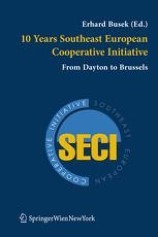
The Southeast European Cooperative Initiative (SECI) was the first international instrument for "peace keeping and peace making". Conceived by the United States with full partnership and participation of the European Union, SECI was a response to the Dayton Agreement. SECI was convinced that sending troops and diplomats did not suffice. It called for a new strategy and approach that would promote economic and social development through regional cooperation. SECI understood that despite their differences, the countries of South East Europe shared many mutual concerns. For the international community, SECI was a prelude to a broader instrument - the Stability Pact for South Eastern Europe, launched in 1999. The approach was a success! This compendium of documents, agreements, analyses and essays gives a glimpse into decision-making processes and results achieved.

Daraa Highway - Ghabagheb - Syria
+963-15 2050 - 15 860 380 /1/2/3 - 11 662 3900