


Refine Results
Sort By
From
To

Beginning Object-Oriented Programming with VB 2005 is a comprehensive resource of correct coding procedures. Author Daniel Clark takes you through all the stages of a programming project, including analysis, modeling, and development, all using object-oriented programming techniques and Visual Basic .NET. Clark explores the structure of classes and their hierarchies, as well as inheritance and interfaces. He also introduces the .NET Framework and the Visual Studio integrated development environment, or IDE. A real-world case study walks you through the design of a solution. You can then transform the design into a functional VB .NET application. The application includes a graphical user interface (GUI), a business logic class library, and integration with a back-end database. Throughout the book, you'll explore the fundamentals of software design, object-oriented programming, Visual Basic .NET 2.0, and the Unified Modeling Language (UML).
Excels what-if data analysis tools let you experiment with your data to project future results. In turn, these predictions will lead to better decision making and unlock the mystery of many business analysis scenarios. For example, what-if data analysis tools will enable you to forecast how lowering the price per unitwhile increasing projected unit salesmight affect your profit margins. Beginning Excel What-If Data Analysis Tools explores the use of Goal Seek, Data Tables, Scenarios, and Solver to help you get insight on your data. This book is focused and to the point, and it provides tutorial treatment of what-if tools in a practical, hands-on manner.
Autonomy Oriented Computing explores the important theoretical and practical issues in AOC, by analyzing methodologies and presenting experimental case studies. The book serves as a comprehensive reference source for researchers, scientists, engineers, and professionals in all fields concerned with this promising new development in computer science. It can also be used as a main or supplementary text in graduate and undergraduate programs across a broad range of computer-related disciplines, including Robotics and Automation, Amorphous Computing, Image Processing and Computer Vision, Programming Paradigms, Computational Biology, and many others. The first part of the book, Fundamentals, describes the basic concepts and characteristics of an AOC system, and then it enumerates the critical design and engineering issues faced in AOC system development. The second part of the book, AOC in Depth, provides a detailed analysis of methodologies and case studies to evaluate the use of AOC in problem solving and complex system modeling. The final chapter reviews the essential features of the AOC paradigm and outlines a number of possibilities for future research and development.
The field of healthcare is constantly evolving and advancing with new technologies and innovations. Among these, assistive technologies, robotics, and automated machines are rapidly gaining ground as powerful tools to improve the quality of care and enhance patient outcomes. From wearable devices that monitor vital signs to surgical robots that assist in complex procedures, these technologies have the potential to revolutionize the way we deliver healthcare. The development and the integration of assistive technologies, care robots, and automated machines are strategic both as single components, when paired together, and when interconnected in the health domain.This reprint explores the latest developments in assistive technologies, robotics, and automated machines in the health domain, providing a comprehensive overview of their applications and potential impact. The reprint is for the benefit of healthcare professionals, researchers, engineers, and students interested in these rapidly evolving fields.

This book explores the potential of ANNs for applications in different fields. Itincludes eight chapters that discuss deep learning, ANN tools, and other cutting-edgetechnologies. It also suggests avenues for further research into ANN techniques formedical imaging to detect breast tumors, classification of COVID-19 surveillancedatasets, health management, estimation of materials processing parameters, solarenergy management, and control of a petrochemical unit.
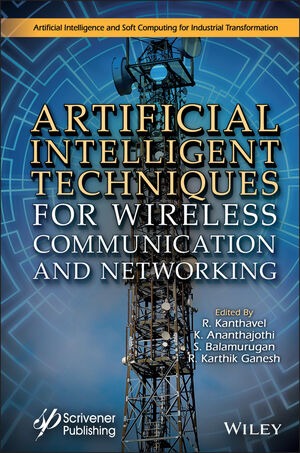
Wireless communication and networking based on AI concepts and techniques are explored in this book, specifically focusing on the current research in the field by highlighting empirical results along with theoretical concepts. The possibility of applying AI mechanisms towards security aspects in the communication domain is elaborated; also explored is the application side of integrated technologies that enhance AI-based innovations, insights, intelligent predictions, cost optimization, inventory management, identification processes, classification mechanisms, cooperative spectrum sensing techniques, ad-hoc network architecture, and protocol and simulation-based environments.
Discusses the evolution of future generation technologies through Internet of Things (IoT) in the scope of Artificial Intelligence (AI). The main focus of this volume is to bring all the related technologies in a single platform, so that undergraduate and postgraduate students, researchers, academicians, and industry people can easily understand the AI algorithms, machine learning algorithms, and learning analytics in IoT-enabled technologies. This book uses data and network engineering and intelligent decision support system-by-design principles to design a reliable AI-enabled IoT ecosystem and to implement cyber-physical pervasive infrastructure solutions. This book brings together some of the top IoT-enabled AI experts throughout the world who contribute their knowledge regarding different IoT-based technology aspects. Addresses the complete functional framework workflow in AI-enabled IoT ecosystem; Presents intelligent object identification and object discovery through the IoT ecosystem and its implications to the real world ;Explores security and privacy issues and trustworthy machine learning related to data-intensive technologies in AI-based IoT ecosystems.
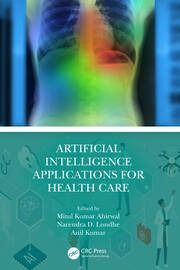
Covers topics on health care and artificial intelligence. Data sets related to biomedical signals (ECG, EEG, EMG) and images (X-rays, MRI, CT) are explored, analyzed, and processed through different computation intelligence methods. Applications of computational intelligence techniques like artificial and deep neural networks, swarm optimization, expert systems, decision support systems, clustering, and classification techniques on medial datasets are explained. Survey of medical signals, medial images, and computation intelligence methods are also provided.
Analyses the implications of the technical, legal, ethical and privacy challenges as well as challenges for human rights and civil liberties regarding Artificial Intelligence (AI) and National Security. It also offers solutions that can be adopted to mitigate or eradicate these challenges wherever possible. As a general-purpose, dual-use technology, AI can be deployed for both good and evil. The use of AI is increasingly becoming of paramount importance to the governments mission to keep their nations safe. However, the design, development and use of AI for national security poses a wide range of legal, ethical, moral and privacy challenges. This book explores national security uses for Artificial Intelligence (AI) in Western Democracies and its malicious use. This book also investigates the legal, political, ethical, moral, privacy and human rights implications of the national security uses of AI in the aforementioned democracies. It illustrates how AI for national security purposes could threaten most individual fundamental rights, and how the use of AI in digital policing could undermine user human rights and privacy.
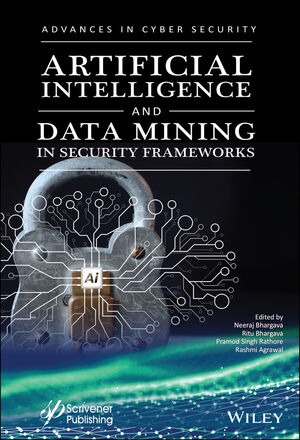
Offers solutions to the problems of security, outlining the concepts behind allowing computers to learn from experience and understand the world in terms of a hierarchy of concepts, with each concept defined through its relation to simpler concepts. provides state of the art approaches of artificial intelligence and data mining in these areas. It includes areas of detection, prediction, as well as future framework identification, development, building service systems and analytical aspects. In all these topics, applications of AI and data mining, such as artificial neural networks, fuzzy logic, genetic algorithm and hybrid mechanisms, are explained and explored. This book is aimed at the modeling and performance prediction of efficient security framework systems, bringing to light a new dimension in the theory and practice. This groundbreaking new volume presents these topics and trends, bridging the research gap on AI and data mining to enable wide-scale implementation. Whether for the veteran engineer or the student, this is a must-have for any library. This groundbreaking new volume: Clarifies the understanding of certain key mechanisms of technology helpful in the use of artificial intelligence and data mining in security frameworks ; Covers practical approaches to the problems engineers face in working in this field, focusing on the applications used every day ; Contains numerous examples, offering critical solutions to engineers and scientists ; Presents these new applications of AI and data mining that are of prime importance to human civilization as a whole
Provides advanced system implementation for Smart Cities using artificial intelligence. It addresses the complete functional framework workflow and explores basic and high-level concepts. The book is based on the latest technologies covering major challenges, issues and advances, and discusses intelligent data management and automated systems.
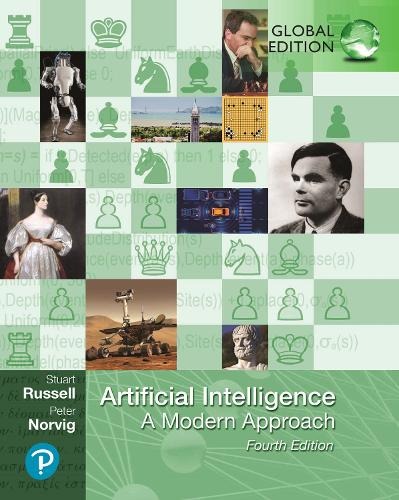
Explores the full breadth and depth of the field of artificial intelligence (AI). The 4th edition brings readers up to date on the latest technologies, presents concepts in a more unified manner, and offers new or expanded coverage of machine learning, deep learning, transfer learning, multi agent systems, robotics, natural language processing, causality, probabilistic programming, privacy, fairness, and safe AI
Focuses on the fundamental concepts and at the same time on practical aspects of implementing neural networks and deep learning for your research projects. This book is designed so that you can focus on the parts you are interested in. You will explore topics as regularization, optimizers, optimization, metric analysis, and hyper-parameter tuning. In addition, you will learn the fundamentals ideas behind autoencoders and generative adversarial networks. All the code presented in the book will be available in the form of Jupyter notebooks which would allow you to try out all examples and extend them in interesting ways. A companion online book is available with the complete code for all examples discussed in the book and additional material more related to TensorFlow and Keras. All the code will be available in Jupyter notebook format and can be opened directly in Google Colab (no need to install anything locally) or downloaded on your own machine and tested locally. You will: Understand the fundamental concepts of how neural networks work / Learn the fundamental ideas behind autoencoders and generative adversarial networks / Be able to try all the examples with complete code examples that you can expand for your own projects / Have available a complete online companion book with examples and tutorials.

During the last 30 years, face recognition and related problems such as face detection/tracking and facial expression recognition have attracted researchers from both the engineering and psychology communities. In addition, extensive research has been carried out to study hand and body gestures. The understanding of how humans perceive these important cues has significant scientific value and extensive applications. this one-day workshop (AMFG 2005) provided a focused international forum to bring together well-known researchers and research groups to review the status of recognition, analysis and modeling of faces and gestures, to discuss the challenges that we are facing, and to explore future directions. Overall, 30 papers were selected from 90 submitted manuscripts. The topics of these papers range from feature representation, robust recognition, learning, and 3D modeling to psychology.

Discusses existing conventional radio frequency (RF)-based wireless access technology and presents the challenges that can impact the requirements of the future wave of new wireless services in the context of artificial intelligence (AI) driven autonomous systems and machine-type communications. The relationship between visible light communications (VLC) and light fidelity (LiFi), is explored, and the major advantages of VLC and LiFi such as security and data density, and discuss existing research challenges are also introduced. Channel modeling techniques are provided for mobile multiuser scenarios, and will introduce key building blocks to achieve LiFi cellular networks achieving orders of magnitude improvements of area spectral efficiency compared to state-of-the-art. Challenges that arise from moving from a static point-to-point visible light link to a LiFi network that is capable of serving hundreds of mobile and fixed nodes are discussed. An overview of recent standardization activities and the commercialization challenges of this disruptive technology is also provided.

Medical imaging has been transformed over the past 30 years by the advent of computerized tomography (CT), magnetic resonance imaging (MRI), and various advances in x-ray and ultrasonic techniques. An enabling force behind this progress has been the (so far) exponentially increasing power of computers, which has made it practical to explore fundamentally new approaches. In particular, what our group terms "model-based" modalities-which produce tissue property images from data using nonlinear, iterative numerical modeling techniques-have become increasingly feasible. Alternative Breast Imaging: Four Model-Based Approaches explores our research on four such modalities, particularly with regard to imaging of the breast: (1) MR elastography (MRE), (2) electrical impedance spectroscopy (EIS), (3) microwave imaging spectroscopy (MIS), and (4) near infrared spectroscopic imaging (NIS).
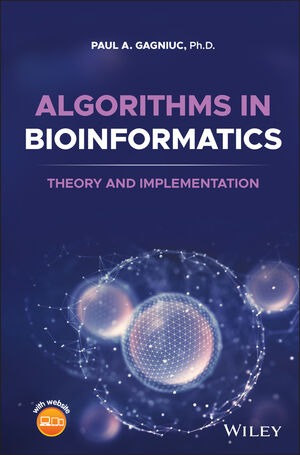
Explores a comprehensive and insightful treatment of the practical application of bioinformatic algorithms in a variety of fields. Delivers a fulsome treatment of some of the main algorithms used to explain biological functions and relationships. It introduces readers to the art of algorithms in a practical manner which is linked with biological theory and interpretation. The book covers many key areas of bioinformatics, including global and local sequence alignment, forced alignment, detection of motifs, Sequence logos, Markov chains or information entropy. Other novel approaches are also described, such as Self-Sequence alignment, Objective Digital Stains (ODSs) or Spectral Forecast and the Discrete Probability Detector (DPD) algorithm. Readers will also benefit from the inclusion of: A detailed presentation of new methods, such as Self-sequence alignment, Objective Digital Stains and Spectral Forecast ; A treatment of sequence alignment, including local sequence alignment, global sequence alignment and forced sequence alignment with full implementations ; Discussions of position-specific weight matrices, including the count, weight, relative frequencies, and log-likelihoods matrices ; A detailed presentation of the methods related to Markov Chains as well as a description of their implementation in Bioinformatics and adjacent fields ; An examination of information and entropy, including sequence logos and explanations related to their meaning ; A chapter on philosophical transactions that allows the reader a broader view of the prediction process ; Extensive worked examples with detailed case studies that point out the meaning of different results
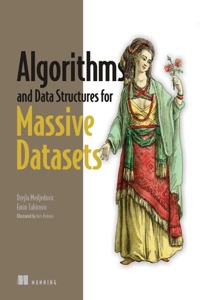
Learn: Probabilistic sketching data structures for practical problems Choosing the right database engine for your application Evaluating and designing efficient on-disk data structures and algorithms Understanding the algorithmic trade-offs involved in massive-scale systems Deriving basic statistics from streaming data Correctly sampling streaming data Computing percentiles with limited space resources Algorithms and Data Structures for Massive Datasets reveals a toolbox of new methods that are perfect for handling modern big data applications. You'll explore the novel data structures and algorithms that underpin Google, Facebook, and other enterprise applications that work with truly massive amounts of data. These effective techniques can be applied to any discipline, from finance to text analysis. Graphics, illustrations, and hands-on industry examples make complex ideas practical to implement in your projects--and there's no mathematical proofs to puzzle over. Work through this one-of-a-kind guide, and you'll find the sweet spot of saving space without sacrificing your data's accuracy. About the Technology Standard algorithms and data structures may become slow--or fail altogether--when applied to large distributed datasets. Choosing algorithms designed for big data saves time, increases accuracy, and reduces processing cost.

Ajax is taking us into the next generation of web applications. Ajax has broken the client-server barrier by decoupling the client from the server, but an Ajax application still needs a server to extract content from. The most effective use of Ajax and the server requires an understanding of REST, an architectural style used to define Web services. Ajax Patterns and Best Practices explores dynamic web applications that combine Ajax and REST as a single solution. A major advantage of REST is that, like Ajax, it can be used with today's existing technologies.
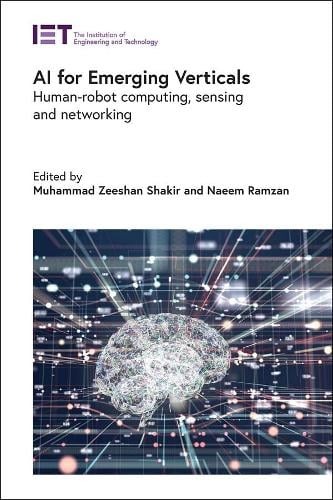
Artificial intelligence (AI) and machine learning (ML) will play a major role. By adopting AI software and services, businesses can create predictive strategies, enhance their capabilities, better interact with customers, and streamline their business processes. Explores novel concepts and cutting-edge research and developments towards designing these fully automated advanced digital systems. Fostered by technological advances in artificial intelligence and machine learning, such systems potentially have a wide range of applications in robotics, human computing, sensing and networking. The chapters focus on models and theoretical approaches to guarantee automation in large multi-scale implementations of AI and ML systems; protocol designs to ensure AI systems meet key requirements for future services such as latency; and optimisation algorithms to leverage the trusted distributed and efficient complex architectures.

Daraa Highway - Ghabagheb - Syria
+963-15 2050 - 15 860 380 /1/2/3 - 11 662 3900