


Refine Results
Sort By
From
To

JDBC Recipes provides easy-to-implement, usable solutions to problems in relational databases that use JDBC. You will be able to integrate these solutions into your web-based applications, such as Java servlets, JavaServer Pages, and Java server-side frameworks. This handy book allows you to cut and paste the solutions without any code changes. This book focuses on topics that have been ignored in most other JDBC books, such as database and result set metadata. It will help you develop database solutions, like adapters, connectors, and frameworks using Java/JDBC. The insightful solutions will enable you to handle all data types, including large binary objects. A unique feature of the book is that it presents JDBC solutions (result sets) in XML.
JDBC Metadata, MySQL, and Oracle Recipes is the only book that focuses on metadata or annotation-based code recipes for JDBC API for use with Oracle and MySQL. It continues where the authors other book, JDBC Recipes: A Problem-Solution Approach, leaves off. This edition is also a Java EE 5-compliant book, perfect for lightweight Java database development. And it provides cut-and-paste code templates that can be immediately customized and applied in each developer's application development.
New editions of the platform don't happen that frequently, but when they do, there is a lot to learn about quickly. If you want to come up to speed on the feature set as quickly as possible, Java 6 Platform Revealed will place you well ahead of the pack. You'll find 10 chapters of how to use the JSR implementations and library improvements that are now a part of Mustang. You'll learn about the scripting features of AWT and Swing, like splash screens, system tray access, and table sorting and filtering and lots more. What you won't find in Java 6 Platform Revealed is a "getting started with Java" tutorial. Come prepared with a good working knowledge of Java 5 platform for best results.
Iterating Infusion presents comprehensive tools for you to best manage and work with object orientation. These include simplified fundamental concepts, popular language comparisons, advanced designing strategies, a broad usage progression, thorough design notations (interaction algebra), and data-oriented (fundamentally-OO) languages. The title, Iterating Infusion, alludes to the fact that any system has multiple, coexisting functional levels and that new levels—both lower and higher—are continually added to the same functional area. The practical effect is to bring processes into focus, always clarifying the vague. The extreme form of this is when separate but compatible technologies are brought together to create advancements; these can be baby-steps or great leaps, with varying amounts of effort. In more general terms, the same thing in a different context can take on much more power. And actually, this phenomenon is at the heart of object-oriented software.
This second volume of a comprehensive tour through mathematical core subjects for computer scientists completes the ?rst volume in two - gards: Part III ?rst adds topology, di?erential, and integral calculus to the t- ics of sets, graphs, algebra, formal logic, machines, and linear geometry, of volume 1. With this spectrum of fundamentals in mathematical e- cation, young professionals should be able to successfully attack more involved subjects, which may be relevant to the computational sciences. In a second regard, the end of part III and part IV add a selection of more advanced topics. In view of the overwhelming variety of mathematical approaches in the computational sciences, any selection, even the most empirical, requires a methodological justi?cation. Our primary criterion has been the search for harmonization and optimization of thematic - versity and logical coherence. This is why we have, for instance, bundled such seemingly distant subjects as recursive constructions, ordinary d- ferential equations, and fractals under the unifying perspective of c- traction theory.
Component-based software development regards software construction in terms of conventional engineering disciplines where the assembly of systems from readily-available prefabricated parts is the norm. Because both component-based systems themselves and the stakeholders in component-based development projects are different from traditional software systems, component-based testing also needs to deviate from traditional software testing approaches. Gross first describes the specific challenges related to component-based testing like the lack of internal knowledge of a component or the usage of a component in diverse contexts. He argues that only built-in contract testing, a test organization for component-based applications founded on building test artifacts directly into components, can prevent catastrophic failures like the one that caused the now famous ARIANE 5 crash in 1996. This book is the first comprehensive treatment of the intricacies of testing component-based software systems. With its strong modeling background, it appeals to researchers and graduate students specializing in component-based software engineering. Professionals architecting and developing component-based systems will profit from the UML-based methodology and the implementation hints based on the XUnit and JUnit frameworks.

Clear Blogging sets out to answer in non-technical terms what blogging has to offer, and why and how you should blog. Clear Blogging will show you why blogging has shaken up mainstream media, and how a blogger can end up on CNN.
C++/CLI: The Visual C++ Language for .NET introduces Microsoft's extensions to the C++ syntax that allow you to target the common language runtime the key to the heart of the .NET 3.0 platform. In 12 no-fluff chapters, Microsoft insider Gordon Hogenson takes you into the core of the C++/CLI language and explains both how the language elements work and how Microsoft intends them to be used.
Business process management is usually treated from two different perspectives: business administration and computer science. While business administration professionals tend to consider information technology as a subordinate aspect for experts to handle, by contrast computer scientists often consider business goals and organizational regulations as terms that do not deserve much thought but require the appropriate level of abstraction.This textbook is ideally suited for classes on business process management, information systems architecture, and workflow management. It is also valuable for project managers and IT professionals working in business process management.

For cloud users and providers alike, security is an everyday concern, yet there are very few books covering cloud security as a main subject. This book will help address this information gap from an Information Technology solution and usage-centric view of cloud infrastructure security. The book highlights the fundamental technology components necessary to build and enable trusted clouds. Here also is an explanation of the security and compliance challenges organizations face as they migrate mission-critical applications to the cloud, and how trusted clouds, that have their integrity rooted in hardware, can address these challenges.
This book covers the first steps of using Spring while discussing the relevant technologies that Spring can be integrated with, what to be aware of, and how working with Spring makes them easier to use. Focuses on the most useful features of Spring, including persistence and transaction management as well as the complete Spring web tools portfolio. Introduces three-tier application design and how to test these designs.
Content management, blogs, and online forums are among the most significant online trends today, and Drupal, phpBB, and WordPress are three of the most popular open source applications facilitating these trends. Drupal is a full content management system that allows you to create any type of website you desire, from an e-commerce to a community-based site. phpBB enables you to set up a bulletin board or forum. And WordPress is the software of choice for the exploding blog community. All three technologies are based on PHP and MySQL.
The book is organized as follows. In the beginning of this book (chapters 1 through 6), you learn how to build a data warehouse, for example, defining the architecture, understanding the methodology, gathering the requirements, designing the data models, and creating the databases. Then in chapters 7 through 10, you learn how to populate the data warehouse, for example, extracting from source systems, loading the data stores, maintaining data quality, and utilizing the metadata. After you populate the data warehouse, in chapters 11 through 15, you explore how to present data to users using reports and multidimensional databases and how to use the data in the data warehouse for business intelligence, customer relationship management, and other purposes. Chapters 16 and 17 wrap up the book: After you have built your data warehouse, before it can be released to production, you need to test it thoroughly. After your application is in production, you need to understand how to administer data warehouse operation.
In this book, a team of renowned web designers take you through the ins and outs of putting together great blogs. They waste no time harking on about the philosophy of blogs, or the community behind them. Instead, they get straight to the practical details, showing how to set up a basic blog in some of the world's most popular blogging engines Movable Type, ExpressionEngine, WordPress, and Textpattern. With your blog set up, they then show you how to build great looking, usable layouts for your blog. The last chapter even shows you how to build your very own PHP/MySQL-based blog engine!

Biometric User Authentication for IT Security: From Fundamentals to Handwriting conveys general principals of passive (physiological trait like fingerprint, iris, face) and active (learned and trained behavior like voice, handwriting and gait) biometric recognition techniques to the reader. This professional book, unlike other publications in this area which concentrate on passive schemes, reflects a more comprehensive analysis of one particular active biometric technique: handwriting. Aspects which are thoroughly discussed include sensor characteristic dependency, attack scenarios, and the generation of cryptographic keys from handwriting.
Solving modern biological problems requires advanced computational methods. Bioinformatics evolved from the active interaction of two fast-developing disciplines, biology and information technology. The central issue of this emerging field is the transformation of often distributed and unstructured biological data into meaningful information. This book describes the application of well-established concepts and techniques from areas like data mining, machine learning, database technologies, and visualization techniques to problems like protein data analysis, genome analysis and sequence databases. Chen has collected contributions from leading researchers in each area. The chapters can be read independently, as each offers a complete overview of its specific area, or, combined, this monograph is a comprehensive treatment that will appeal to students, researchers, and R&D professionals in industry who need a state-of-the-art introduction into this challenging and exciting young field.
This followup to Jeni Tennison's Beginning XSLT has been updated to accomodate the revised XSLT standard. Part one of this book introduces XML and XSLT at a comfortable pace, and gradually demonstrates techniques for generating HTML (plus other formats), from XML. In part two, Tennison applies theory to real-life XSLT capabilities—including generating graphics. Each chapter includes step-by-step examples (with code available online), plus review questions at the end, to help you grasp the discussed features. In fact, all of the examples and exercises revolve around an interesting common theme: making TV listings available online. This book lives up to its name, and will definitely take you from a novice to a professional, in no time!
Don't waste time on 1,000-page tomes full of syntax; this book is all you need to get ahead in XML development. Renowned web developer Sas Jacobs presents an essential guide to XML. Beginning XML with DOM and Ajax is practical and comprehensive. It includes everything you need to know to get up to speed with XML development quickly and painlessly.
Beginning XML with C# 2008 focuses on XML and how it is used within .NET 3.5. As you'd expect of a modern application framework, .NET 3.5 has extensive support for XML in everything from data access to configuration, from raw parsing to code documentation. This book demystifies all of this. It explains the basics of XML as well as the namespaces and objects you need to know in order to work efficiently with XML. You will see clear, practical examples that illustrate best practices in action. With this book, you'll learn everything you need to know from the basics of reading and writing XML data to using the DOM, from LINQ and SQL Server integration to SOAP and web services.
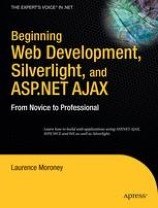
Beginning Web Development, Silverlight, and ASP.NET AJAX: From Novice to Professional aims to give you the skills you need to start building web applications with Microsoft's next–generation technology as quickly as possible. Whether you're interested in ASP.NET AJAX, Silverlight, or the technologies that support them (WPF, WCF, WF, etc.), this book is the starting point that you need. It adopts a “zero to hero” approach that concentrates on achieving practical results you can use in real projects rather than presenting a deep academic treatment that can't be immediately applied.

Daraa Highway - Ghabagheb - Syria
+963-15 2050 - 15 860 380 /1/2/3 - 11 662 3900