


Refine Results
Sort By
From
To

Lifetime spectroscopy is one of the most sensitive diagnostic tools for the identification and analysis of impurities in semiconductors. Since it is based on the recombination process, it provides insight into precisely those defects that are relevant to semiconductor devices such as solar cells. This book introduces a transparent modeling procedure that allows a detailed theoretical evaluation of the spectroscopic potential of the different lifetime spectroscopic techniques. The various theoretical predictions are verified experimentally with the context of a comprehensive study on different metal impurities. The quality and consistency of the spectroscopic results, as explained here, confirms the excellent performance of lifetime spectroscopy.

In the paper the author attempts to assess the fatigue life of chosen welded joints. It focuses especially on chosen problems that accompany deter- nation of the fatigue life of welded joints, taking into consideration the strain energy density parameter.
In the last few decades the effect of lead contamination on human health has received significant attention. Based on such concerns, elimination of lead from ceramic glaze, paint, plumbing etc. has been legislated and implemented. However, until recently, solders used in electronics, based on suitability and knowledge-base developed over a long period of time, remained lead-based. Successive rapid advances in microelectronic devices in recent decades make them obsolete within a very short period after their introduction resulting in significant quantities of electronic wastes in landfills. Leaching of toxic lead from such electronic wastes can result in contamination of the human food chain causing serious health hazards. As a consequence, several European and Pacific Rim countries have passed legislations warranting elimination of lead from electronic solders by fast approaching deadlines. Global economic pressures brought on by such legislations have resulted in a flurry of research activities to find suitable lead-free substitutes for the traditional leaded electronic solders.
Both experimental and theoretical studies of nearly every aspect of the LDH structure are discussed, including the range of metal cations and interlayer anions, M 3+ /M 2+ ratios, LDH polytypes, arrangement of the "interlayer" anions and water molecules, molecular modeling and molecular dynamics simulations, and the long- and short-range order in both the layers and interlayer galleries. Of especial value is the treatment of the more detailed aspects of the LDH structure that are still unresolved.
Laser Fabrication and Machining of Materials introduces readers to the fundamental properties and physical phenomena of laser machining and its applications on the macro, micro, and nano scales. Examples of existing, emerging, and potential techniques are discussed, giving students and practicing engineers alike the opportunity to expand their use of lasers in such disciplines as mechanical processes, electronics, materials, and manufacturing.
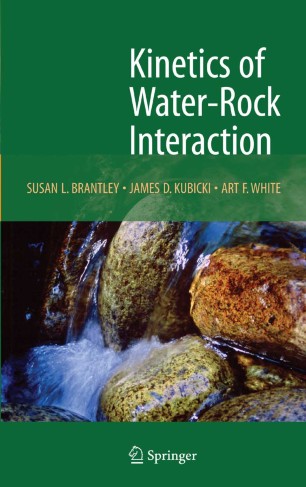
Systems at the surface of the Earth are continually responding to energy inputs derived from solar radiation or from the radiogenic heat in the interior. These energy inputs drive plate movements and erosion, exposing metastable mineral phases at the Earth’s surface. In addition, these energy fluxes are harvested and transformed by living organisms. As long as these processes persist, chemical disequilibrium at the Earth’s surface will be perpetuated. Chemical disequilibrium is also driven by human activities related to production of food, extraction of water and energy resources, and burial of wastes. To understand how the surface of the Earth will change over time, we must understand the rates at which reactions occur and the chemical feedbacks that relate these reactions across extreme temporal and spatial scales. This book addresses fundamental and applied questions concerning the rates of water-rock interactions driven by tectonic, climatic, and anthropogenic forcings.
This textbook contains all the information needed for graduate students or industrial researchers to design kinetic experiments involving heterogeneous catalysts, to characterize these catalysts, to acquire valid rate data, to verify the absence of mass (and heat) transfer limitations, to propose reaction models, to derive rate expressions based on these models and, finally, to assess the consistency of these rate equations.The most recent technique to calculate heats of adsorption and activation barriers on metal surfaces, the BOC-MP approach, is discussed in detail. Methods to measure metal surface areas and crystallite sizes using x-ray diffraction, transmission electron microscopy and various chemisorption techniques are discussed. Different experimental techniques to determine the influence of mass transfer limitations, especially within the pores of a catalyst, are reviewed in detail, with a particular emphasis on liquid-phase reactions.
One the key aspects of this volume is to cut across the traditional taxonomy of disciplines in the study of alloys. Hence there has been a deliberate attempt to integrate the different approaches taken towards alloys as a class of materials in different fields, ranging from geology to metallurgical engineering. The emphasis of this book is to highlight commonalities between different fields with respect to how alloys are studied. The topics in this book fall into several themes, which suggest a number of different classification schemes. We have chosen a scheme that classifies the papers in the volume into the categories Microstructural Considerations, Ordering, Kinetics and Diffusion, Magnetic Considerations and Elastic Considerations. The book has juxtaposed apparently disparate approaches to similar physical processes, in the hope of revealing a more dynamic character of the processes under consideration. This monograph will invigorate new kinds of discussion and reveal challenges and new avenues to the description and prediction of properties of materials in the solid state and the conditions that produce them

The use of phosphine derivatives has historically induced the tremendous development of catalysis (both non-asymmetric and asymmetric). Although the chemistry of amines is more documented, the use of nitrogen-containing ligands only appeared recently. Nevertheless, during the last ten years, the results describing chiral diamine preparations and their uses in asymmetric catalysis and synthesis are increasing faster than their phosphorus counterparts. The reader will find in this volume the most recent methods for the synthesis of chiral diamines as well as their applications in asymmetric catalysis of CC bond formation. Particular attention will be given to spartein and derivatives of such diamines. Recently, the particular properties and the chemistry of amines allowed to obtain catalysts easy to separate and recycle and new types of ligands such as diaminocarbenes, ureas and thioureas. Finally, the complexing properties of some diamines allowed the formation of complexes with chirality "at the metal " which is of major theoretical interest and presents numerous potential applications.
The book contains fields of ecology, chemistry, medicine, epidemiology, public health, toxicology, risk assessment, environmental protection and management, modelling, environmental remediation technologies came together to discuss the chemicals threats for the global environment. The intentional or accidental release of chemicals into environment poses a global threat to public health and security.
It is well known that corrosion products, i.e. rust, on iron and steel surfaces cannot be assigned a typical crystallographic structure with long-range order. In fact, the structure of rust is considered to be very complicated, and some forms of rust are assigned to the amorphous state for this reason. Accurate information about the atomic-scale structure of rust is important to shed light on corrosion mechanisms of metallic materials. And, since life of steel structures is often dominated by environmental degradation or corrosion of the surface, the structure of the rust formed on iron and steel surfaces during prolonged exposure to air is of great interest. This book describes the fundamental aspects of materials characterization for the ferric oxyhydroxides formed on steel surfaces.

Chalcogenocarboxylic acid derivatives are a large class of compounds including more than one chalcogenocarboxyl group in which one or two oxygen atoms of the carboxyl group are replaced with sulfur, selenium or tellurium atoms. The chemistry of metal chalcogenocarboxylates has not been explored extensively as that of carboxylates and dithiocarbamates. This volume presents a comprehensive overview of the syntheses and their limitations, structures and reactions of chalcogenocarboxylic acid derivatives, by emphasizing the developments in organic and inorganic chalcogen chemistry over the last 5 to 20 years.
Carbonylation reactions are of major importance in both organic and industrial chemistry. Due to the availability, price and reactivity pattern, carbon monoxide is becoming a more and more important building block for fine and bulk chemicals. The major reaction types of carbon monoxide are comprehensively discussed by leading experts from academia and industry. The authors highlight important carbonylation reactions such as hydroformylation, alkoxy-carbonylations, co/olefin-copolymerization, Pauson-Khand reactions and others. They illustrate applications in organic synthesis and give industrial examples.

For a long time, the die cast industry has used trial and error as a leading development method, resulting in tremendous growth in the utilisation of available CFD (computational fluid dynamics) software. This software allows the development of better products that maximise the advantages the die cast process has to offer. Casting: An Analytical Approach will refresh knowledge of the governing laws of the fluid dynamics that have an effect on die cast die and die cast process design. MATLAB® (MathWorks, Inc.) and Visual Basic® (Microsoft) code are listed in Casting: An Analytical Approach for every stage of product, die and die cast process design; providing better understanding of die and process design and simplifying calculations of the die cast die as well as the die cast process. Gas ventilation system calculations and fundamentals of compressible gas flow are also included.

A nanotube can bend easily but still is very robust. The nanotubes can be manipulated and contacted to external electrodes. Their diameter is in the nanometer range, whereas their length may exceed several micrometers, if not several millimeters. In diameter, the nanotubes behave like molecules with quantized energy levels, while in length, they behave like a crystal with a continuous distribution of momenta. Depending on its exact atomic structure, a single-wall nanotube –that is to say a nanotube composed of just one rolled-up graphene sheet– may be either a metal or a semiconductor. The nanotubes can carry a large electric current, they are also good thermal conductors.

Bulk Metallic Glasses explores an emerging field of materials known as bulk metallic glasses. It summarizes the rapid development of these materials over the last decade and includes documentation on diverse applications of bulk metallic glasses; from structural applications to microcomponents. Some of the applications covered are pressure sensors, microgears for motors, magnetic cores for power supplies, and nano-dies for replacing next generation DVDs. The chapters cover current theories and recent research including an atomistic theory of local topological fluctuations, atomistic simulations, and unique microstructures of these amorphous materials. Other topics include glass formation, glass forming ability, and the underlying mechanisms and physical insights of these criteria. The mechanical deformation of bulk metallic glasses, fatigue, fracture, and corrosion behaviors of these materials are also reviewed.

Blast cleaning is one of the most frequently utilised surface treatment-method in modern industry. The book is the first comprehensive monograph in this subject. It provides a practical and comprehensive review of the technology. This book systematically and critically reviews the theory behind the technology, the state of current blast cleaning, surface quality aspects and the effects of blast cleaning on the performance of applied coatings.

Bioorganometallic Chemistry has become a mature area of science and is comprehensively covered by leading experts in this book. Naturally occuring bioorganometallic complexes, such as vitamin B12 and recently discovered iron and nickel hydrogenases, including a possible role of the latter in the geochemical theory of the origin of life, are considered.

Interfacial electrochemistry of redox metalloproteins and DNA-based molecules is presently moving towards new levels of structural and functional resolution. This is the result of powerful interdisciplinary efforts. Underlying fundamentals of biological electron and proton transfer is increasingly well understood although with outstanding unresolved issues. Comprehensive bioelectrochemical studies have mapped the working environments for bioelectrochemical electron transfer, supported by the availability of mutant proteins and other powerful biotechnology. Introduction of surface spectroscopy, the scanning probe microscopies, and other solid state and surface physics methodology has finally offered exciting new fundamental and technological openings in interfacial bioelectrochemistry of both redox proteins and DNA-based molecules.

Global warming has worsened the water resource crisis in many arid zones worldwide, from Africa to Asia, affecting millions of people and putting them at risk of hunger. Effective management of arid zone resources, including understanding the risks of toxic trace and heavy elements to humans, coupled with the need to produce more food to feed the world’s growing population, has thus become increasingly important. This very timely book, the only one of its kind on the market, fills the gap of our knowledge of trace elements in these regions. This book begins by introducing the nature and properties of arid zone soil, followed by an updated overview and comprehensive coverage of the major aspects of the trace elements and heavy metals of most concern in the world’s arid and semi-arid soils. These aspects include: - content and distribution - solution chemistry - solid-phase chemistry - selective sequential dissolution techniques - transfer fluxes - bioavailability - pollution and remediation In order to illustrate the themes, a comprehensive and focused case study on transfer fluxes of trace elements in Israeli arid soils is presented. Finally it closes with the global perspectives on anthropogenic interferences in the natural trace elements’ distribution.

Daraa Highway - Ghabagheb - Syria
+963-15 2050 - 15 860 380 /1/2/3 - 11 662 3900