



Page 3
Page 3
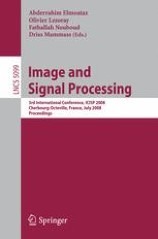
Image and Signal Processing ; 3rd International Conference, ICISP 2008. Cherbourg-Octeville, France, July 1 - 3, 2008. Proceedings
This book constitutes the refereed proceedings of the Third International Conference on Image and Signal Processing, ICISP 2008, held in Cherbourg-Octeville, France, in July 2008.The 48 revised full papers and 22 revised poster papers presented were carefully reviewed and selected from 193 submissions. The papers are organized in topical sections on image filtering, image segmentation, computer vision, feature extraction, pattern recognition, graph-based representations, motion detection and estimation, new interfaces, document processing, and signal processing.

Hypoplastic Left Heart Syndrome
Hypoplastic Left Heart Syndrome draws together the experiences of the leading experts in the field. Through their work in all aspects of congenital cardiac care, they have become acknowledged as the world leaders in the diagnostic, medical and social needs of children born with hypoplasia of the left heart. More importantly, for the first time the book recognizes the crucial contributions made by the families of these children. Diagnostic possibilities, options for medical and surgical treatment and a history of their evolution are looked into and the book also gives an insight into the longer-term effects that treatment has on the child and its family. As well as including contributions from medical clinicians, nurses, and psychologists, for the first time a forum is provided for the parents, who have complemented the contributions from the medical and nursing experts to provide a holistic view of the lives and experiences of the children born with this condition. No other publication, currently available, offers such a comprehensive overview of the care required by a child with hypoplasia of the left heart. This book provides the ultimate reference for anyone treating children with this heart condition, particularly paediatric cardiac clinical and nursing teams, radiologists and radiographers, obstetric medical and nursing teams, psychologists, pathologists, geneticists and workers in social care.

Human Nucleotide Expansion Disorders
Human neurological and neuromuscular disorders caused by nucleotide expansion, first discovered in 1991, are the focus of growing interest of practicing physicians and of interested biomedical researchers. This volume represents a comprehensive and up-to-date description of many of the better-studied disorders. The expert authors discuss molecular, clinical and pathological aspects of the diseases as well as our current understanding of their underlying mechanisms. Of special interest are ideas and initial results of the different therapeutic strategies that can be employed to overcome some of the disorders. As a summary of the state-of-the-art research in this field, this book is of value to human geneticists, molecular biologists and biochemists as well as to practicing neurologists and pediatricians.

Histones : Methods and protocols
Provides new and updated chapters on histones for molecular biologists, biochemists and geneticists. Chapters cover protein complexes that modify chromatin either by adding or removing post-translational modifications, or by exchanging histone variants within the nucleosome. Written in the highly successful Methods in Molecular Biology series format, the chapters include brief introductions to the material, lists of necessary materials and reagents, step-by-step, readily reproducible laboratory protocols, and a Notes section which highlights tips on troubleshooting and avoiding known pitfalls.

Hebrew Scholasticism in the Fifteenth Century : A History and Source Book
This book aims to respond to this need. After a historical introduction, where a "state of the art" about research on the relationship between Jewish philosophy and science and Latin Scholasticism in the thirtheenth-fifteenth centuries is given, the book consists of four chapters. Each of them offers a general bio-bibliographical survey of one or two key-authors of fifteenth-century "Hebrew Scholasticism", followed by English translations of some of their most significant "Scholastic" works or of some parts of them: Abraham Bibago’s "Treatise on the Plurality of Forms", Baruch Ibn Ya’ish’s commentaries on Aristotle’s "Nicomachean Ethics" and "De anima", Eli Habillo’s introduction to Antonius Andreas’s commentary on the "Metaphysics", Judah Messer Leon’s commentary on Aristotle’s "Physics" and questions on Porphyry’s "Isagoge".

Heaven Upon Earth : Joseph Mede (1586-1638) and the Legacy of Millenarianism
THE HISTORY OF BRITISHAPOCALYPTICTHOUGHT The study of early modern Britain between the Reformation of the 1530s and the Wars of the Three Kingdoms of the 1640s has undergone a series of historiographical revisions. The dramatic events during that century were marked by a religious struggle that produced a Protestant nation, divided internally, yet clearly opposed to Rome. Likewise the political environment instilled a sense of responsible awareness regarding the administration of the realm and the defense 1 of constitutional liberty. Whig Historians from the nineteenth century described 2 these changes as a “Puritan Revolution.”

Hans Christian Ørsted and the Romantic Legacy in Science : Ideas, Disciplines, Practices
This volume owes its origin to the perception of a puzzling paradox. Hans Christian Ørsted, the great Danish scientist and philosopher, was one of the founders of modern physics through his experimental discovery in 1820 of the interaction of electricity and magnetism—a key step and model for the further unification of the forces of nature. Followers such as Maxwell and Einstein were, and today searchers worldwide are, enchanted by the hope for a completion of that grand program. In addition to Ørsted’s discovery of electromagnetism, his work in science included other fields, chiefly high-pressure physics and acoustics.

Handbook of topological fixed point theory
This book is the first in the world literature presenting all new trends in topological fixed point theory. Until now all books connected to the topological fixed point theory were devoted only to some parts of this theory. The content is also likely to stimulate the interest of mathematical economists, population dynamics experts as well as theoretical physicists exploring the topological dynamics.

Handbook of Geometric Computing : Applications in Pattern Recognition, Computer Vision, Neuralcomputing, and Robotics
Many computer scientists, engineers, applied mathematicians, and physicists use geometry theory and geometric computing methods in the design of perception-action systems, intelligent autonomous systems, and man-machine interfaces. This handbook brings together the most recent advances in the application of geometric computing for building such systems, with contributions from leading experts in the important fields of neuroscience, neural networks, image processing, pattern recognition, computer vision, uncertainty in geometric computations, conformal computational geometry, computer graphics and visualization, medical imagery, geometry and robotics, and reaching and motion planning. For the first time, the various methods are presented in a comprehensive, unified manner.

Handbook of biomedical image analysis ; Vol.2 : Segmentation models ; Part B
Handbook of Biomedical Image Analysis: Segmentation Models (Volume II) is dedicated to the segmentation of complex shapes from the field of imaging sciences using different mathematicaltechniques. This volume is aimed at researchers and educators in imaging sciences, radiological imaging, clinical and diagnostic imaging, physicists covering different medical imaging modalities, as well as researchers in biomedical engineering, applied mathematics, algorithmic development, computer vision, signal processing, computer graphics and multimedia in general, both in academia and industry.

Handbook of biomedical image analysis : Vol.3: Registration models
Handbook of Biomedical Image Analysis: Registration Models (Volume III) is dedicated to the algorithms for registration of medical images and volumes. This volume is aimed at researchers and educators in imaging sciences, radiological imaging, clinical and diagnostic imaging, biomedical engineering, physicists covering different medical imaging modalities and researchers in applied mathematics, algorithmic development, computer vision, signal processing, computer graphics and multimedia in general, both in academia and industry.

Handbook of biomedical image analysis : Vol.1 : Segmentation bodels ; Part A
Handbook of Biomedical Image Analysis: Segmentation Models (Volume I) is dedicated to the segmentation of complex shapes from the field of imaging sciences using different mathematical techniques. This volume is aimed at researchers and educators in imaging sciences, radiological imaging, clinical and diagnostic imaging, physicists covering different medical imaging modalities, as well as researchers in biomedical engineering, applied mathematics, algorithmic development, computer vision, signal processing, computer graphics and multimedia in general, both in academia and industry .

Gravitation and Experiment : Poincaré Seminar 2006
This book is the sixth in a series of lectures of the S´ eminaire Poincar´ e,whichis directed towards a large audience of physicists and of mathematicians. The goal of this seminar is to provide up-to-date information about general topics of great interest in physics. Both the theoretical and experimental aspects are covered, with some historical background.

Gottfried Wilhelm Leibniz : The Art of Controversies
All these perspectives (and more) are united in what this book identifies as his Art of Controversies, which might also be called an Art of Dialectical Cooperation. For it is based on the idea that knowledge production, acquisition, and evolution is not a one-man affair, but the result of the cooperation of many, coming from different perspectives; whence it follows that not only tolerance vis-à-vis the other, but also valuing the other’s contribution and integrating it – whether it stems from another age, continent, culture, discipline, religion, or individual – is indispensable. This dialectical Leibniz that emerges from the selected texts here translated, commented, and interpreted in the light of their context, isn’t for sure the familiar one. Yet, perhaps surprisingly.

Geometry and Topology in Hamiltonian Dynamics and Statistical Mechanics
This book explores the foundations of hamiltonian dynamical systems and statistical mechanics, in particular phase transition, from the point of view of geometry and topology. A broad participation of topology in these fields has been lacking and this book will provide a welcome overview of the current research in the area, in which the author himself is a pioneer. Using geometrical thinking to solve fundamental problems in these areas, compared to the purely analytical methods usually used in physics could be highly productive. The author skillfully guides the reader, whether mathematician or physicists through the background needed to understand and use these techniques.

Geology and Habitability of Terrestrial Planets
This book has resulted from a workshop at the International Space Science Institute (ISSI) in Bern, Switzerland (5-9 September 2005) that brought together planetary geologists, geophysicists, atmospheric scientists, and biologists to discuss the multi-faceted problem of how the habitability of a planet co-evolves with the geology of the surface and interior, the atmosphere, and the magnetosphere.

Geographies of Asylum in Europe and the Role of European Localities
This book describes how the numerous arrivals of asylum seekers since 2015 shaped reception and integration processes in Europe. It addresses the structuration of asylum and reception systems, and spaces and places of reception on European, national, regional and local level.

Genetics of Adaptation
What is the genetic basis of adaptive evolution? In this volume, a new generation of biologists have taken up this challenge. Using advances in both molecular genetic and statistical techniques, evolutionary geneticists have made considerable progress in this emerging field. In this volume, a diversity of examples from plant and animal studies provides valuable information for those interested in the genetics and evolution of complex traits.

Galileo Galilei - When the World Stood Still
"I, Galileo, son of the late Vincenzio Galilei, Florentine, aged seventy years ...kneeling before you Most Eminent and Reverend Lord Cardinals ...I abjure, curse, detest the aforesaid errors and heresies."The mathematician and physicist Galileo Galilei is one of the most famous scientists of all times. The story of his life and times, of his epoch-making experiments and discoveries, of his stubbornness and pride, of his patrons in the house of Medici, of his enemies and friends in their struggle for truth - all is brought vividly to life in this book. Atle Næss has written a gripping account of one of the great figures in European history.

Frontiers of Fundamental Physics ; Proceedings of the Sixth International Symposium "Frontiers of Fundamental and Computational Physics", Udine, Italy, 26-29 September 2004
The Sixth International Symposium "Frontiers of Fundamental and Computational Physics", Udine, Italy, 26-29 September 2004, aimed at providing a platform for a wide range of physicists to meet and share thoughts on the latest trends in various, mainly cross-disciplinary research areas. This includes the exploration of frontier lines in High Energy Physics, Theoretical Physics, Gravitation and Cosmology, Astrophysics, Condensed Matter Physics, Fluid Mechanics. Such frontier lines were unified by the use of computers as an, often primary, research instruments, or dealing with issues related to information theory.
